
Most women over 45 carry a handful of hard-won lessons they wish someone had told them decades ago. Things about boundaries, money, health, guilt, and the quiet power of trusting yourself. We gathered 27 of them. Some will feel familiar. Others might genuinely surprise you. A few could change how you move through the rest of your life.
Nobody Has It All Figured Out
You've scrolled past her a thousand times — the woman with the effortless career, the perfect family photos, the somehow-always-together life. And somewhere in the back of your mind, a quiet voice whispers: everyone else got the manual except me. Here's what nobody posts about: she's winging it too. Every single one of them. The composed colleague, the supermom neighbor, the friend who always knows what to say.

Behind every polished surface is a woman Googling things at 2 a.m. and second-guessing herself over coffee. The secret isn't that some women figured it all out — it's that none of them did. And that changes everything about what comes next, starting with something you've probably heard your whole life.
You Were Never "Too Sensitive"
You heard it from teachers, boyfriends, maybe even your own family: you're too sensitive, too emotional, too much. After hearing it enough times, you started believing it. You learned to apologize for your tears, swallow your reactions, and shrink your feelings down to whatever size made everyone else comfortable. But here's what they never told you — that sensitivity wasn't a flaw. It was perception. It was emotional intelligence working overtime.

The women who feel deeply are the same women who notice when something's wrong first, who hold friendships together, who lead with empathy instead of ego. That so-called weakness? It quietly made you extraordinary. And yet, that same sensitivity came with a cost most people never talk about — one your body remembers even if your mind moved on.
"No" Is a Complete Sentence
You know this one in your bones. Someone asks for a favor and before your brain even weighs in, your mouth says yes. Yes to the extra shift. Yes to hosting again. Yes to listening to that friend's crisis at midnight when you're barely holding yourself together. People-pleasing isn't generosity — it's a survival pattern most women learned before they could spell their own names. The exhaustion isn't from doing too much. It's from never feeling allowed to do less.
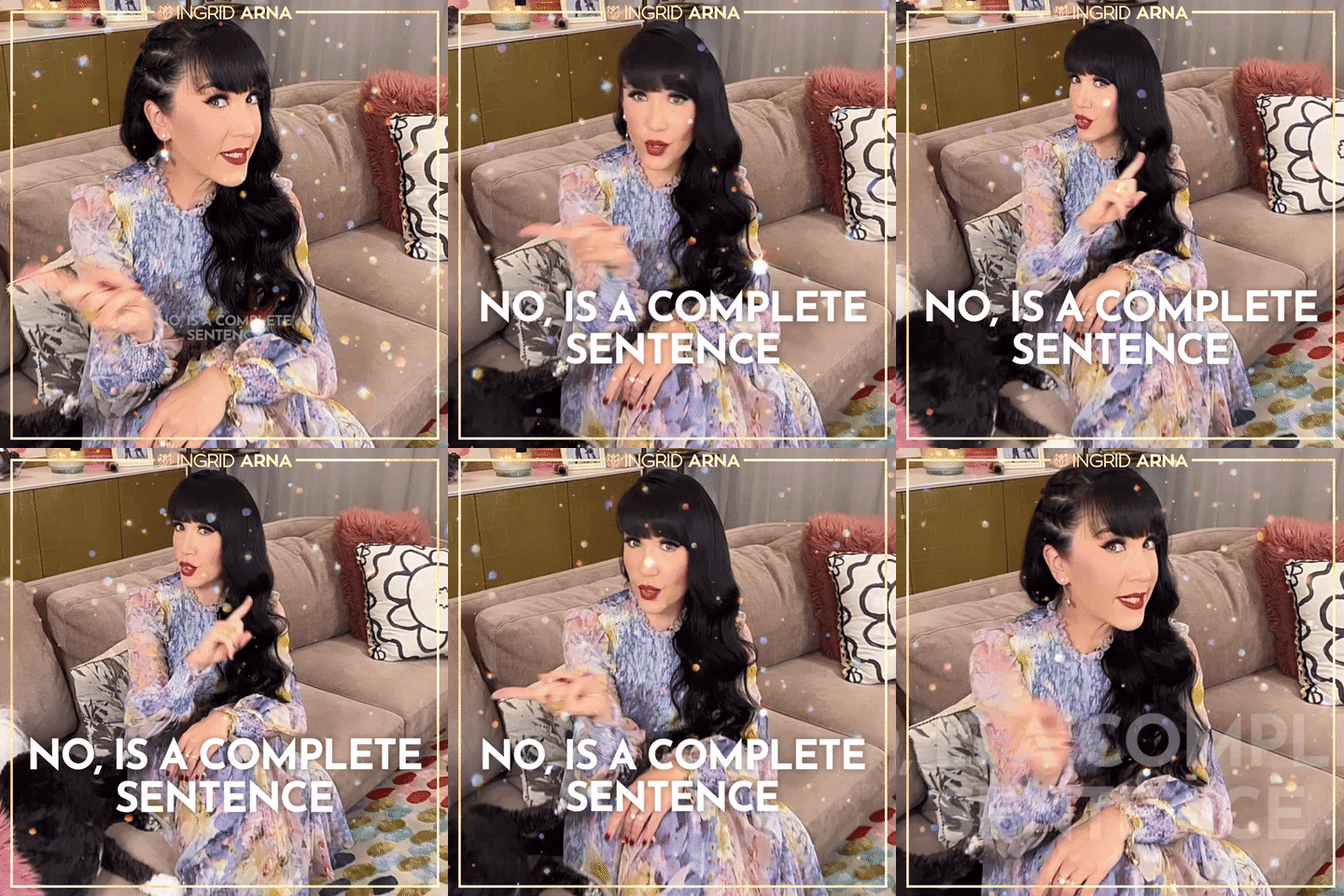
"No" doesn't require a reason, an apology, or a five-minute explanation softening the blow. It's a complete sentence — maybe the most powerful one you'll ever learn to say. And boundaries like this aren't just emotionally freeing. What they do to your actual, physical body might genuinely shock you.
Your Body Kept the Score
Here's something most people never connect: all those years of swallowed frustration and forced smiles didn't just vanish. They moved into your body. Researchers have found that chronic people-pleasing triggers a sustained stress response that manifests as tension headaches, lower back pain, jaw clenching, and irritable digestion. That knot between your shoulder blades? It might literally be unspoken resentment sitting in your muscles.
Every time you said "I'm fine" when you weren't, your nervous system logged the discrepancy. The body doesn't forget what the mind tries to smooth over. And if the physical cost surprises you, wait until you hear what happens to your friendships after 40.
The Friend Purge That Saves You
Here's something nobody warns you about: after 40, your social circle starts shrinking — and researchers say that's actually one of the healthiest things that can happen to you. Studies show women who maintain fewer but deeper friendships report significantly higher life satisfaction than those clinging to large social networks. That friend you drifted from isn't a relationship you failed. It's one you outgrew. Your brain is quietly curating — keeping the connections that nourish you and releasing the ones that cost more energy than they return.
If you've been carrying guilt about lost friendships, consider this: what feels like loss is actually emotional wisdom finally kicking in. You're not becoming isolated — you're becoming selective. But there's a crucial difference between a healthy purge and dangerous disconnection, and the line between them has life-or-death stakes.
Forgiveness Isn't What You Think
Forgiveness doesn't mean what you were taught. It doesn't mean reconciliation. It doesn't mean saying "that was okay." It means evicting someone who's been living rent-free in your head for years. Tonight, try this: write a letter to whoever still takes up that space. Pour everything out — the anger, the hurt, the things you never said. Be messy. Be honest. Then don't send it. Fold it up, tear it up, burn it if you want.

The letter isn't for them. It was never for them. It's the physical act of putting the weight down that your body has been carrying — and yes, your body has been carrying it. But while forgiveness frees you emotionally, there's another silence that's been costing you something far more concrete: money.
Money Silence Cost You Thousands
Nobody taught you to talk about money — and that silence was expensive. Women who skip negotiating their very first salary earn up to $500,000 less over the course of a career. Half a million dollars, gone — not because of ability, but because asking felt uncomfortable. Think about your own life for a moment. Did your parents discuss household finances openly? Did your friends ever share their actual salaries? Most women shake their heads at both questions.

That silence wasn't accidental. It was cultural. Girls were taught that discussing money was tacky, aggressive, unfeminine. So millions of women worked hard, stayed quiet, and accepted what they were given. Financial confidence isn't something you missed — it's something that was kept from you. And the cost goes far deeper than a paycheck.
The Comparison Trap Has a Deadline
Here's something that might genuinely surprise you: confidence doesn't peak in your twenties. It peaks in your sixties. Researchers studying self-assurance across the lifespan found that women in their 50s and 60s consistently report feeling more comfortable in their own skin than at any previous age. That comparison spiral — measuring yourself against colleagues, neighbors, other mothers — actually has a neurological expiration date. The brain's tendency toward social comparison naturally weakens as you age, replaced by something psychologists call "selective focus on the positive."

Your so-called "best years" aren't behind you. They're the ones where you finally stop measuring your life against someone else's highlight reel. But while comparison fades on its own, there's another deeply ingrained habit that won't disappear without a conscious push.
Stop Explaining Your Decisions to Everyone
Remember the boundary thread from Section 3? Here's where it gets practical. Notice how often you justify your choices — what you ordered for dinner, why you skipped the party, how you're spending your weekend. That instinct to explain isn't politeness. It's a deeply ingrained habit of asking permission to live your own life. Every explanation is an invisible invitation for someone else to weigh in on decisions that were never theirs to make.

Here's your micro-experiment: this week, make one choice and offer zero explanation. Order what you want. Wear what you want. Say "I'm staying in Saturday" — period. No "because." Notice how strange it feels. That discomfort? It's the sound of an old pattern breaking. What you might not realize is how much energy that explaining habit has been quietly draining.
Worry Was Never Productivity
Here's something psychologists have quietly named: "cognitive avoidance disguised as problem-solving." That's what worry actually is. It feels productive — your mind is racing, scanning for threats, running scenarios — but it produces exactly zero solutions. Not one. And yet so many women were praised for this. She's the one who thinks of everything. She's always planning ahead. She's the responsible one. That praise wired worry into your identity, making it feel like love.
But worry isn't love. It's an energy leak masquerading as caregiving. Studies show chronic worriers don't make better decisions — they make more exhausted ones. Every hour spent rehearsing catastrophe was an hour stolen from actual living. And if worry quietly drained your energy, wait until you see what the medical system quietly took from you.
Doctors Dismissed You — Here's Proof
Remember being told your pain wasn't real? That dismissal followed you into the doctor's office. Studies show women wait an average of 65 minutes longer than men in emergency rooms before receiving pain treatment. Women having heart attacks are misdiagnosed at significantly higher rates because their symptoms — jaw pain, nausea, exhaustion — don't match the male-centric textbook presentation. The "too sensitive" label from Section 2 didn't just hurt your feelings. It infiltrated the very system designed to save your life.

These aren't ancient statistics. This is happening right now, in modern hospitals, to women who know something is wrong but can't get anyone to believe them. The stakes aren't abstract — they're measured in lives lost and diagnoses delayed by years. But there's one sentence that changes the power dynamic instantly.
The Magic Phrase Doctors Respect
Here's the sentence. Memorize it: "Please note in my chart that you are declining to run this test." That's it. Fourteen words that shift everything. When a doctor hears this, they understand immediately — you're creating a legal record. A paper trail. If something goes wrong later, that chart note becomes evidence that you asked and were refused. Most doctors will pause, reconsider, and often order the test after all. The phrase works because it speaks the language of accountability, which is the one language every medical professional takes seriously.

You don't need to be confrontational. You don't need to raise your voice. Just say it calmly, clearly, and watch the conversation change. Teach this phrase to every woman you know — your daughter, your sister, your best friend. It could genuinely save a life. And speaking of things passed down between women, some of your mother's most well-meaning advice may actually need revisiting.
Your Mother's Advice Had an Expiration
Your mother taught you to keep the peace because, in her world, peace-keeping was how women survived. Your grandmother told you not to speak up at the table because silence kept her safe. These weren't bad lessons. They were brilliant strategies for the constraints those women faced. Honor that. They gave you what they had. But you're living in rooms they never got to enter, having conversations they were never allowed to start.
Some of their rules were armor for a war that's no longer yours to fight. You can love them completely and still outgrow the playbook they wrote with shaking hands. That quiet ache you feel when you realize this? It's not betrayal — it's evolution. And while you're rethinking what you inherited, there's one silent epidemic that deserves your attention next.
Loneliness Hits Harder Than Smoking
Here's a number that should stop you cold: chronic loneliness carries health risks equivalent to smoking 15 cigarettes a day. That's not metaphor — that's data from researchers at Brigham Young University. Your blood pressure rises. Your immune system weakens. Your risk of dementia climbs by 40 percent. Remember when we talked about shrinking your circle being healthy? It absolutely is. But there's a critical difference between curating your friendships and letting connection disappear entirely.

If you've retired recently, or your kids have left, or you've moved somewhere new, the drift into isolation can be so gradual you don't notice until it's settled into your bones. The good news? The antidote is simpler than you'd think.
One Weekly Call Changes Everything
Pick one person you genuinely enjoy talking to. Not someone you feel obligated to call — someone whose voice actually makes you lighter. Now commit to calling them once a week. That's it. Not a text. Not a heart emoji on their Instagram post. An actual conversation where you hear each other laugh. Research shows just 10 minutes of real vocal connection lowers cortisol, the stress hormone that's been quietly wrecking your sleep and your immune system.

Put it in your calendar like a doctor's appointment. Wednesday at 7. Sunday after coffee. Make it non-negotiable. You'll be stunned how quickly that one small ritual rewires your week — and your wellbeing. But here's something worth examining: why do so many women feel guilty for even wanting connection in the first place?
Guilt Was Never Your Job Description
Spanish researchers discovered something striking: women don't just feel guilty more often than men — they feel it at significantly higher rates across every age group studied. And it's not because women behave worse. It's because from childhood, girls are trained to monitor everyone's emotional temperature. You became the thermostat for every room you entered. Every disappointed face, every tense silence, every unmet need — you absorbed it as your personal failure.

That guilt you've carried for decades? It was never evidence that you weren't doing enough. It was evidence that the conditioning worked exactly as designed. And once you see guilt clearly for what it is, you start noticing something else you were never compensated for.
The Invisible Labor You Never Invoiced
Think about everything you tracked last week — doctor's appointments, grocery lists, birthday gifts, permission slips, the fact that your partner's prescription needed refilling. Researchers at Wellesley College estimate this invisible cognitive labor consumes over 20 hours per week. That's a part-time job. Remember the $500,000 women lose by not negotiating salaries? Here's the darker math: while you were underpaid at the office, you were simultaneously working an entirely unpaid shift at home.

If you invoiced your household management at even minimum wage, you'd be looking at tens of thousands of dollars annually — money that was never acknowledged, never reciprocated, never rested from. Your exhaustion isn't a character flaw. It's an economic reality. So what would it actually look like to stop carrying all of it alone?
Delegate Like You Mean It
Here's your assignment: pick three tasks you do on autopilot every week — scheduling appointments, packing lunches, restocking supplies — and hand them off completely. Not halfway. Completely. Write clear instructions once, then walk away. No hovering, no redoing it "the right way" afterward. That voice saying "it's faster if I just do it myself"? That's the exact trap. It guarantees you'll be doing it yourself forever. Every task you redo teaches everyone around you to wait for you to take over.

Delegation feels uncomfortable at first because you've been rewarded for being indispensable your entire life. Let it feel clumsy. Let the dishwasher get loaded wrong. The goal isn't perfection — it's freedom. And speaking of freedom, there's one form of rest you've probably been denying yourself for years.
Rest Isn't Laziness — It's Medicine
Burnout researchers don't prescribe rest as a reward for exhaustion — they prescribe it as a baseline requirement, like water or sleep. Dr. Saundra Dalton-Smith, a leading physician in rest research, identifies something called "rest debt" — the cumulative deficit that builds when you skip genuine downtime for years. And it compounds like unpaid interest. Women carrying decades of rest debt face measurably higher rates of cardiovascular disease, chronic inflammation, and cognitive decline.

Therapists who specialize in women's burnout say the same thing: rest isn't the break between productive moments. It IS the productive moment. Your nervous system cannot heal, regulate, or rebuild while running on fumes. The next time your body sends you a signal, you might want to listen more carefully than ever.
Your Gut Feelings Were Always Data
Here's something that should have been told to every woman who was ever called 'overreacting': your gut contains over 100 million neurons. That's more than your spinal cord. Scientists call it the 'second brain,' and it sends far more signals up to your brain than your brain sends down to it. Every time you said 'something feels off' about a person, a situation, a deal — your nervous system was literally processing data your conscious mind hadn't caught up to yet.

Your intuition was never hysteria. It was biology — a sophisticated surveillance system doing exactly what it evolved to do. And yet, how many times were you talked out of what you already knew? That pattern of self-silencing didn't just cost you peace of mind.
It's Not Too Late to Start
Vera Wang was a figure skater, then a journalist. She didn't design her first dress until she was 40. Laura Ingalls Wilder published *Little House in the Big Woods* at 65. Grandma Moses picked up a paintbrush at 78 and became one of America's most beloved artists. These women didn't beat a clock — they ignored it entirely. If you've ever whispered "it's too late for me" while searching for something you couldn't quite name, consider that the ache itself is the answer. That longing didn't expire. It was waiting for you to stop apologizing for having it.

Think about what you'd try if nobody were watching and no clock were ticking. Hold that thought — because something you've already survived quietly proves you're more capable than you realize, and it has to do with money.
The Salary You Never Negotiated
Here's what HR professionals know that most candidates don't: nearly every job offer has built-in negotiation room. Hiring managers budget for it. When a candidate accepts the first number without discussion, many recruiters are genuinely surprised. The insider phrase is disarmingly simple: "I'm very excited about this role. Is there flexibility in this offer?" That single sentence signals professionalism, not greed. Career negotiation experts say it works because it's collaborative rather than confrontational — and it opens a door that was never locked to begin with.

Women who negotiate even once earn an average of $1 million more over a 45-year career compared to those who never do. Teach that sentence to your daughter, your granddaughter, your niece. Write it on a sticky note and put it on their mirror. But money wasn't the only thing many women gave away quietly — sometimes it was something harder to measure.
Shrinking Yourself Helped No One
Here's the part that stings: playing small didn't even work. You dimmed your intelligence to avoid intimidating people. You downplayed promotions, deflected compliments, started sentences with 'I'm probably wrong, but...' You thought shrinking made others comfortable. Research from the University of Texas found the opposite — people who consistently self-diminish are perceived as less competent and less trustworthy. Not more likable. Less credible. Every time you minimized an accomplishment, you weren't being humble. You were teaching people to undervalue you, and they listened.

The rooms you made yourself small in didn't reward you with safety. They simply forgot you were there. That realization can sting — or it can set you free. And there's something you can do about it right now, in the next sixty seconds.
Write Down Three Things You're Proud Of
Grab your phone, a napkin, the back of an envelope — anything. Write down three things you've accomplished that you've never said out loud. Maybe you raised children while barely holding yourself together. Maybe you survived a loss that would have flattened anyone else. Maybe you mastered something — a job, a skill, a language — that everyone around you simply took for granted. Write them down. Not in your head. On paper. Neuroscience shows that handwriting activates neural pathways that thinking alone doesn't reach. When you see your accomplishments in your own handwriting, your brain processes them differently.

They stop being things that happened to you and become things you did. Read your three items back. Let them land. Now — here's something important about what you might feel rising in your chest as you read them.
Your Anger Was Always Appropriate
That rising feeling? It might be anger. Good. Remember how your body keeps the score — the headaches, the tension, the mysterious pain nobody could diagnose? Researchers have found that chronically suppressed anger is linked to significantly higher rates of autoimmune disease, depression, and cardiovascular problems. Women who were taught to swallow their rage didn't destroy the anger. They destroyed themselves. Every time you smiled when you wanted to scream, every time you said 'it's fine' when it absolutely wasn't, that fury didn't evaporate. It burrowed into your nervous system and stayed.

The anger was never the problem. The suppression was. Studies show women who express anger constructively have stronger relationships and better health outcomes than women who perform constant calm. Your anger was always appropriate — it was information, just like your gut feelings were. And once you truly believe that, something remarkable happens: you stop waiting for permission.
Permission Slips Were Never Required
You stopped waiting for permission. Let that sink in. Think about how many years you spent quietly hoping someone would say: yes, you can want that career. Yes, you can leave. Yes, you can take up space. Yes, you deserve more. You were waiting for a permission slip that was never coming — because nobody had the authority to write it. Not your mother, not your partner, not your boss, not the culture that raised you to seek approval before wanting anything for yourself.

The permission was always yours. It was yours at twenty-five, and it's yours right now. Every boundary you've learned to set, every explanation you've stopped offering, every guilt trip you've refused to pack for — it all led here, to this quiet, enormous truth: you never needed anyone's signature but your own. And that wisdom? It's not meant to stay with you alone.
Teach Your Daughters This List
Here's your action step: pick one lesson from this article — just one — and bring it up with a daughter, niece, granddaughter, or any young woman you care about. Not as a lecture. As a conversation. "I read something interesting today" is all the opening you need. Maybe it's the magic phrase for doctors. Maybe it's the truth about negotiating salaries. Maybe it's simply that "no" needs no explanation.

You earned this wisdom the expensive way — through decades of living it. She doesn't have to. One conversation this week could change the trajectory of someone's entire life. But before you focus on her future, there's someone else who deserves a moment of your compassion.
The Woman You Were Was Doing Her Best
Think about her — you at twenty-five, making that choice everyone questioned. You at thirty-five, holding it all together with trembling hands. You at forty-five, wondering if you'd wasted too much time. She didn't have this article. She didn't have the language for boundaries or invisible labor or permission slips. She had exactly what she had, and she made the best decision she could see from where she was standing. She survived things she wasn't sure she'd survive. She carried weight she never agreed to carry.

If your best friend told you her story — your story — you'd never say she failed. You'd say she was extraordinary. So say it to her now. She deserves that. She always did. And the woman reading this right now? She's built from everything that younger woman endured.
You Know More Than You Think
We started this journey with a simple truth: nobody has it all figured out. But here's what twenty-nine lessons have shown you — you've figured out so much more than you ever gave yourself credit for. Every scar taught you what to protect. Every mistake taught you what matters. Every sleepless night sharpened an instinct that no textbook could replicate. That quiet knowing you carry — the one you've dismissed as 'just getting by' — that's wisdom.
It was never baggage. It was never damage. It was qualification, earned in the hardest classroom there is: your own life. You are not behind. You are not broken. You are the most prepared you have ever been. And there's only one question left.
Your Next Chapter Starts Right Now
Here's the one thing I need you to do before you close this article: choose one lesson. Just one. Maybe it's making that weekly phone call. Maybe it's writing down three things you're proud of. Maybe it's saying "please note that in my chart." Maybe it's the conversation with your daughter. Whatever landed hardest — that's your lesson. Now act on it today. Not tomorrow morning. Not next Monday when things calm down.

Today. Before your head hits the pillow tonight. Because knowing these twenty-seven lessons earlier would have been nice. But knowing them now? That's enough. That was always going to be enough.Disclaimer: This story is based on real events. However, some names, identifying details, timelines, and circumstances have been adjusted to protect the privacy of the individuals involved. The images in this article were created with AI and are illustrative only. They may include altered or fictionalized visual details for privacy and storytelling purposes