
You know that feeling where you're staring into a full closet and somehow have nothing to wear? That's not a wardrobe problem — it's an organization problem. Over the next several posts, I'm breaking down the most common closet mistakes that quietly steal your space, your time, and even your money. Some of these will surprise you.
Your Closet Isn't Small — It's Misused
You've probably stood in front of your closet thinking, "I need more space." Maybe you've even browsed bigger apartments or fantasized about a walk-in. Here's the thing — most closets actually have plenty of square footage. The real problem isn't size. It's arrangement. What you're seeing when you open those doors is "visible space" — the obvious spots where clothes hang and stack. But lurking behind, above, and between everything is "usable space" you've never tapped into.
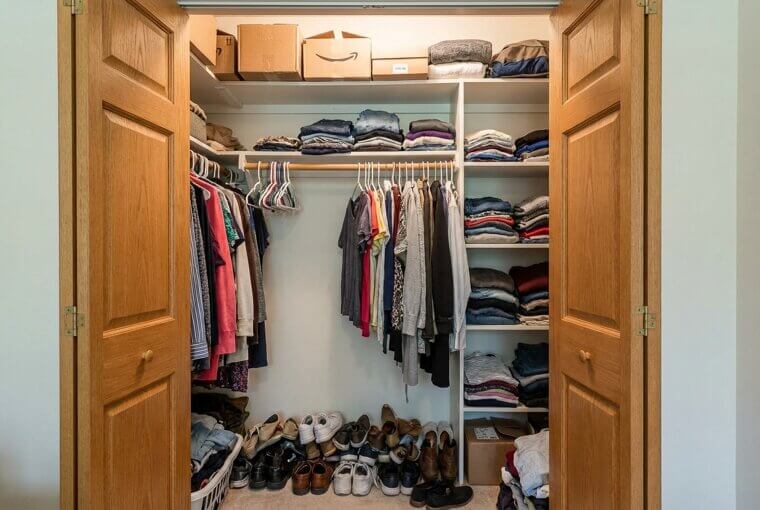
The difference between those two concepts is where most closet frustration lives. Once you start seeing your closet the way professional organizers do, the same four walls suddenly feel twice as big. But first, let's talk about the single biggest space thief hiding in almost every closet.
Keeping Clothes You Never Wear
You already know which clothes they are. That blouse you bought for an event two years ago. Those jeans you're keeping "just in case" your size changes. The jacket that was on sale but never quite fit right. We all have them — items hanging untouched for twelve months or more, quietly consuming prime closet real estate. And every piece that just hangs there pushes the clothes you actually love further into the shadows.
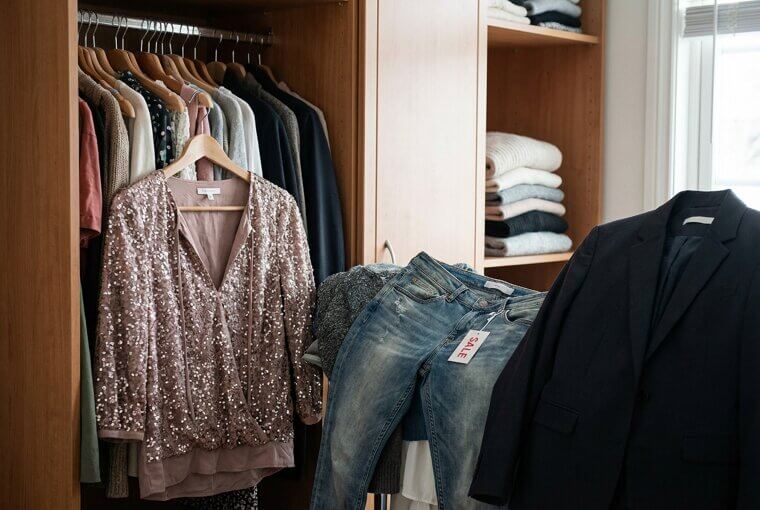
Think of your closet rod like expensive shelf space in a store — every inch occupied by something that doesn't sell is an inch stolen from something that would. That "just in case" mentality might be costing you more than you realize — and not just in space.
Folding Everything The Same Way
You probably fold everything the same way — lay it flat, fold in the sides, fold it in half, stack it up. It's the method most of us learned as kids, and we never questioned it. But here's what becomes obvious once someone points it out: a chunky knit sweater and a lightweight t-shirt have completely different needs. Stacking heavy jeans on top of delicate fabrics crushes and wrinkles them. Thick items waste vertical space when folded the same width as thin ones.

Different garments need different folding techniques — and the right approach can dramatically change how much fits in a single drawer. One small adjustment in particular can increase your drawer capacity by nearly half.
One Simple Folding Trick Saves Inches
Here's the adjustment: instead of stacking clothes flat in piles, fold each item into a compact rectangle and stand it upright — like files in a filing cabinet. When you open the drawer, you see every single item at once. No more digging through layers to find what's buried at the bottom. This method fits 30 to 50 percent more clothing into the same drawer space. Try it tonight with just your t-shirt drawer. You'll be surprised how many extras actually fit.
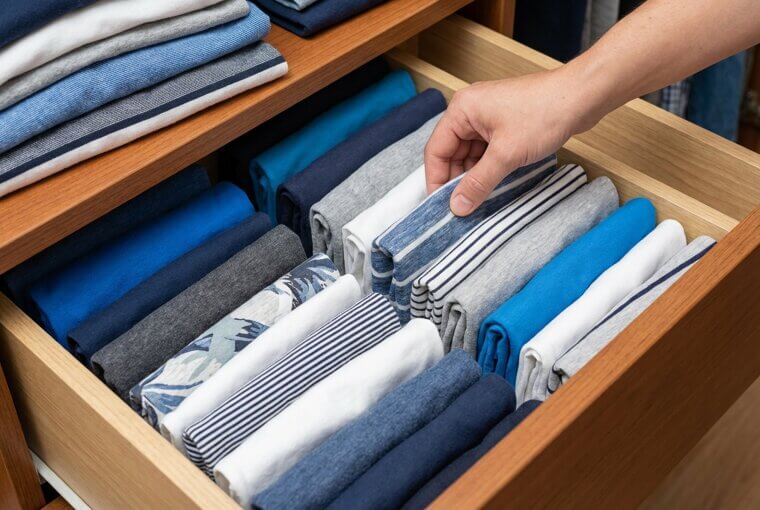
For many people, this one change eliminates the need for an extra dresser entirely — reclaiming bedroom floor space they thought was permanently gone. But your drawers are only part of the equation. There's a forgotten zone in your closet that's quietly wasting even more room.
Ignoring The Back Of Your Closet
Here's a number that might surprise you: professional organizers consider the back wall of your closet the single most wasted square footage in any home. Most people treat it like a black hole — things go in, they never come out. But that deep space behind your hanging clothes is prime storage territory. Simple shelf risers can double what a back wall holds. A row of hooks transforms it into dedicated storage for bags, hats, or scarves. A few stackable bins turn forgotten corners into a seasonal inventory system.
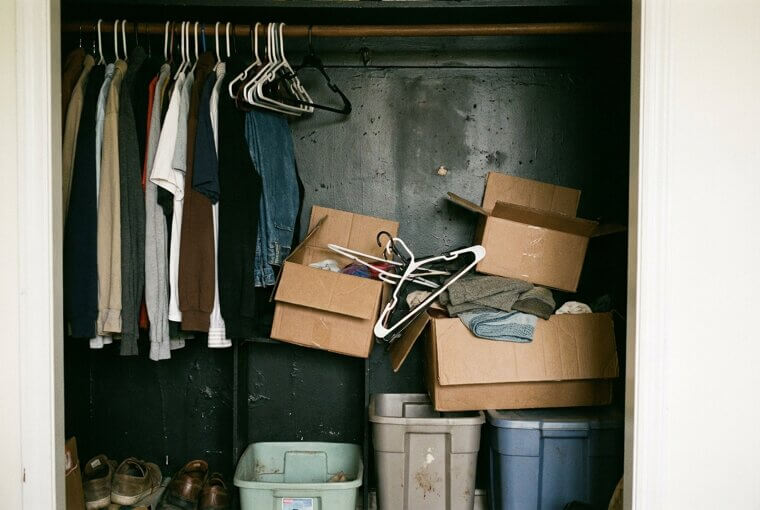
Remember the difference between usable and visible space from the beginning of this article? This is exactly where that concept gets real. Just because you can't see it at a glance doesn't mean it can't work hard for you. And speaking of things working harder — your hangers might be quietly sabotaging your entire setup.
Matching Hangers Aren't Just Aesthetic
You probably dismissed matching hangers as something influencers do for Instagram photos. Here's what they won't tell you on those makeover shows: it's not about looks. Mismatched hangers create chaos on the rod — different widths, different heights, different hook sizes. Your clothes hang at uneven levels, leaving awkward gaps that swallow usable space. Those bulky plastic hangers from the store? Each one wastes nearly an inch of rod space compared to slim alternatives. Multiply that across fifty hangers and you've lost over four feet of hanging room.
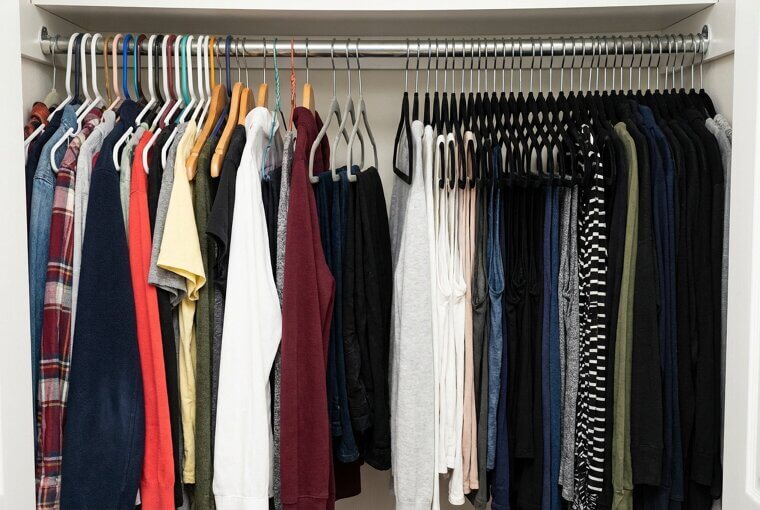
Switching to uniform slim velvet or matching wood hangers can instantly recover 20 to 30 percent of your rod space — no closet renovation required. But gaining space is only half the story. Those mismatched hangers might actually be destroying your favorite clothes.
Why Wire Hangers Ruin Your Shoulders
You know those annoying bumps that form on the shoulders of your sweaters and blazers? Most people blame the washing machine. The real culprit is sitting in your closet right now. Wire hangers are too thin and too narrow to support fabric weight properly. Over time, they press permanent creases into shoulders, stretch out necklines, and leave pointed dimples that no amount of ironing fully removes. Knits are especially vulnerable — the wire digs into soft fibers and reshapes them permanently.
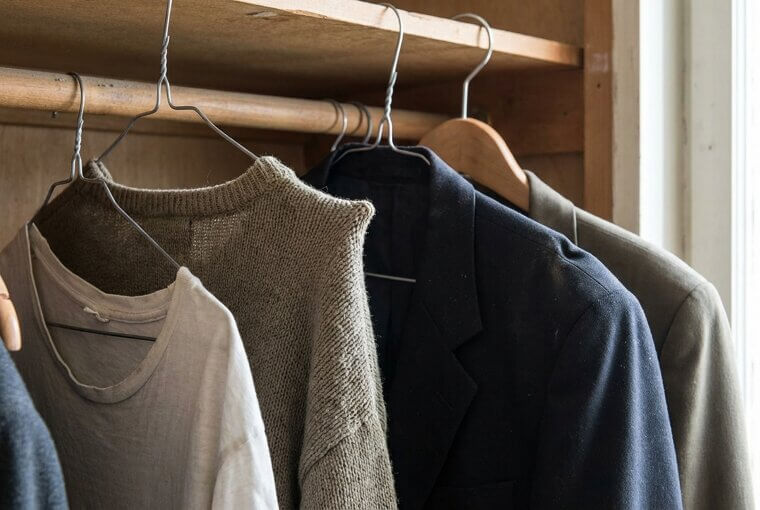
Think about it: you're spending time every week ironing out damage your own closet is causing. That blazer you keep "fixing" before work? The problem starts the moment you hang it back up. The good news is the fix is fast, cheap, and surprisingly satisfying.
Swap Your Wire Hangers This Weekend
Here's your weekend project — it takes less than thirty minutes. Grab a pack of slim non-slip velvet hangers. They run about ten dollars for fifty at most big-box stores. Start with just one section of your closet — maybe your everyday shirts. Swap each wire hanger one by one, and toss the old ones directly into a bag. Don't let them migrate to another rod. Most dry cleaners will happily take wire hangers back, so drop them off next time you're out running errands.
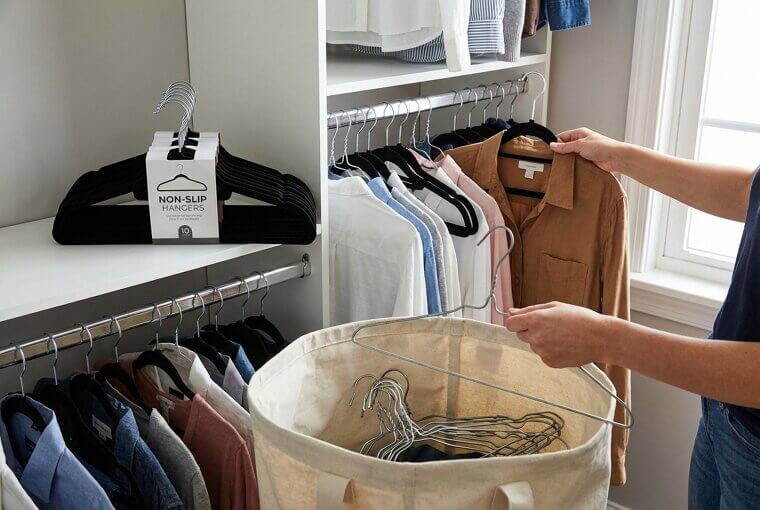
By tackling one section at a time, you avoid the overwhelm of a full closet overhaul. You'll notice the difference immediately — clothes hanging evenly, more breathing room on the rod, and zero shoulder bumps forming overnight. But reclaiming your hanging space only matters if you're not losing ground somewhere else. Take a look at your closet floor right now.
Storing Shoes On The Closet Floor
That pile of shoes lining your closet floor? It feels like you're using free space. It's actually the least efficient storage zone in your entire closet. Here's why: shoes on the floor block you from stepping close enough to reach hanging clothes comfortably. They collect dust at an alarming rate since floor level catches every particle that drifts downward. And let's be honest — pairs get separated within days, turning your "organized row" into a jumbled heap you kick through every morning.
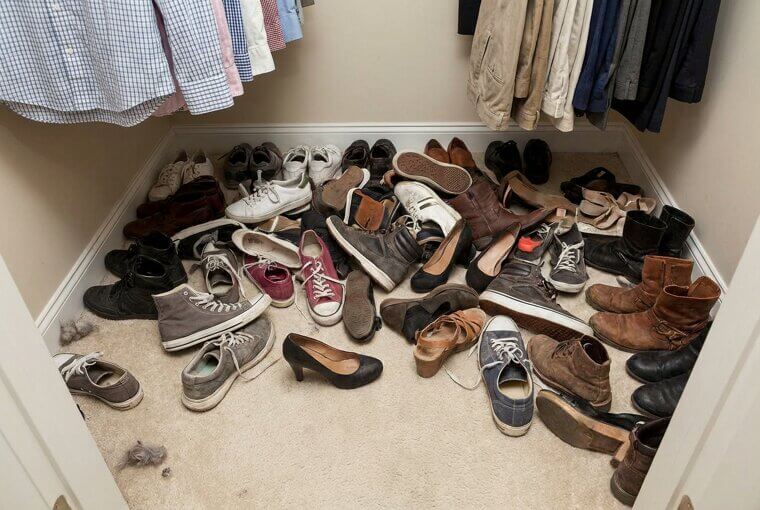
The floor tricks you because it's visible and empty, so it feels like wasted potential. But filling it with shoes trades accessibility for the illusion of efficiency. That prime ground-level real estate serves you far better when it's kept clear. So where should your shoes actually go? There's one overlooked surface in your closet that's practically begging to be used.
The Door You're Not Using
Here's what professional organizers do first when they walk into a client's closet — before touching a single hanger, they look at the door. The inside of your closet door is what pros call the most overlooked usable surface in any home. A simple over-the-door organizer with clear pockets can hold twelve to twenty pairs of shoes vertically. Hook racks handle belts, scarves, and crossbody bags. Pocket systems corral accessories that currently clutter your drawers.
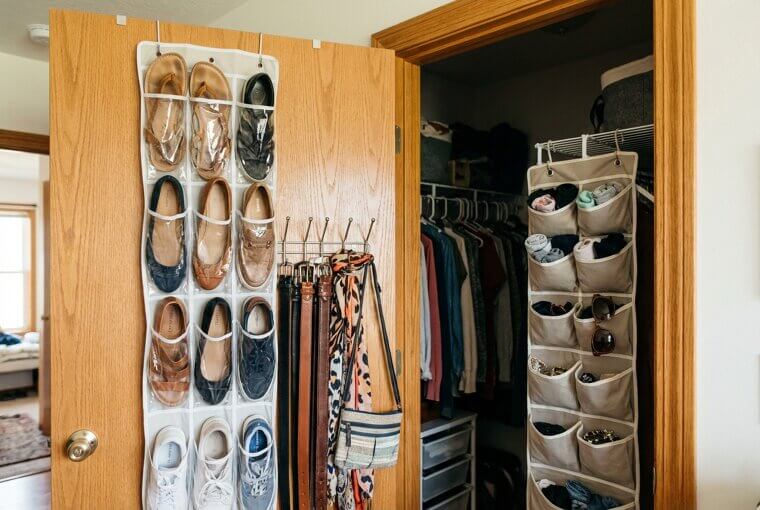
This is genuinely the first thing most professionals install during a consultation — it's that impactful. One fifteen-dollar organizer can free up an entire shelf and clear your floor in minutes. But reclaiming space only works if you're honest about what's filling it — and right now, an entire season of clothes might be working against you.
Seasonal Clothes Hogging Prime Space
Think about this: if it's July and your heavy coats, wool scarves, and fleece pullovers are hanging at eye level, roughly 40% of your most accessible rod and shelf space is occupied by items you won't touch for months. That's not storage — that's a blockade. Every morning, you're reaching past things you can't wear to find things you can. Your closet is essentially working at 60% capacity during any given season, which means you're experiencing that "my closet is too small" frustration for no reason.
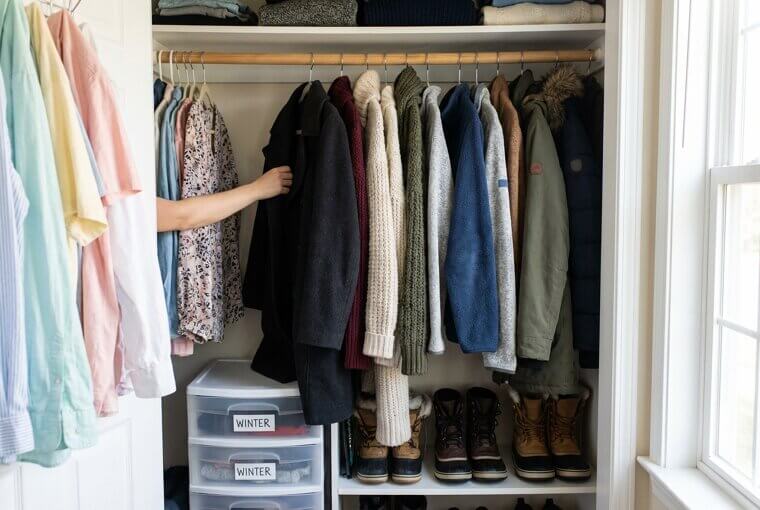
Remember the idea that every inch has a cost? Off-season clothes are silently charging you rent in the most valuable real estate you have — your eye-level, arm-reach zone. The fix is surprisingly simple, and it takes less than an hour twice a year.
The Twice-a-Year Swap That Changes Everything
Here's your system. Grab two large bins — label one "warm weather" and one "cold weather." Right now, pull every off-season item from your rod and shelves and pack it into the appropriate bin. Store those bins on your highest shelf or slide them under the bed. Set two recurring calendar reminders — one in early April, one in early October — that simply say "swap closet bins." When the reminder hits, switch what's accessible. That's it.
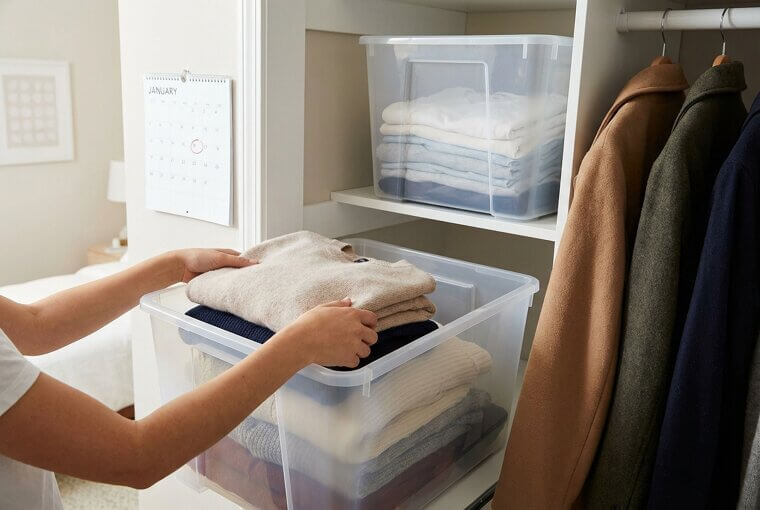
The whole process takes about 45 minutes, and you'll feel the difference every single morning for the next six months. Your rod suddenly has breathing room. Your shelves make sense. Getting dressed becomes genuinely easier. But before you buy any bins, there's a critical sequencing mistake that derails most closet projects before they even start.
Buying Organizers Before Decluttering
Here's the number-one reason closet makeovers fail within weeks: people buy the organizers first. It feels so productive — filling a cart with matching bins, drawer dividers, and basket sets. But professional organizers never start at the store. They start with a purge. Every single time. When you buy storage products before decluttering, you're essentially investing money to neatly contain things you don't even need. Those beautiful bins become expensive packaging for clutter.

The correct sequence is always declutter, then measure, then shop. Otherwise you end up with organizers that don't fit your actual space or your actual wardrobe. So how do you figure out what truly deserves to stay? Professionals have a brilliantly simple hanger trick that removes all the guesswork.
The "Hanger Trick" Pros Swear By
Here's what professional organizers and celebrity stylists actually do. Go to your closet and turn every single hanger backward — hooks facing you instead of away. It takes five minutes. Then just get dressed normally. Each time you wear something, return it with the hanger facing the correct way. After three to six months, look at your rod. Every hanger still turned backward represents a piece you never reached for — not once.
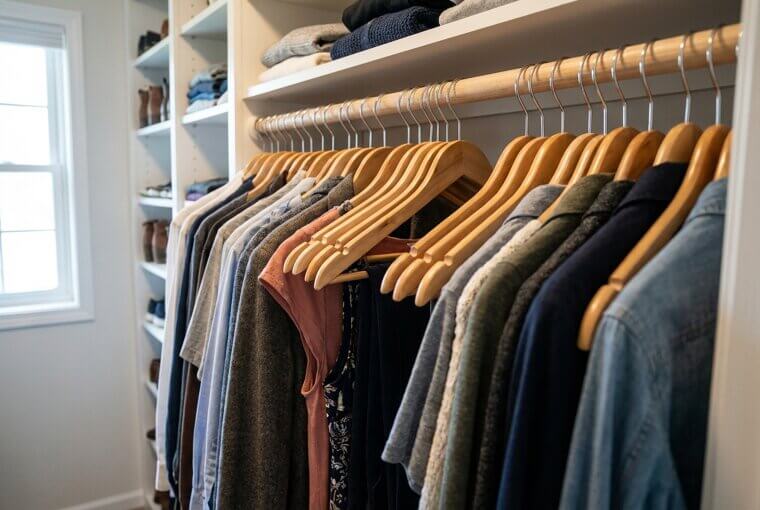
No guessing, no agonizing, no guilt. The data decided for you. Those reversed hangers go straight into a donation bag. It's the most elegant decluttering system that exists — and it costs absolutely nothing. But once you've trimmed the excess, how you arrange what remains matters more than most people realize.
Not Grouping Clothes By Category
Here's what surprises most people: organizing clothes by color looks beautiful but actually slows you down. Closet experts overwhelmingly recommend grouping by category instead — all pants together, all blouses together, all jackets together. The reason is simple. When you're getting dressed, you think in categories. You decide "I need a blouse" before you decide "I need a blue blouse." But the real revelation comes when identical items end up side by side.
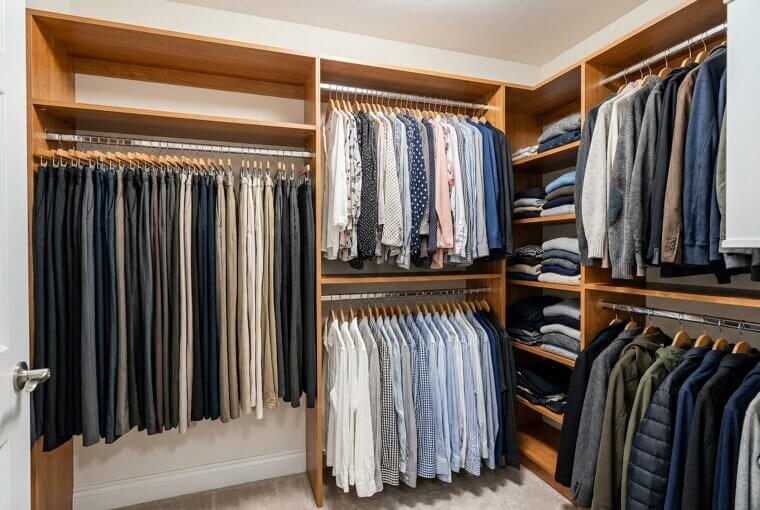
People regularly discover they own seven nearly identical black tops — purchases they made because they couldn't see what they already had. Remember those clothes from Section 2 that never get worn? Many of them are quiet duplicates. And those duplicates aren't just taking up space — they're costing you real money.
How Duplicates Silently Steal Your Space
Consumer research paints a startling picture: the average American spends roughly $1,500 on clothing annually, and an estimated 20-30% of that goes toward items nearly identical to what's already buried in their closet. That's potentially $300 to $450 per year — spent not on new styles, but on replacements for things you forgot you owned. Over a decade, that's a used car. A disorganized closet isn't just messy. It's a slow, invisible leak in your household budget that nobody tracks.
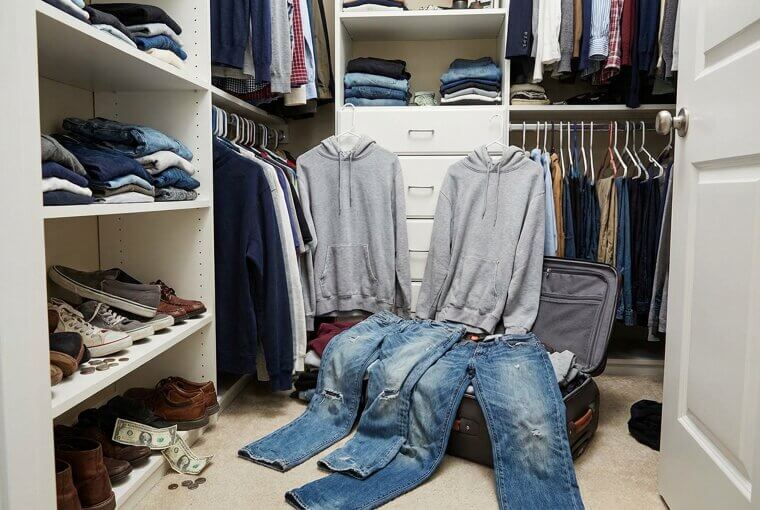
Think about that the next time you grab a "basic" black cardigan at the store. Organization isn't about aesthetics or Instagram-worthy shelves — it's a financial decision that pays you back every single month. And while duplicates drain your wallet, there's a physical problem on your shelves that's quietly wrecking your favorite sweaters right now.
Stacking Sweaters Too High On Shelves
Ask any professional organizer what they fix first when they walk into a client's closet, and the answer is almost always the same: the sweater shelf. Stacking five, six, or seven sweaters into a single tower seems space-efficient, but it's a trap. The bottom sweaters get crushed under the weight, developing stubborn creases that washing won't fix. And every time you want the third one down, you're dismantling the entire pile — which never goes back as neatly as it started.
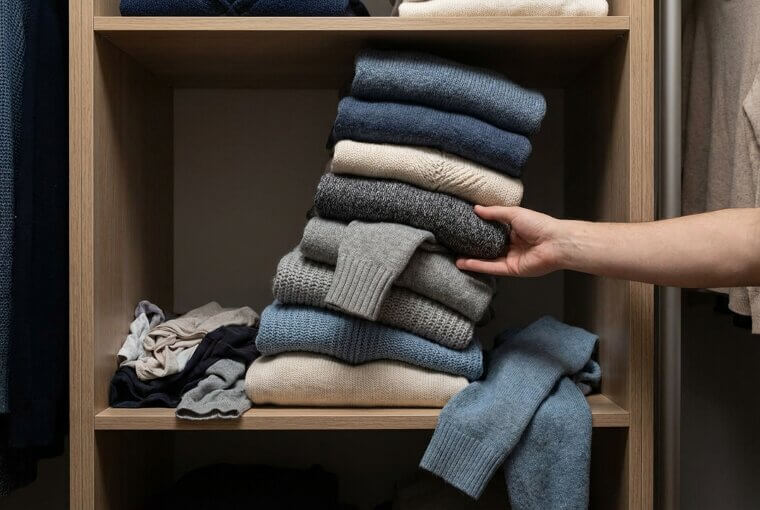
The pro rule is simple: never stack more than three sweaters before starting a new column. Shelf dividers keep those columns standing independently so pulling one item doesn't trigger an avalanche. It's a small discipline that protects your clothes and your patience. And those dividers? They cost almost nothing.
Shelf Dividers Cost Five Dollars — Use Them
Here's your easiest win yet. Search for acrylic or wire shelf dividers — they're available at any home store or online for around five dollars per pair. They clip directly onto your existing shelves with no tools, no drilling, and no measuring whatsoever. Just slide them on wherever you want a boundary. Instantly, your sweater columns stay upright independently, your handbags stop slouching into your t-shirts, and every category gets its own defined lane.
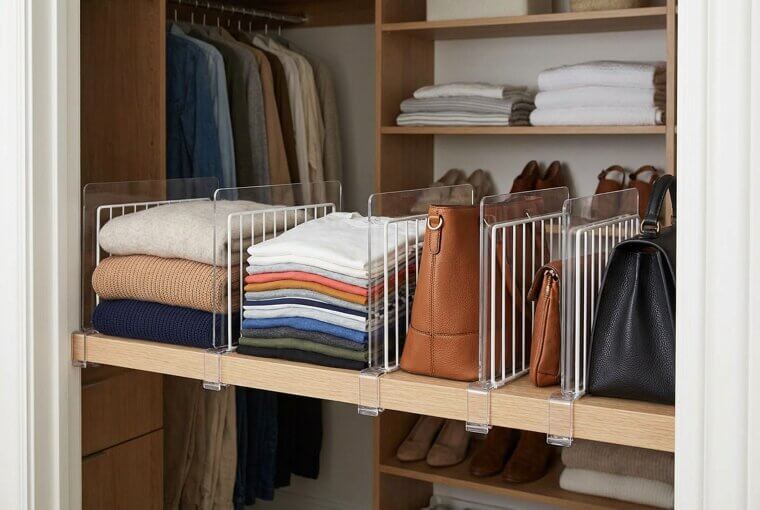
The visual difference is immediate and genuinely satisfying. One small purchase turns a shelf that looked chaotic into something that looks intentional. But while your shelves are getting smarter, there's a good chance your hangers are quietly damaging clothes you think you're protecting.
Hanging Clothes That Shouldn't Be Hung
Here's something that might surprise you: hanging your favorite heavy sweater isn't treating it well — it's slowly destroying it. Gravity pulls the weight onto the shoulders, stretching the fabric into those awkward pointy bumps that never fully bounce back. Knit dresses gradually elongate on hangers, losing the shape that made you love them. Even leather jackets can develop permanent hanger creases and marks along the shoulder line.
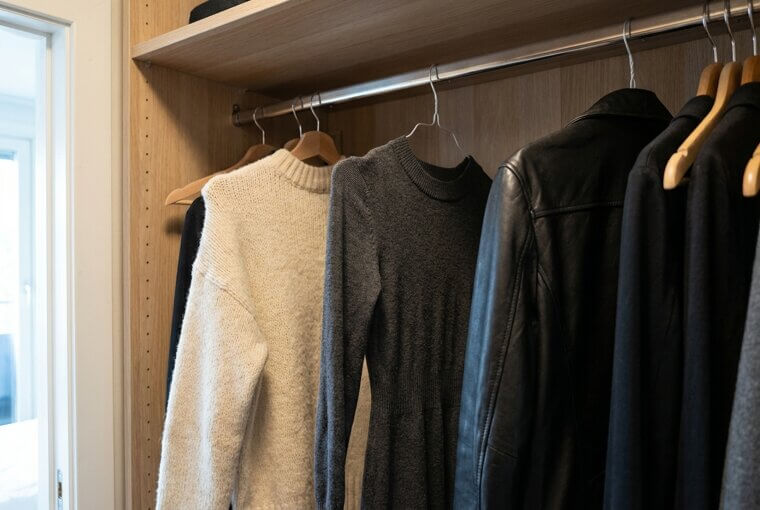
We've been trained to think hanging equals proper care, but for these fabrics, folding is actually the expert move. So how do you know which clothes to hang and which to fold? There's a surprisingly simple rule.
What To Hang vs. Fold — The Quick Rule
Here's your new rule, and it's only two sentences. If the garment has structure — blazers, button-downs, dress pants, collared shirts — hang it. If it has stretch or weight — sweaters, knits, activewear, heavy cardigans — fold it. That's it. Jeans can honestly go either way, but folding them frees up valuable rod space for pieces that actually need to hang. Go try it right now. Walk to your closet, scan the rod, and pull off anything that belongs in a fold.
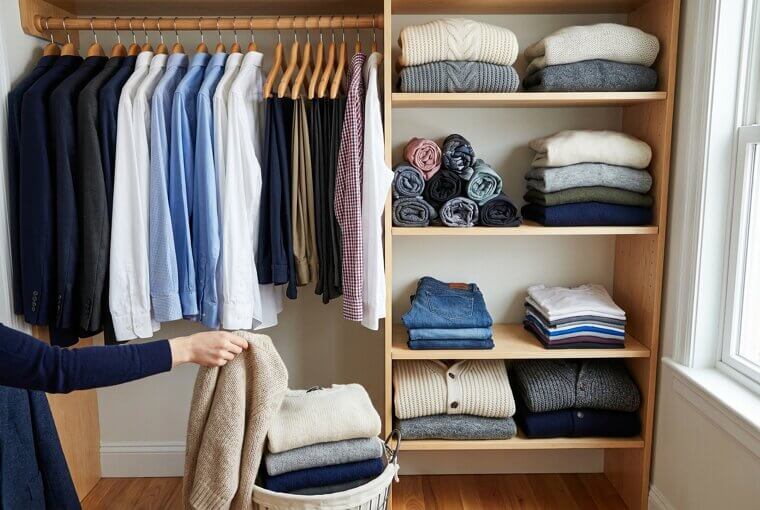
You'll probably relocate three or four items in under a minute — and your rod will immediately feel less cramped. Now that your hanging and folding zones make sense, it's time to look in a direction almost nobody thinks about: straight up.
Forgetting The Vertical Space Above
Look up inside your closet right now. See that gap between your top shelf and the ceiling? That's 12 to 18 inches of completely wasted real estate — and most people either ignore it entirely or shove random bags up there with no plan. Here's what professional organizers know: that forgotten zone can hold an entire season's worth of scarves, hats, extra linens, or keepsakes when you add a second shelf or slide in labeled bins. Remember the difference between usable and visible space from earlier? This ceiling gap is the final frontier of that idea.
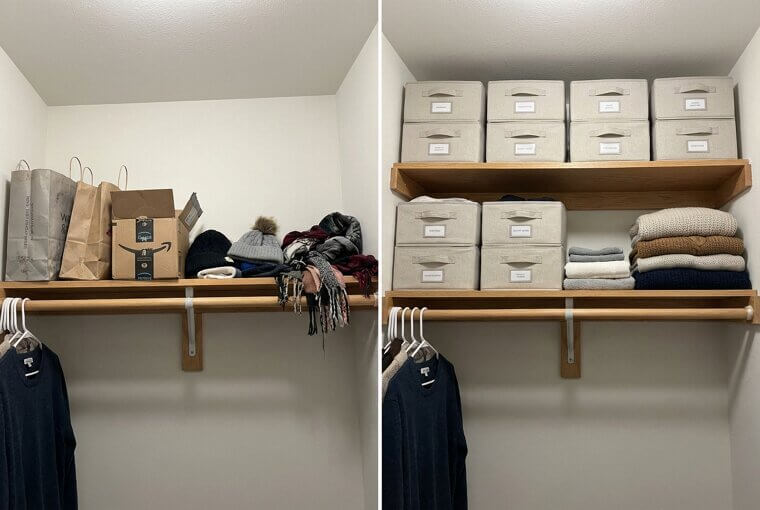
It's storage you already own but never claimed. A single additional shelf costs under twenty dollars and installs in minutes. But reclaiming hidden space is only half the equation — because there's another invisible problem lurking in most closets, and it has nothing to do with storage.
Poor Lighting Hides Your Best Clothes
Here's something nobody files under "organization": your closet light. That single dim bulb — or worse, no light at all — is quietly deciding what you wear every day. When you can't see clearly, your hands reach for the same few items hanging near the front while dozens of perfectly good pieces disappear into the shadows. You're not choosing outfits. You're choosing whatever catches the light. This isn't a design flaw — it's an organizational problem that just looks like one.
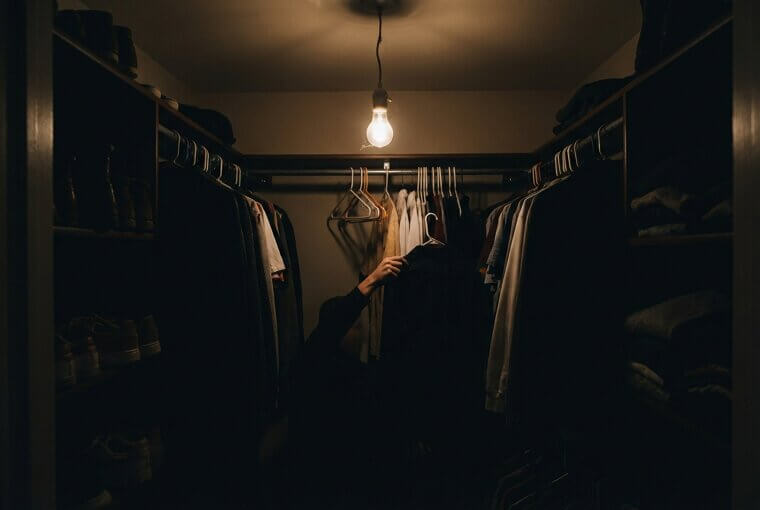
Peel-and-stick LED strips or battery-powered motion-sensor lights cost under ten dollars and instantly reveal clothes you forgot you owned. Think about that: you might be sitting on a whole new wardrobe already. And the fix takes almost no effort at all.
Add a Motion-Sensor Light Tonight
Here's your action plan, and it takes two minutes. Pick up a battery-powered motion-sensor LED light — they're available at any hardware store or online for under ten dollars. Peel the adhesive backing off, press it firmly above your closet rod, and you're done. No wiring, no tools, no drilling. The moment you open the door, the light clicks on automatically, illuminating every shirt, jacket, and dress you've been blindly reaching past each morning.
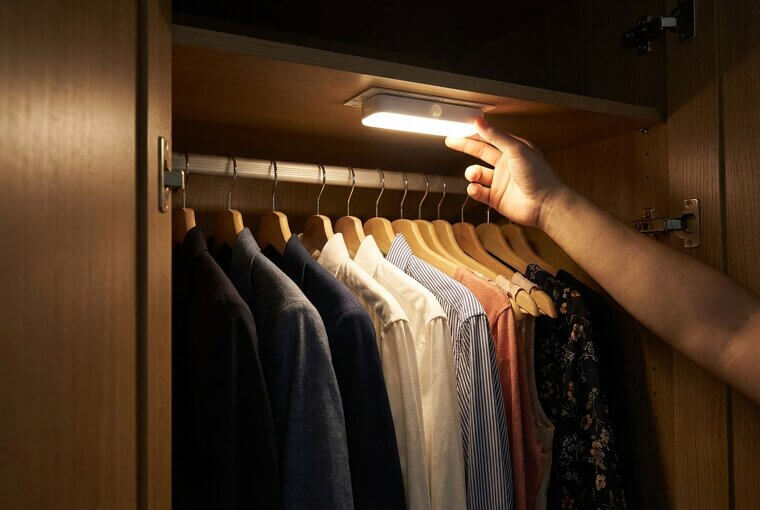
You'll rediscover clothes you completely forgot about — which means fewer duplicate purchases eating into your budget. Remember how a disorganized closet costs you hundreds a year? Seeing everything is the first defense against that. But what about the items you can see clearly yet still can't release?
Emotional Attachment To Clothes You've Outgrown
That dress you wore to your best friend's wedding. The suit from the day you got promoted. The jeans that fit perfectly a decade ago. They're not just fabric — they're timestamps of who you were, and letting go feels like erasing those chapters. You're not being silly for holding on. Those moments genuinely mattered.

But here's the gentle truth: the memory lives in you, not in the stitching. Your closet deserves to reflect who you are now, not serve as a museum of who you were. Honoring your past doesn't require storing it on a hanger. And there's actually a compassionate middle ground that lets you keep what truly matters.
The "Memory Box" Compromise That Works
Here's the middle ground: grab one small bin with a lid. This is your memory box. That christening outfit, your late father's tie, the concert tee from the night you met your partner — if a garment carries truly irreplaceable emotional weight, it earns a spot inside. Everything else gets donated to someone who'll actually wear it and create their own memories in it.
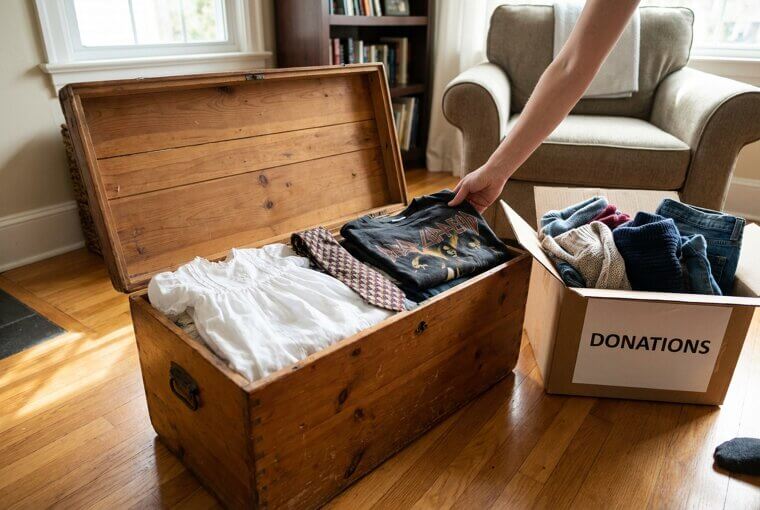
The one rule? It has to fit with the lid closed. No overflow, no exceptions. This forces you to keep only what matters most, and it frees every other inch for clothes you'll actually reach for tomorrow morning. But here's what catches most people off guard — even a perfectly organized closet can fall apart fast if you skip one critical step.
Not Involving Your Household In The System
You spent an entire Saturday afternoon perfecting your shared closet — every shelf labeled, every category zoned. Three weeks later, it looks like it was hit by a tornado. Sound familiar? This is the number-one reason closet makeovers fail, and it has nothing to do with your system. It has everything to do with who wasn't in the room when you built it. If your partner or kids don't understand where things belong and why, they'll default to old habits immediately.
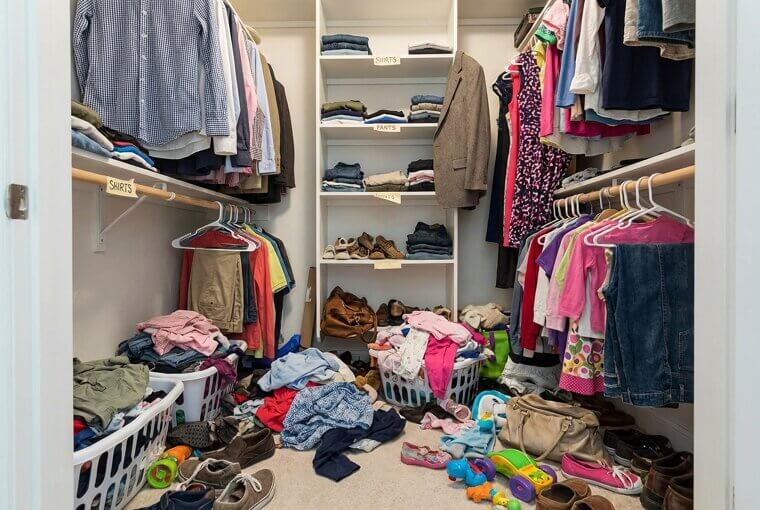
Professional organizers never skip this step — they always walk every household member through the finished system before calling the job complete. The fix isn't buying more bins or adding more labels. It's a fifteen-minute conversation. But even with everyone on board, systems drift without one simple maintenance habit.
A Ten-Minute Weekly Reset Prevents Chaos
Here's the habit that makes everything stick: pick one moment each week — Sunday while the laundry runs works perfectly — and set a timer for ten minutes. Walk through your closet returning anything that migrated from its zone. Re-fold the stacks that slouched. Straighten the hangers that shifted. And if you notice something you didn't reach for all week, drop it straight into a donation bag you keep on the closet floor.
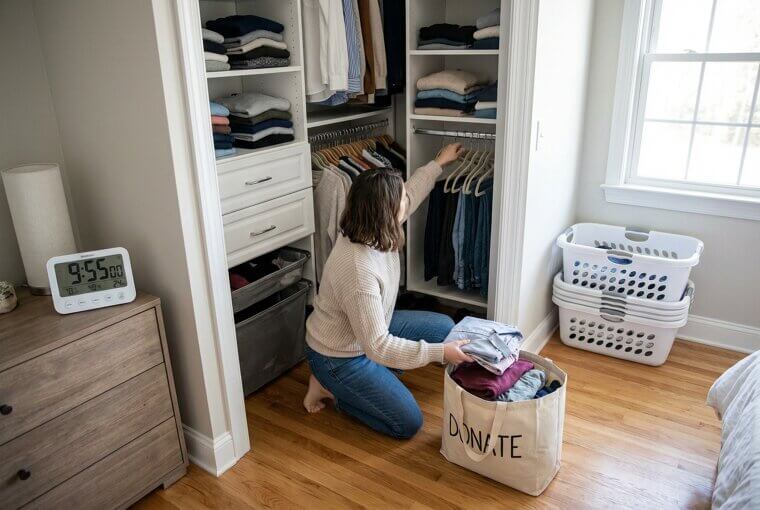
That's it. Ten minutes prevents the slow slide back into chaos that makes people feel like organizing was pointless. You're not reorganizing — you're maintaining. It's the difference between brushing your teeth and needing a filling. What you might not expect is how this tiny ritual quietly changes the way your entire morning feels.
Your Closet Affects Your Morning Mood
Think about this: the very first decision you make each morning happens in your closet. Research shows visual clutter raises cortisol — your body's stress hormone — before you've even had coffee. Every tangled hanger, every crammed shelf, every frantic search for a matching pair quietly tells your nervous system the day is already difficult. Now flip that picture. Imagine opening your closet to calm, order, and everything exactly where it belongs.
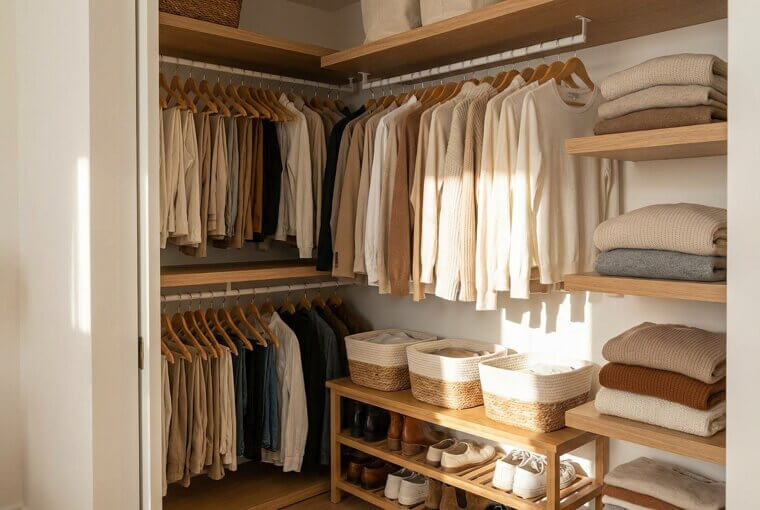
That exhale you just felt imagining it? That's real. An organized closet isn't a Pinterest fantasy — it's an act of daily self-care that shapes your mood before you walk out the door. And after everything you've read, you might be surprised how ready you already are to start.
You Already Know What Doesn't Belong
Remember that feeling from the very beginning — standing in front of your closet, convinced the space itself was the problem? You know better now. You know about the dead zones, the hangers, the emotional weight of clothes you've outgrown. You know what belongs on a shelf versus a rod, and why ten minutes on Sunday changes everything. That knowledge is already yours. You don't need to hire anyone. You don't need a renovation or a free weekend.
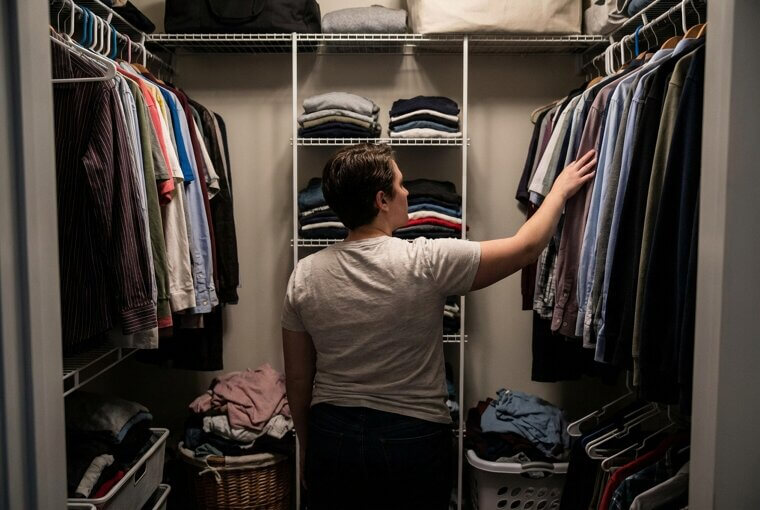
You just need to trust the list that's been quietly forming in your mind since you started reading. Every item that doesn't belong, every habit that needs shifting — you already see it. Now there's just one question left: where do you begin?
Start With One Shelf — Just One
Right here, right now — pick one shelf. Just one. Take everything off it. Touch each item and decide: does this stay, get donated, or belong somewhere else? Group what remains by category. Fold or stack neatly, three items high at most. If it's dark in there, stick on that ten-dollar light. Then step back and look at what you did.
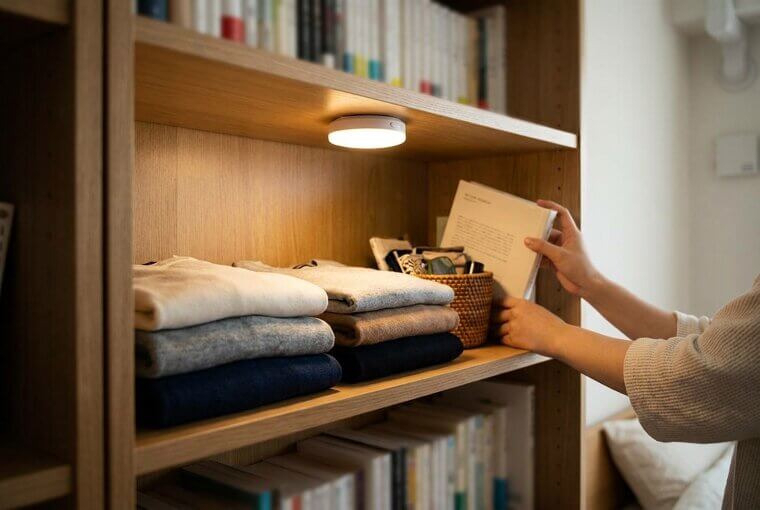
That single shelf is your proof. Proof that the whole closet is possible, that you already have everything you need to make it happen. Every beautifully organized closet in the world started exactly like this — with one shelf and one decision. Yours just started too.Disclaimer: This story is based on real events. However, some names, identifying details, timelines, and circumstances have been adjusted to protect the privacy of the individuals involved. The images in this article were created with AI and are illustrative only. They may include altered or fictionalized visual details for privacy and storytelling purposes