
You know that frustrating moment when a top you love somehow makes your midsection look wider than it actually is? Turns out, most people blame their body when the real problem is the clothing itself. This series breaks down the specific mistakes that are adding visual inches to your waist — and the easy swaps that fix everything.
That Shirt Isn't Doing You Favors
You've felt it before. You pull on a top you love, glance in the mirror, and somehow your midsection looks wider than it did ten seconds ago without the shirt. Most people immediately blame their body — maybe it's bloating, maybe it's weight gain. But here's what almost nobody considers: the clothing itself is creating that illusion. Certain cuts, fabrics, and fits can add visual inches to your waist that simply don't exist.
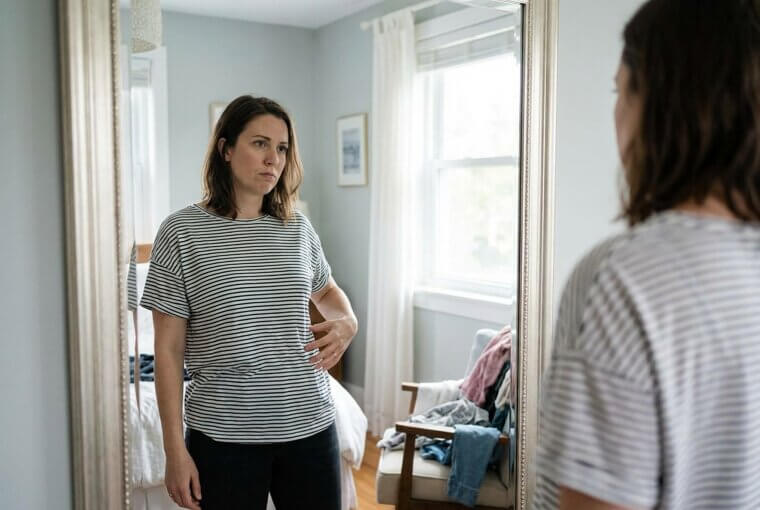
The good news? The reverse is also true. Small, strategic swaps in what you already own can reshape how your body appears — no gym required, no new wardrobe needed. It starts with understanding one surprisingly simple concept.
Why Boxy Tops Add Invisible Pounds
Here's the concept: waist definition. It's the single most important visual principle in getting dressed, and it'll come up again and again. Most people instinctively reach for loose, boxy tops when they want to hide their midsection. It feels logical — more fabric means more coverage. But shapeless tops don't hide your waist. They erase it entirely. When fabric hangs straight from your shoulders to your hips with no indication of a curve underneath, your body reads as one wide rectangle.
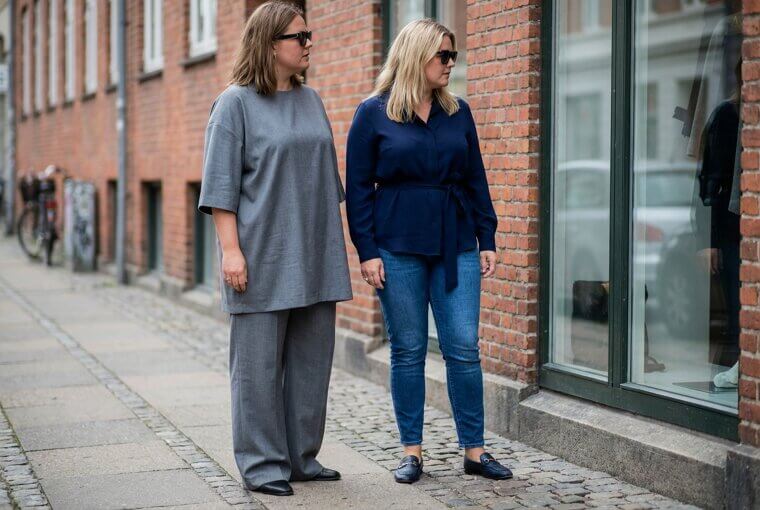
Think about it — you're replacing your natural shape with the shape of the garment. And a box is always wider than a waist. The fix isn't tighter clothing. It's clothing that acknowledges your waist exists. But color plays a sneaky role here too, and almost everyone gets it wrong.
The Color Mistake Almost Everyone Makes
You've heard it a million times: dark colors are slimming. So you grab a black top and call it done. But here's what that advice leaves out — it's not just about choosing dark colors, it's about where you place them. A bright white or pastel top draws the eye directly to your midsection and holds it there. Meanwhile, wearing head-to-toe black doesn't automatically fix things either. The real trick is strategic placement. When the darkest shade in your outfit sits right at the waist, it makes that area visually recede.

Lighter colors above or below your waist? Those areas come forward. Your eye reads contrast before it reads shape, so the color map of your outfit is quietly sculpting your silhouette every single day. But speaking of old style rules that need a serious update — let's talk about horizontal stripes.
Horizontal Stripes Aren't the Real Enemy
You've heard it your whole life: horizontal stripes make you look wider. But science disagrees. The Helmholtz illusion — studied by researchers since the 19th century — actually demonstrates that horizontal stripes can make a figure appear taller and narrower compared to vertical ones. Surprised? You should be. The real problem was never horizontal stripes themselves. It's stripe width and placement. Thick, bold stripes sitting directly across the widest part of your torso will expand that area visually.
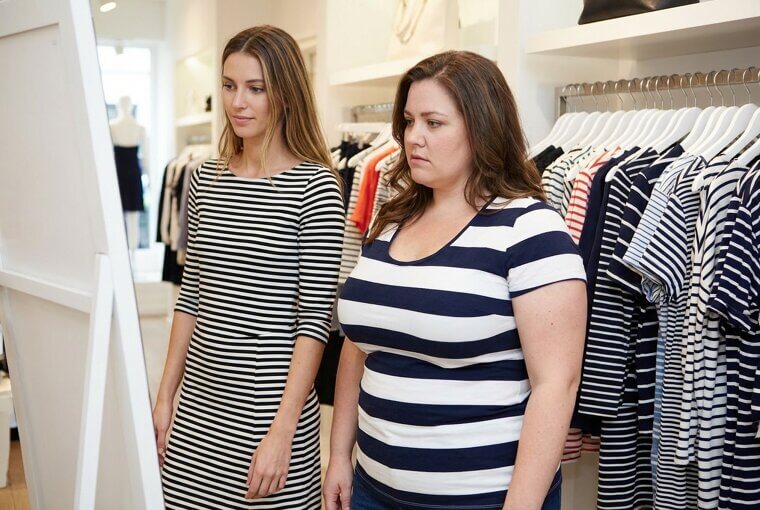
But thin, evenly spaced horizontal stripes across a fitted garment? They can actually work in your favor. So before you purge every striped top from your closet, know this — where your pants sit on your body might matter far more than any pattern you're wearing.
Where Your Pants Sit Changes Everything
Here's something you can try right now. Stand in front of a mirror and place your hand flat at your belly button. That's where most low-rise and mid-rise pants sit — cutting directly across the widest, softest part of your midsection. Now move your hand about two inches higher. Feel that narrower spot where your torso naturally dips inward? That's your natural waist, and that's where a true high-rise waistband belongs.
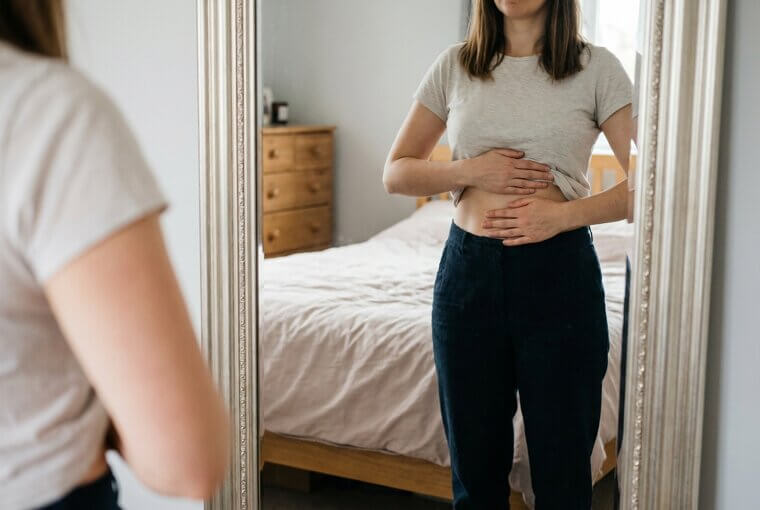
The difference is immediate. High-rise pants contain and smooth the lower belly while creating a longer, leaner line from hip to chest. Try this test with pants you already own — you'll see exactly which ones are working against you. Now, what you do with the top you tuck into those pants? That's where stylists have a move most people have never been taught.
The Tucking Trick Stylists Swear By
Every stylist knows this move. Instead of tucking your entire shirt in — which can pull fabric tight and emphasize every curve — or leaving it fully untucked, which erases your waist completely, do the French tuck. Just tuck the front center of your top into your waistband and let the sides and back hang free. That single fold creates a vertical line that points directly at your narrowest spot. Your eye follows it like an arrow. It's the reason stylists do this on nearly every client before a photo is taken.
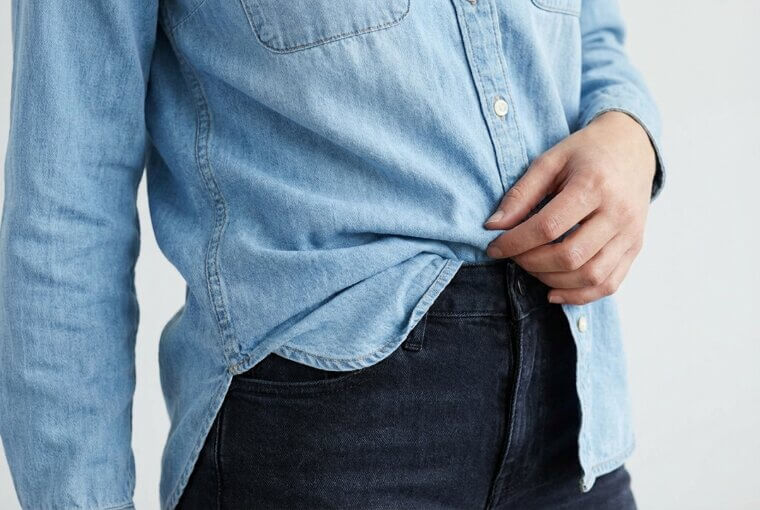
The French tuck also gives you something unexpected — it makes casual outfits look intentional without feeling overdone. You're not fighting the fabric; you're guiding it. But here's something most people never consider: the fabric itself might be undermining everything you just learned.
Stiff Fabrics Are Secretly Working Against You
Here's what nobody tells you at the store: that thick, structured denim jacket you bought because it felt "substantial" is adding visual bulk to your frame. Stiff fabrics — heavy cotton, rigid polyester blends, unlined canvas — don't follow your body's natural curves. They project outward from whatever they touch, creating a boxy shell that sits inches away from your actual waist. You're essentially wearing armor where you want softness. Mid-weight fabrics with gentle drape — think ponte knit, tencel, soft chambray — skim past your curves instead of broadcasting them.
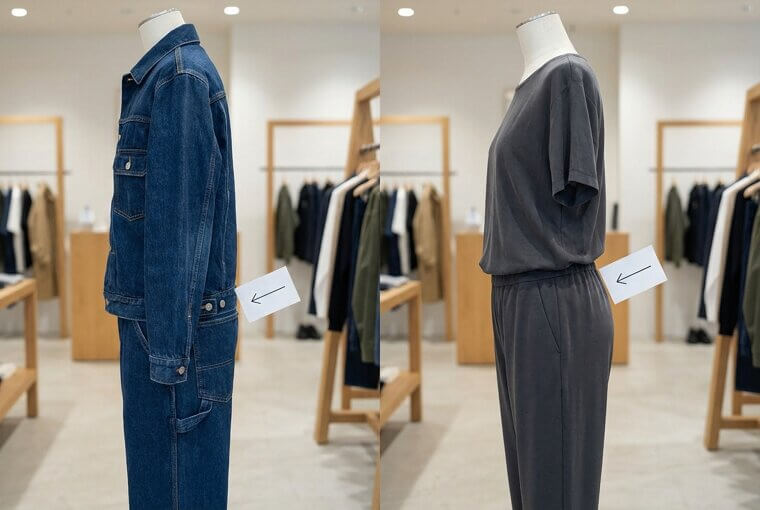
The irony? Many people equate stiffness with quality and choose these fabrics deliberately, never realizing they're trading a slimmer silhouette for a more expensive-looking one. And speaking of accessories that quietly add inches — when's the last time you really looked at what your belt is doing?
Your Belt Might Be Adding Inches
That belt you're cinching tight? It might be the reason your waist looks wider. When a wide belt presses into soft midsection fabric, it doesn't define your waist — it creates two bulges, one above and one below. That's the muffin effect, and it adds visual inches exactly where you're trying to lose them. The problem isn't belts themselves. It's width, placement, and pressure. A thick belt squeezing your middle compresses soft tissue outward in both directions.
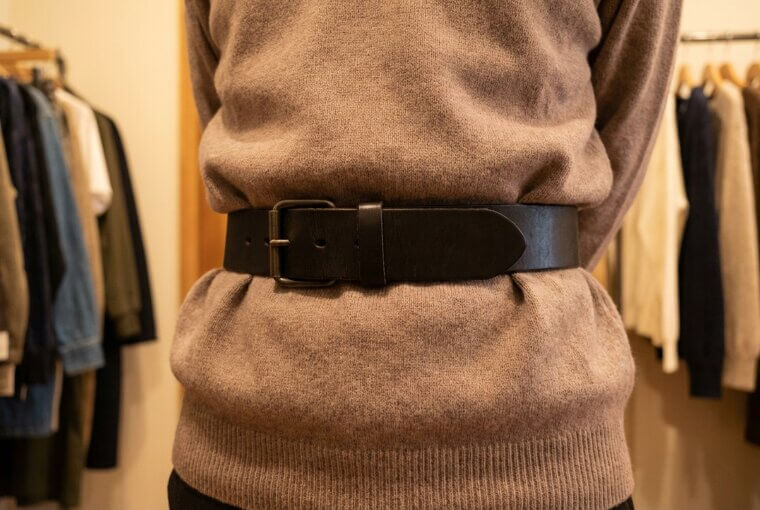
Swap it for a thin belt positioned precisely at your natural waist — that narrow point we keep coming back to. The goal is definition, not compression. Interior-waistband belts work even better, creating shape without any visible squeeze. Now imagine pairing that clean waistline with one simple color trick that makes your whole body look longer.
Monochrome Outfits Have a Hidden Power
Here's your simplest win yet. Dressing in one color family from head to toe creates a single unbroken vertical line — and your eye reads that line as height, not width. No contrast band cutting across your middle means nothing interrupts the flow. Your torso looks longer, your waist looks narrower, and you didn't buy a single new thing. The rule is easy: pick one color tone and vary the shade slightly between top and bottom. Navy shirt with dark indigo jeans. Olive top with forest green pants.
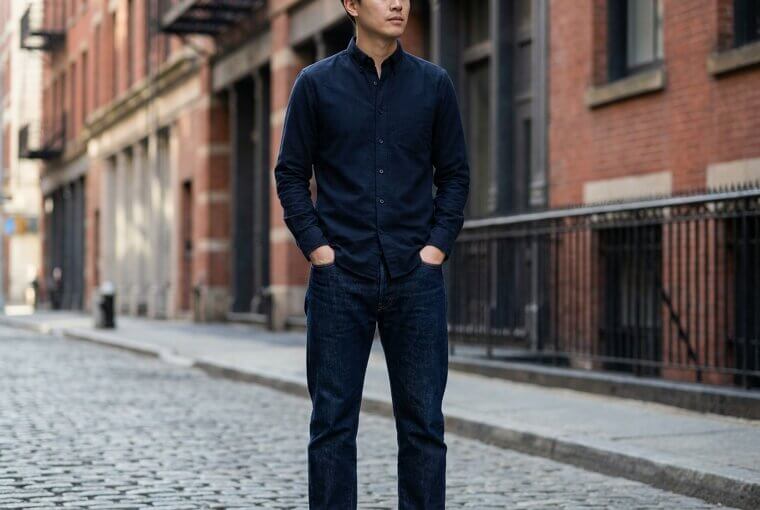
Camel sweater with tan trousers. That subtle tonal shift keeps the outfit interesting without breaking the vertical column. Try it tomorrow morning — you'll see the difference before you leave the mirror. But even this trick can be undone by one dress cut that's been lying to women for decades.
The Deadly Mistake With Empire Waistlines
Empire waistlines were sold as the great equalizer — flattering on every body, perfect for every occasion. The reality? That seam sitting just below your bust lets every inch of fabric below it fall straight down with zero structure. For anyone carrying even a little weight through the midsection, the result is a tent-like drape that can add the illusion of an entire clothing size. You're not being hugged at the waist. You're being draped from the chest down, and your body disappears behind a curtain of fabric.
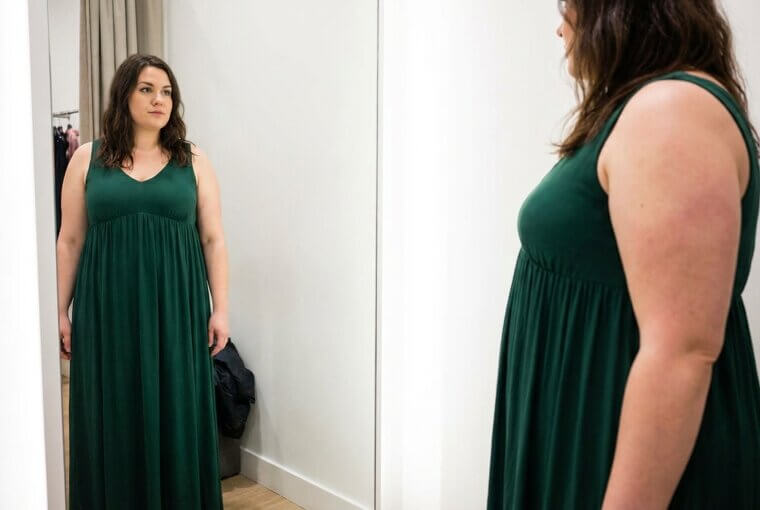
Think about how many empire-cut tops and dresses have cycled through your closet over the years — each one quietly working against you while the label promised otherwise. That's years of well-intentioned choices doing the opposite of what you wanted. But what if the fix isn't just about your clothes' waistline — it's about your shoulders?
How Shoulder Fit Reshapes Your Middle
Here's what tailors check before they even look at your waist: your shoulders. When shoulder seams fall just one inch too wide, the fabric drapes outward and creates a boxy frame that makes everything below look proportionally wider. Too narrow, and the fabric pulls and bunches, adding tension lines that draw the eye straight to your midsection. Professionals know that shoulder fit is the anchor point for your entire silhouette. Get it right, and the eye naturally travels inward toward a defined waist. Get it wrong, and no amount of tucking or color strategy fully compensates.
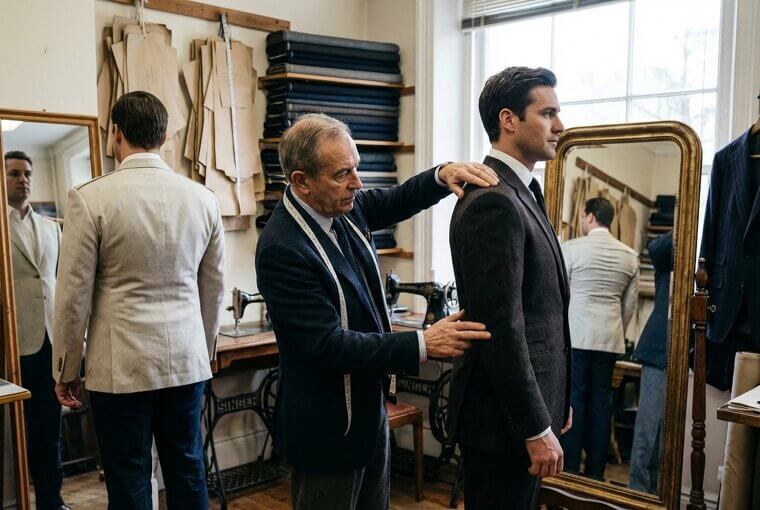
Next time you're trying something on, check the shoulder seam first — it should sit exactly where your shoulder rounds downward into your arm. That single checkpoint changes everything downstream. And speaking of what your eye does with clothing, there's a pattern mistake that's actively magnifying the area you're trying to minimize.
That Pattern Is Working Against Your Shape
That bold floral you grabbed because it felt like a fun distraction? It's actually making your midsection look bigger. Large-scale prints — oversized flowers, big geometric shapes, wide paisleys — visually expand whatever surface they cover. Your eye groups the large repeating elements together and reads the area as wider than it actually is. It's the same principle from the color-placement lesson: your clothing is directing attention, and big prints are shouting "look right here" at the exact spot you wanted to downplay.
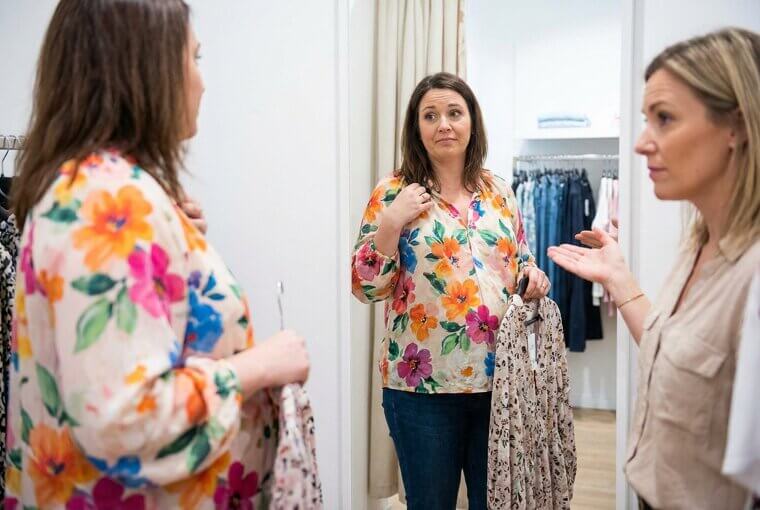
Smaller, more dispersed patterns work differently. They let the eye move quickly across the surface without anchoring to one wide area. Vertical-oriented prints — think elongated florals, pinstripes, or diagonal repeats — actively slim. Next time you're drawn to a statement print, ask yourself: is this pattern working for my shape, or just against the hanger? Because the next mistake compounds this one — and it happens every single winter.
Why Layering Wrong Adds a Whole Size
Every bulky layer you stack adds roughly half an inch of visual width on each side of your torso. That thick henley under a chunky cardigan under a puffy vest? You've just added two inches of perceived width — enough to jump a full clothing size in how you look. Each layer compounds the one beneath it, pushing fabric further from your body and erasing any trace of your natural waist. If you've spent entire winters layering like this, you've been carrying a size that isn't yours for months at a time.
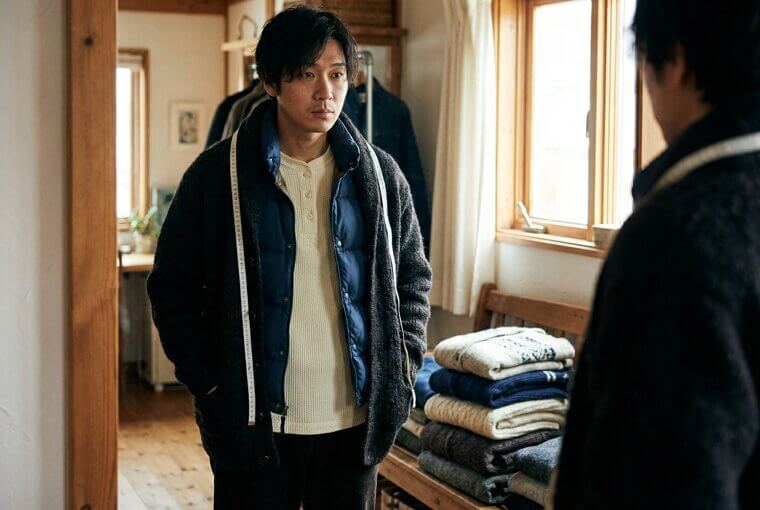
Strategic layering flips the effect completely. A fitted, dark base layer recedes against your body while an open jacket or cardigan creates two vertical lines that frame your torso inward. The difference is dramatic — and it costs nothing to rearrange. But how do you know if your current outfit is actually working before you walk out the door?
The Simple Mirror Test That Changes Outfits
Here's your new morning ritual — it takes thirty seconds. Before you leave the house, turn sideways in the mirror. Look at where the fabric breaks away from your body. Now ask yourself one question: can I see my waist? If the answer is no, you have three instant fixes. Adjust your tuck to create a waist anchor point. Swap a bulky outer layer for something that skims closer. Or add a single defining element — a thin belt, an open jacket, a strategic color break.
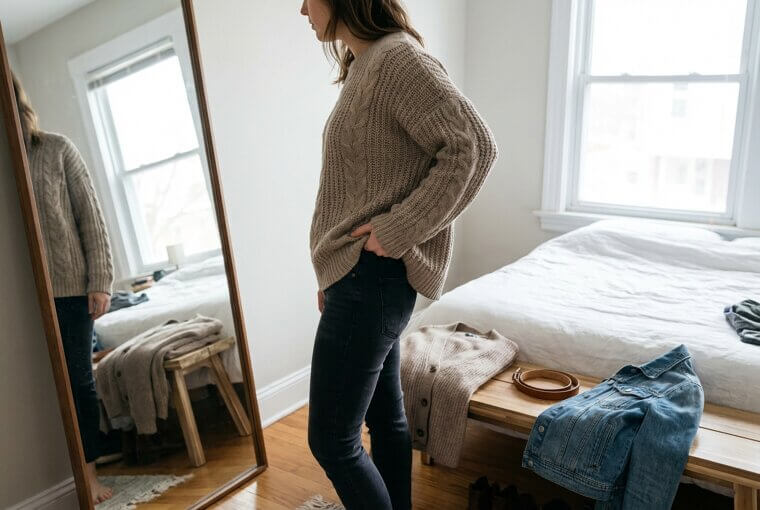
That's it. Sideways glance, one question, one adjustment. Do this every morning and you'll start catching mistakes you never noticed before. It turns every lesson in this article into a daily habit. And one garment style passes this mirror test almost every single time.
Wrap Styles Do What No Other Cut Can
Stylists call the wrap silhouette their secret weapon, and here's why nothing else competes. When fabric crosses diagonally across your torso, it creates a slimming line that no straight-cut garment can replicate. The wrap cinches at your exact natural waist — not where a designer guessed it would be — because you control the tension. Meanwhile, the V-neckline formed at the chest elongates your entire upper body, making your torso appear longer and leaner.
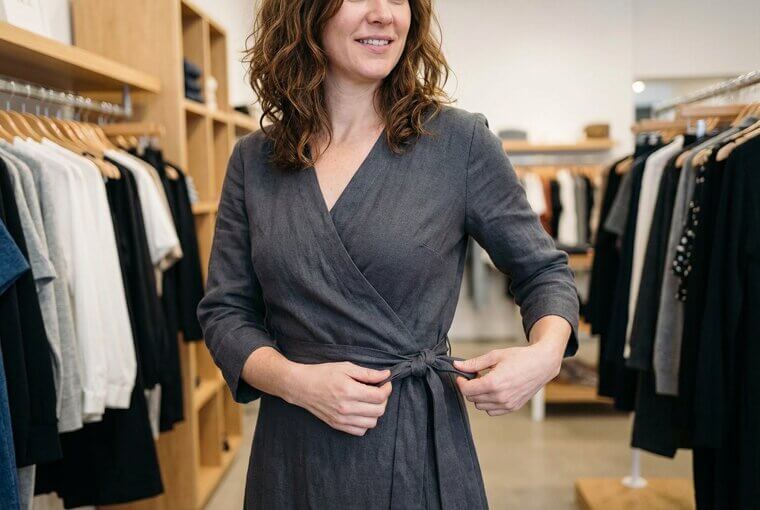
What makes wraps truly special is adaptability. They adjust to your body rather than forcing you into a predetermined shape. Size 4 or size 24, age 25 or 65, casual brunch or evening out — the mechanics work every time. But even the perfect wrap can be undermined by something you might not expect: your neckline choices on everything else.
Your Neckline Is Framing Your Waist Wrong
Here's something most people have never considered: your neckline is quietly reshaping your waist. A crew neck or high round collar creates a visual ceiling right at your collarbone, compressing everything below it. Your torso looks shorter, your midsection looks squeezed together, and your waist pays the price for a design choice happening eight inches above it. Switch to a V-neck or scoop neck and the effect reverses instantly. That open space at the chest draws the eye downward along a longer line, stretching the perceived distance between your shoulders and your waist.

The result? Your midsection appears leaner without changing a single thing below the chest. Think about that next time you're reaching for a basic tee — the collar shape alone could be adding or subtracting visual inches from your middle. And yet even the most flattering neckline can't fix what's happening underneath your clothes.
The Undergarment Mistake Sabotaging Everything
You could nail every tip in this article — the right neckline, the perfect tuck, the ideal colors — and still look heavier than you are. The culprit? What's underneath. A bra band riding up because it's too loose creates a ridge visible through every top. Underwear that's a size too small cuts into hip flesh, producing bulges that outer fabric drapes right over. Shapewear squeezed too tight doesn't smooth — it displaces, pushing tissue up and down to create new rolls that didn't exist before you got dressed.
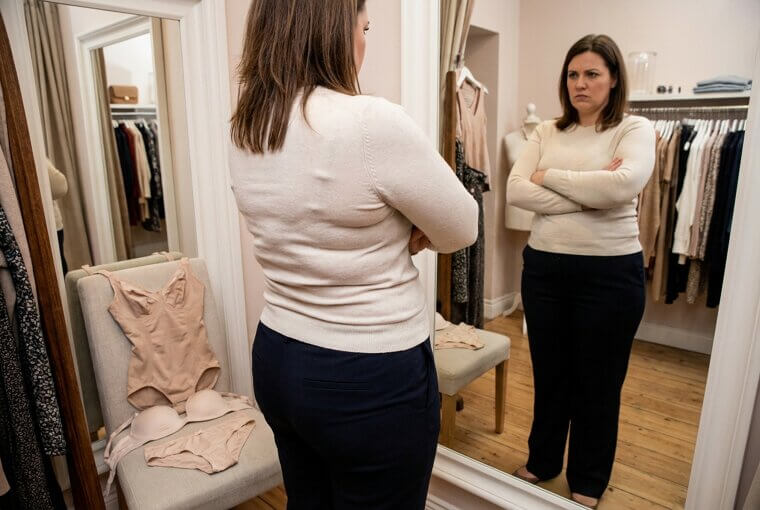
Studies show roughly 80% of women wear the wrong bra size. That means most readers right now have a foundation problem silently undermining every outfit they own. You're investing in flattering clothes while the real issue remains invisible beneath them. The good news? We'll revisit modern shapewear solutions later. But first, let's talk about the one item nearly everyone owns and almost nobody buys correctly — jeans.
How Professionals Pick the Right Jeans
When stylists shop for jeans, they follow a checklist most people never consider. First, the rise — as we covered earlier, high-rise is essential, but professionals specifically want the waistband hitting at least one inch above the belly button, not just near it. Second, they check the stretch content: 2-4% elastane creates smooth draping without sagging. Third, they insist on a dark, uniform wash. Those faded whisker marks radiating across the front belly area? They highlight the exact spot you want to minimize.
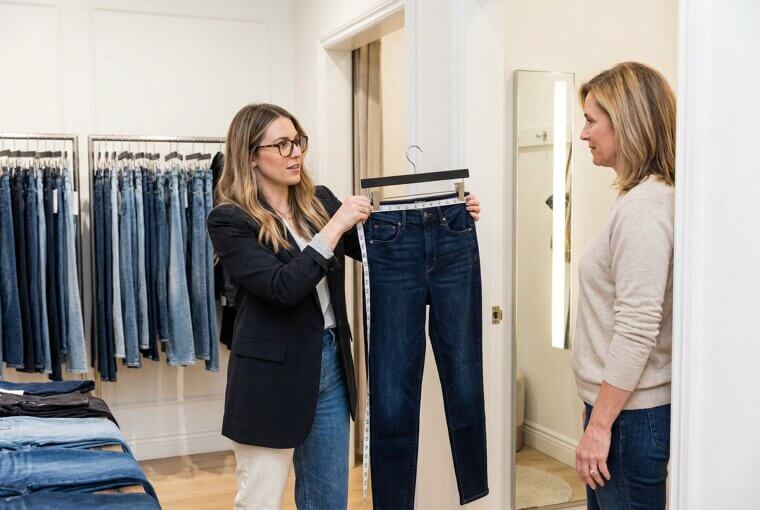
Finally, the leg shape matters more than you'd think. Straight or bootcut legs create visual balance by adding width at the hem, which proportionally narrows how your waist reads. Skinny jeans do the opposite, funneling all attention upward. Next time you're in a fitting room, you'll know exactly what to reach for — and what to leave behind. But here's a pairing trick that amplifies everything jeans can do.
Cropped Tops Aren't Just for Young People
Here's a style rule worth breaking: cropped tops aren't reserved for twenty-somethings. Before you scroll past, we're not talking about baring your midriff. A top that ends right at your natural waist — not three inches above it — paired with high-rise pants creates one of the most powerful waist-defining silhouettes in fashion. No skin shows. The waistband meets the hem, and suddenly your body has a clear, defined midpoint.

The magic is proportion, not exposure. That precise meeting point between top and bottom tells the eye exactly where your waist lives. Have you dismissed this entire category of clothing because of a number on your driver's license? You might be skipping the most effective trick in your closet. And speaking of built-in tricks, some garments do the slimming work without you lifting a finger.
Vertical Seams Do the Work For You
Here's your simplest shopping hack: next time you pick up a top, dress, or jacket, run your finger straight down the front of the garment. Feel for vertical seam lines — raised ridges running from chest to hem. These are princess seams, center-front seams, or vertical panels, and they're doing something powerful. Each line creates a visual pathway that draws the eye up and down, narrowing how your torso reads instantly.
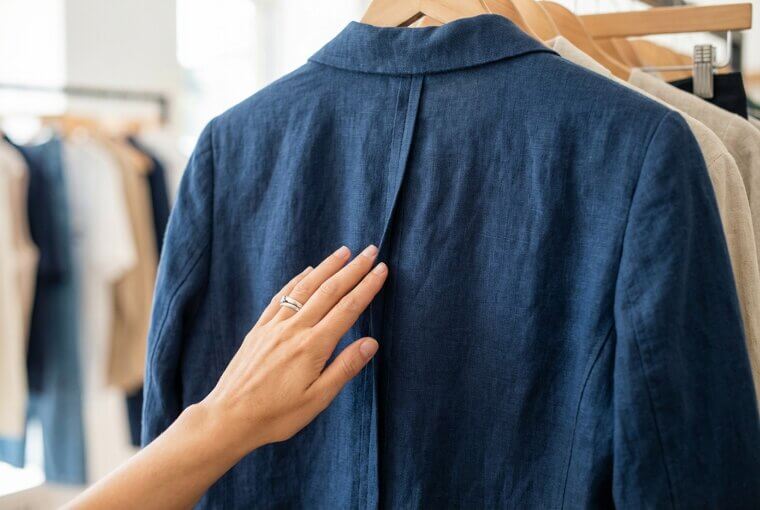
You don't need to style anything differently or learn a new tucking method. The garment's construction does the slimming automatically. Look for at least two vertical seams flanking the center front — that's the sweet spot. But even perfectly seamed clothing falls apart if your jacket hits at the wrong length.
The Jacket Length That Erases Your Waist
Here's a costly mistake hiding in plain sight: that jacket ending right at your widest hip point is drawing a bold horizontal line across the broadest part of your body. It's like underlining the one area you'd rather not emphasize. This is arguably the most common outerwear error — and you probably own three or four jackets at exactly this length. Every time you zip one up, it visually merges your waist and hips into one wide block, erasing any definition above.
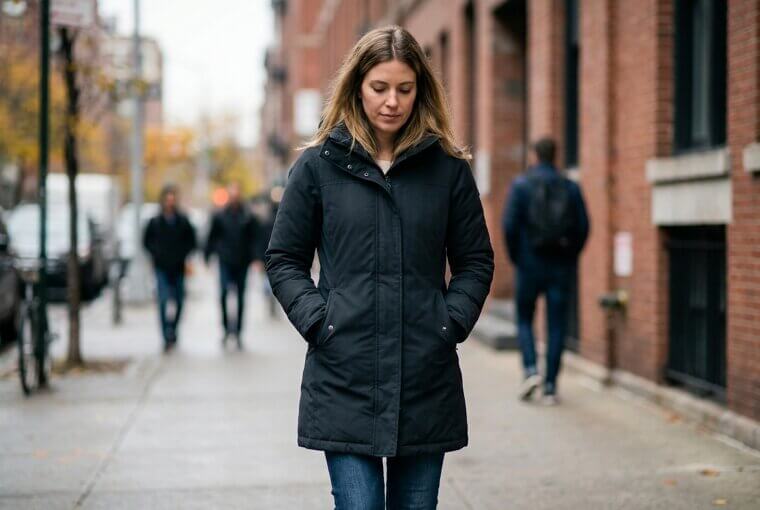
The fix involves two safe zones. Jackets ending at your natural waist preserve your shape. Jackets falling to mid-thigh bypass the danger area entirely by elongating your silhouette. Think about your go-to jacket right now — where does it hit? But length is only half the equation. What you do above the waist can dramatically reshape everything below it.
How Adding Volume Up Top Slims Below
Here's what stylists know that most people get backwards: instead of minimizing everything, they strategically add volume at the shoulders. A structured blazer shoulder, a subtle puff sleeve, or even a bold statement necklace widens the upper frame just enough to make the waist look dramatically narrower by contrast. It's proportional balancing — the same principle architects use to make doorways feel grand. Your instinct says shrink everywhere, but professionals do the opposite up top.
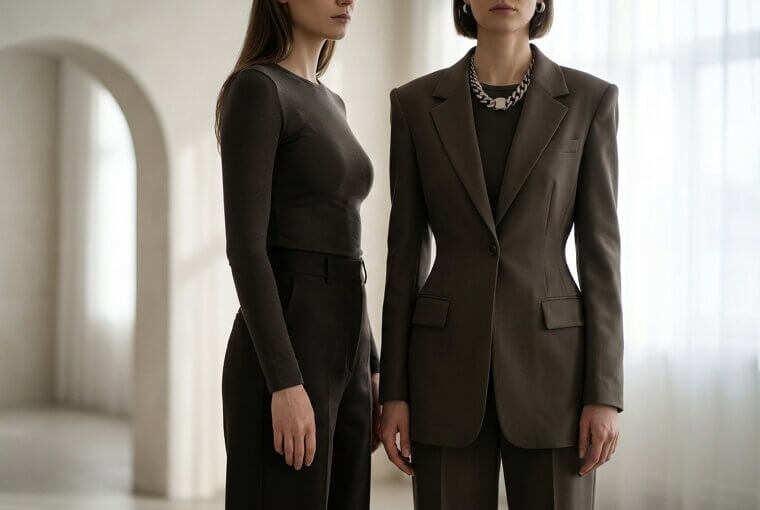
Think of it like an inverted triangle: broader shoulders naturally taper the eye downward toward a smaller middle. Even something as simple as a boat neckline shifts the widest visual point away from your midsection and onto your shoulders. It's a subtle move with outsized results — and it pairs beautifully with the right foundation underneath everything.
Shapewear You'll Actually Want to Wear
Remember when shapewear meant barely breathing through dinner? Those days are over. Modern options use seamless, breathable microfiber with graduated compression — firmer at the waist, gentler everywhere else. No tourniquet tightness, no visible edges under clothing. Here's your shopping framework: look for pieces that start just below the bra band and extend past the hip bone. That full coverage zone eliminates the bulges we talked about in Chapter 17 — no rolling, no cutting in, no creating new problem lines.
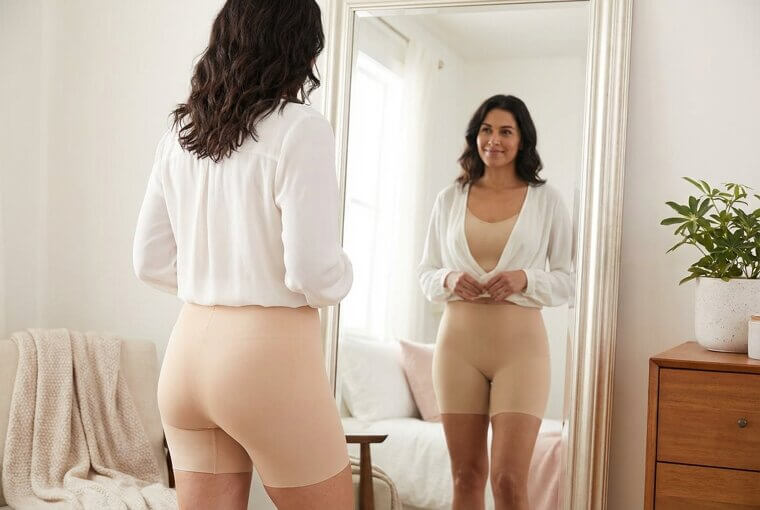
Choose mid-compression over maximum. You should be able to slide a finger under the waistband comfortably. If you can't, size up — too-tight shapewear creates the exact lumps you're trying to smooth. Order one nude-to-you piece today and wear it under your most challenging outfit this week. But here's something that costs absolutely nothing and changes your silhouette just as dramatically.
Why Your Posture Changes Your Clothes' Shape
You could follow every tip in this article perfectly and still lose the effect by slouching. Here's the reveal: when your spine curves forward, it physically pushes your belly outward, collapses your natural waistline, and causes fabric to bunch and pull horizontally across your midsection. That carefully chosen wrap top? It loses its diagonal line. Those vertical seams? They warp sideways. One slouch undoes thousands of style decisions simultaneously.
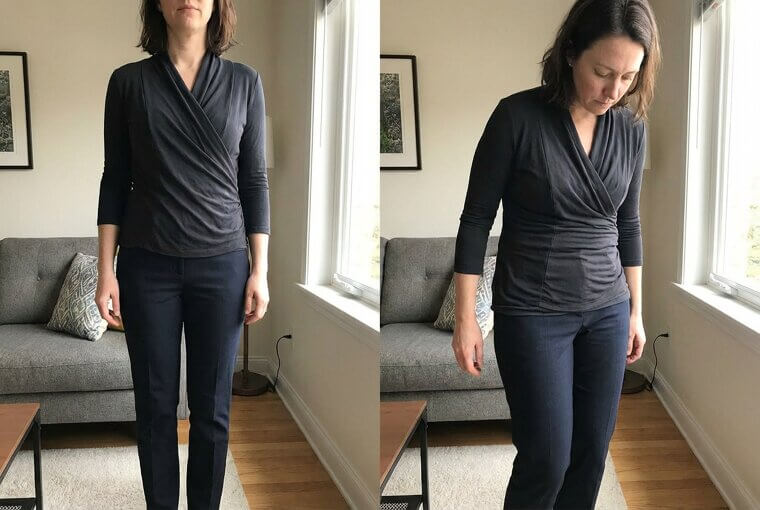
Now stand tall — shoulders back, spine long — and watch what happens. The same clothing suddenly drapes the way it was designed to. Your waist reappears. No purchase, no tailor, no mirror trick. Just awareness. And when you combine that awareness with a smart color strategy, the visual effect multiplies.
The Color-Block Strategy That Actually Works
Here's your three-piece formula — grab these from your closet tonight. First, a dark top in black, navy, or charcoal. Second, a lighter open jacket or cardigan — cream, light gray, blush. Third, lighter bottoms that echo the jacket's tone family. When you layer that open jacket over the dark top, the lighter sides frame your midsection inward like parentheses, while the dark center recedes. Your eye reads the narrowest visible line as the waist.
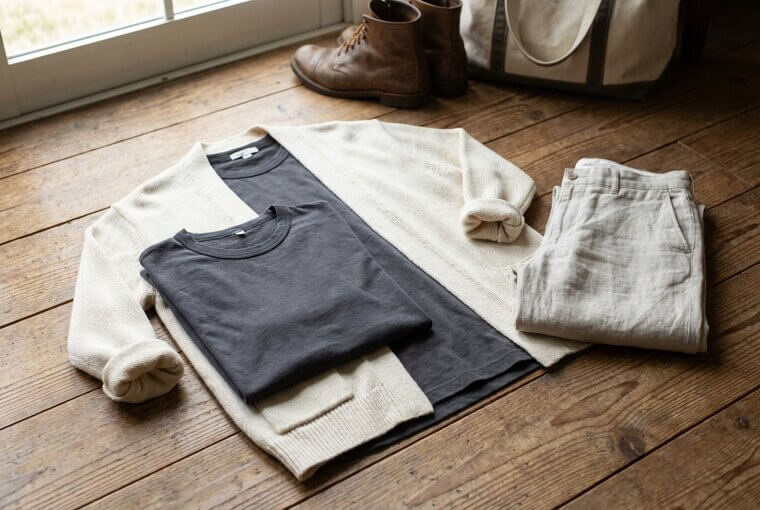
This combines everything we covered about color placement and monochrome flow into one deliberate outfit. No shopping required — just rearranging what you already own with intention. And speaking of intention, there's one tiny professional secret that could make your favorite pieces fit even better without buying anything new.
One Small Detail Tailors Always Fix First
Here's what happens when a tailor evaluates any garment: before checking length, before touching the hem, they look at where the waist seam sits relative to your actual natural waist. That's it. That's the first move every single time. Because even a half-inch discrepancy between where the garment thinks your waist is and where it actually lives changes the entire silhouette. A quick side-seam adjustment or a repositioned dart can make a fifteen-dollar thrift store find look like it was made for your body.
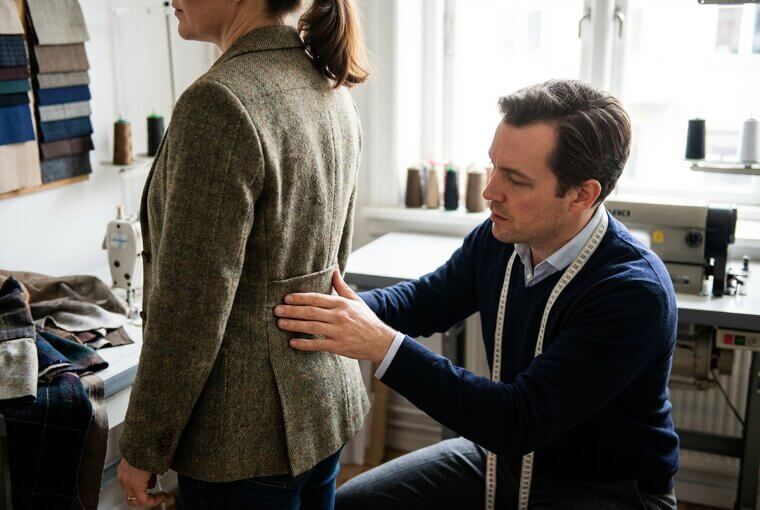
You don't need to tailor everything — just pick one or two pieces you reach for most. A blazer, a favorite dress. Expect to spend fifteen to thirty dollars per piece, and you'll get back a garment that finally flatters instead of approximates. But what happens when your body itself changes over time and those old reliable cuts stop working?
The Mistake That Gets Worse With Age
Here's the reality nobody talks about: after 50, your body redistributes weight toward the midsection regardless of diet or exercise. It's hormonal, it's natural, and it happens to nearly everyone. The mistake isn't the changing body — it's reaching for the same straight-cut tops, the same mid-rise jeans, the same boxy jackets that worked fifteen years ago. Those cuts were designed for a different shape. Wearing them now doesn't preserve your old look; it highlights exactly what shifted.
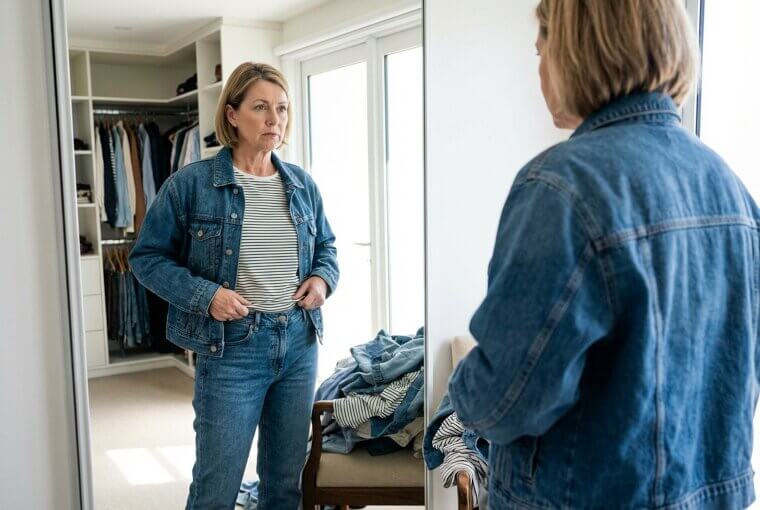
Every strategy in this article — waist definition, proper rise, fabric draping, strategic color placement — becomes more critical with each passing year, not less. This isn't about surrendering your style. It's about evolving it with the same confidence that makes someone truly magnetic. And confidence? That's exactly what separates people who look great from people who simply look dressed.
What Confident People Do Differently With Clothes
Here's something you've probably noticed without realizing it. That person who always looks put together? They're not necessarily thinner than you. They haven't discovered some secret store. They've simply stopped fighting their body and started listening to it. They know where their waist is. They know which fabrics love their shape. They reach for clothes that say "I know exactly who I am" instead of "I wish I were someone else." That quiet intention — not the price tag, not the size — is what you actually see when someone walks into a room and looks amazing.

You've spent 27 sections building exactly that knowledge. You understand proportion, color, draping, and fit better than most people ever will. Now it's time to put it all into action — and it'll only take five minutes.
Your Five-Minute Closet Audit Starts Now
Go to your closet right now and pull out five tops you wear most often. Lay them on your bed. For each one, ask three questions. First: does it show where my waist is, or does it hide it completely? Second: do the shoulder seams sit right at the edge of my shoulders — not drooping, not pulling? Third: where does the hem hit — at my natural waist, at my widest hip point, or somewhere more flattering?
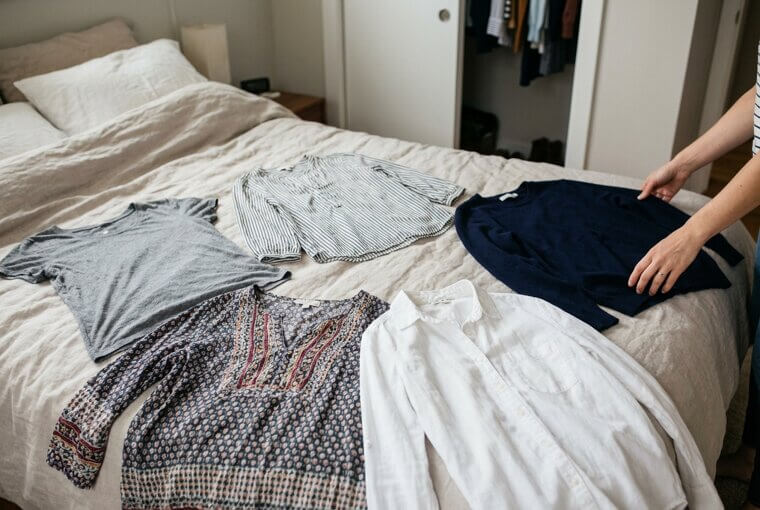
Be honest with each top. It either earns a keep, gets flagged for a fifteen-dollar tailor visit, or goes in the donate pile. Five tops, three questions, five minutes. You just applied everything you've learned. And the best part? Your smartest outfit might already be among the survivors.
You Already Own Your Best Outfit
Here's the truth you can carry with you tomorrow morning: you don't need to spend a single dollar to look slimmer. Everything you need is already hanging in your closet. That front tuck you learned transforms a shapeless top in two seconds. That sideways mirror check catches what used to slip past you. That simple act of standing taller reshapes every piece of fabric on your body instantly. You walked into this article thinking you needed new clothes.
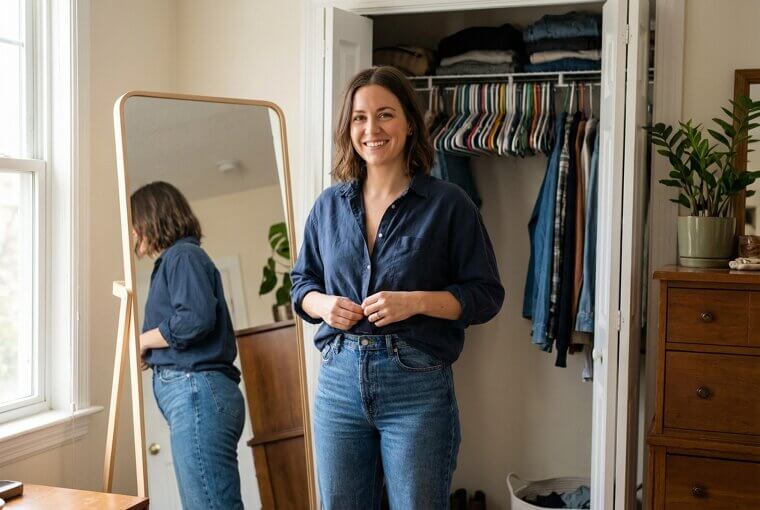
You're walking out knowing you just needed new eyes. Go get dressed tomorrow with everything you now know — and really look at yourself. You're going to love what you see.Disclaimer: This story is based on real events. However, some names, identifying details, timelines, and circumstances have been adjusted to protect the privacy of the individuals involved. The images in this article were created with AI and are illustrative only. They may include altered or fictionalized visual details for privacy and storytelling purposes