
That breakfast you've had for years — the toast, the cereal, the glass of juice — might be quietly speeding up how fast your body ages after 60. Not in dramatic ways. In subtle ones you feel every morning. I dug into the research, and what I found changed how I stock my own kitchen.
Your Breakfast Is Aging You
You've done it a thousand times — toast with jam, a bowl of cereal, maybe a blueberry muffin with your coffee. It feels harmless. It's what breakfast has always looked like. But after 60, these everyday foods quietly trigger something inside your body that most people never connect to aging. Every time your blood sugar spikes — and these breakfast staples send it soaring — a hidden process kicks in that stiffens your skin, drains your energy, and inflames your joints.

It's not dramatic. It's gradual. That's what makes it so easy to miss. The connection between what's on your plate and how fast you're aging is stronger than most doctors ever mention. And it starts with a mechanism called glycation.
Why Aging Speeds Up After 60
You already know your body doesn't recover like it used to. A late night hits harder, a pulled muscle lingers longer, a cut takes its sweet time healing. That's not just how it feels — it's what's actually happening at the cellular level. After 60, your cells repair themselves more slowly, collagen production drops significantly, and your metabolism becomes less forgiving of dietary mistakes. Foods your body could shrug off at 40 now leave a lasting mark.
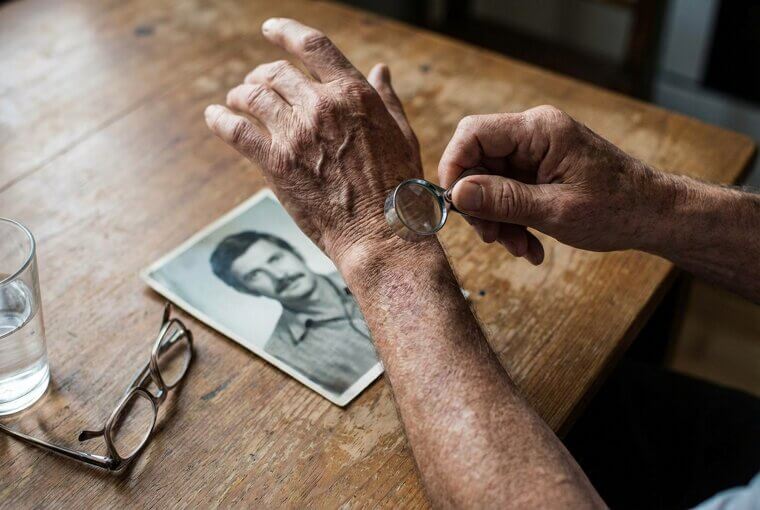
But here's the part most people miss: underneath nearly every aging symptom you notice — the stiffness, the fatigue, the foggy mornings — there's a quiet engine driving it all. It's called chronic inflammation, and the foods fueling it might surprise you.
Sugar Does More Than Add Pounds
You already know sugar isn't great for you. But after 60, it's doing something far more specific than adding weight. When excess sugar floods your bloodstream — remember those breakfast spikes from section one — it latches onto proteins like collagen and elastin through a process called glycation. Think of it like caramelizing. Those proteins become stiff and brittle instead of flexible and resilient. That's not a metaphor. It's literally what's happening beneath your skin every time blood sugar surges.
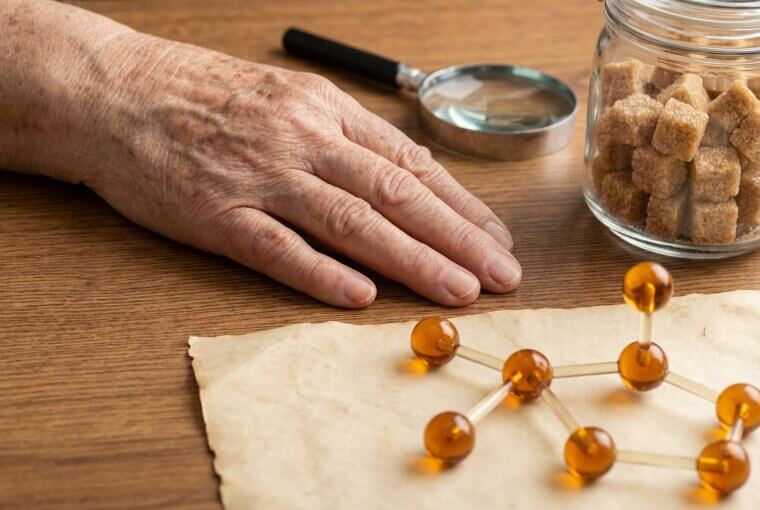
That spoonful in your morning coffee, the honey in your tea, the jam on your toast — each one contributes to this slow stiffening from the inside out. Your wrinkles aren't just from sun exposure. Many of them started at the breakfast table. And speaking of that table — there's one staple sitting on your counter that spikes blood sugar faster than sugar itself.
The Bread On Your Counter
Here's something most people don't believe until they see the data: white bread spikes your blood sugar faster than a tablespoon of straight table sugar. It sounds impossible, but refined flour has been so heavily processed that your body treats it like pre-digested starch. The moment it hits your stomach, it floods your bloodstream with glucose almost instantly. Remember the glycation process from the last section — sugar molecules latching onto your collagen, stiffening everything from the inside out?
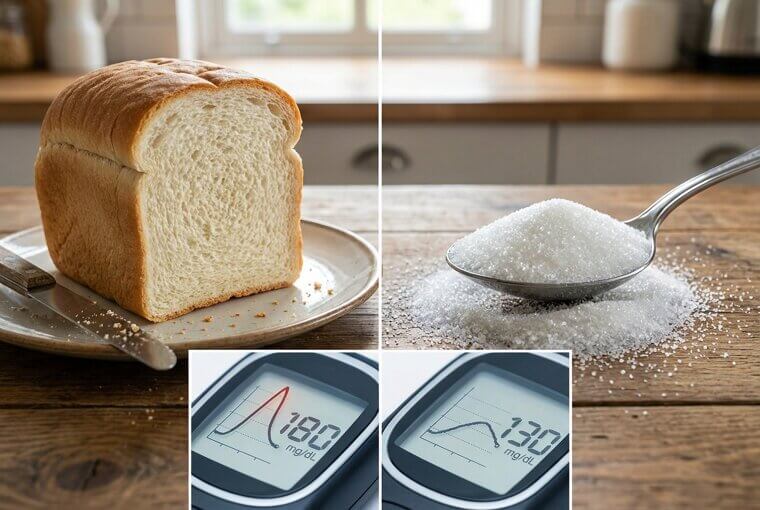
That slice of white bread on your counter is doing exactly that, possibly even more aggressively than the sugar bowl sitting next to it. A pattern is forming here, and it's worth paying attention to — especially because the fix is surprisingly simple.
A Simple Swap That Actually Helps
Here's your first easy win. Swap that white bread for sourdough or sprouted grain bread — you can find Ezekiel 4:9 brand in nearly every grocery store's freezer section. The difference isn't just marketing. Sourdough's natural fermentation process partially breaks down the starches before they ever reach your bloodstream, resulting in a significantly lower blood sugar response. Sprouted grain breads work similarly — the germination process converts starches into more digestible forms.

For aging bodies already struggling with glucose processing, this one swap can meaningfully reduce the glycation damage we talked about. Same sandwich, dramatically less harm. Now, about that margarine you might be spreading on it — there's a story you need to hear.
Margarine's Quiet Comeback Problem
Remember when your doctor told you to ditch butter for margarine? You listened. Millions of us did. And while the worst offenders — trans fats — were officially banned in 2018, the story didn't end there. Most margarines and spreads reformulated using soybean, corn, and sunflower oils. These are loaded with omega-6 fatty acids, which in excess trigger the exact chronic inflammation we discussed earlier — the kind that quietly degrades your joints, your skin, and your brain.
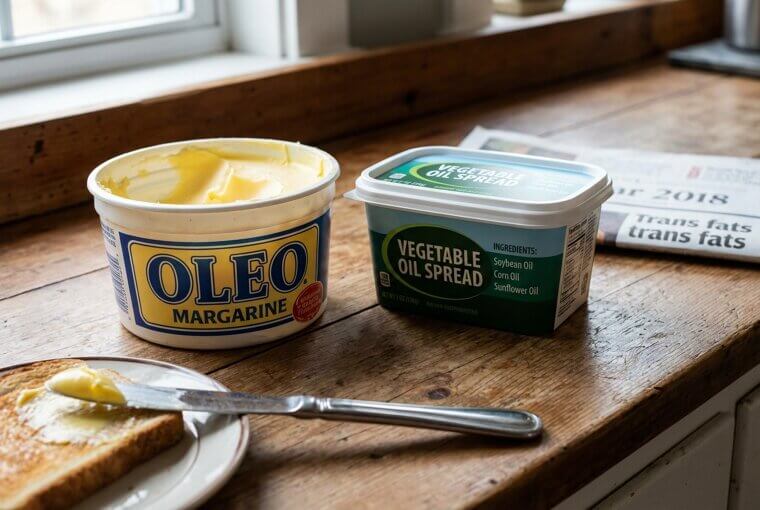
So you followed the advice, made the switch in good faith, and may have been fueling the very problem you were trying to prevent. It's a frustrating realization. But here's what matters now: understanding what that inflammation is actually doing inside your body — because the symptoms might surprise you.
What Inflammation Actually Does Inside You
You know that morning stiffness that takes twenty minutes to walk off? The brain fog that settles in by 2 PM? Fatigue that eight hours of sleep somehow doesn't fix? That's chronic low-grade inflammation — and it's not a buzzword. It's your immune system stuck in a slow-burning alarm state, triggered in part by the foods we've been discussing. This constant inflammatory response damages joint cartilage, impairs blood flow to your brain, and breaks down the tiny blood vessels under your skin — which is why you bruise from barely bumping a counter.

These aren't separate problems with separate causes. They're connected, and they're diet-driven. If you've been blaming age alone for how you feel, think about what you're drinking — because your afternoon diet soda might be making things worse than you'd ever guess.
Diet Soda Isn't The Safe Choice
Here's a finding that stings: a University of California study discovered that people who drank diet soda daily had telomeres as short as those of smokers. Telomeres are the protective caps on your chromosomes — when they shorten, your cells age faster. That "healthier" swap you made years ago may have been quietly accelerating your biological clock. And it doesn't stop there. Artificial sweeteners like aspartame and sucralose disrupt your gut microbiome, killing off beneficial bacteria that regulate inflammation and immune function.

Worse, research shows these sweeteners actually increase sugar cravings — your brain tastes sweetness, gets no calories, and demands more. It's a cycle that undermines everything you were trying to accomplish. So what should you reach for instead? The alternatives are simpler and more satisfying than you'd think.
What To Drink Instead (Easy List)
You don't have to love plain water. Here are drinks that actually taste good and fight aging at the same time. Sparkling water with a squeeze of lemon — refreshing and zero sugar. Cucumber-mint infused water — feels luxurious, takes two minutes. Black coffee — rich in antioxidants, perfectly fine for most people. And the real star: green tea, hot or iced. Green tea contains EGCG, a powerful compound shown to protect collagen and combat the oxidative stress we've been talking about.

Think of these as your new daily rotation. Small swap, real results — your cells will literally thank you. Now, let's talk about something sitting in your fridge right now that's doing more damage than diet soda ever could.
Processed Meats And Your Cells
That bacon with breakfast, that deli ham sandwich at lunch — here's what they're quietly doing inside you. Sodium nitrites, the preservatives that keep processed meats pink and fresh-looking, transform into compounds called nitrosamines once they hit your stomach. Nitrosamines cause oxidative DNA damage — meaning they physically chip away at the genetic instructions your cells rely on to repair and replicate correctly.
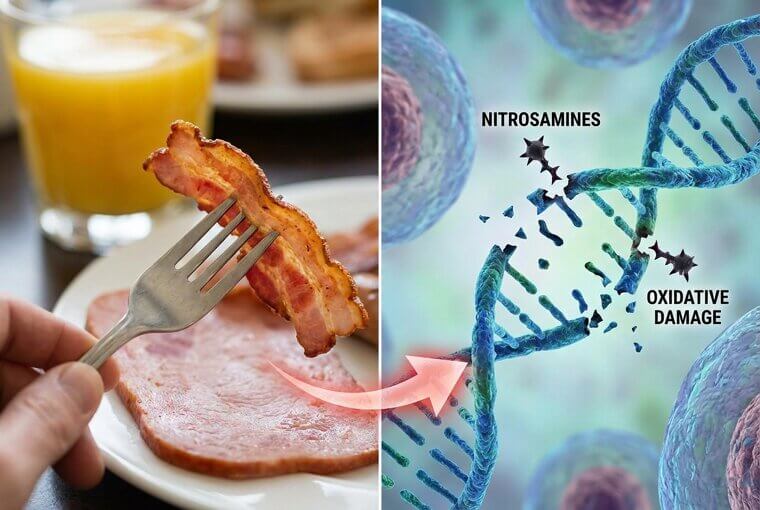
Every one of your 37 trillion cells carries a copy of your DNA. Each time you eat processed meat, you're increasing the error rate in that blueprint. Over years, the damage accumulates — cells age faster, repair slower, and function less reliably. But the next hidden threat isn't in your fridge. It's in your pantry, in almost everything.
The Vegetable Oil In Everything
Those "heart-healthy" vegetable oils your doctor recommended? They might be aging you from the inside out. Soybean oil, corn oil, and canola oil are packed with omega-6 fatty acids — and in excess, omega-6s pour gasoline on the chronic inflammation we talked about in section seven. The same inflammation behind your stiff mornings and foggy thinking. Here's what's truly stunning: these oils are in practically everything. Salad dressings, crackers, granola bars, frozen meals, restaurant fryers.
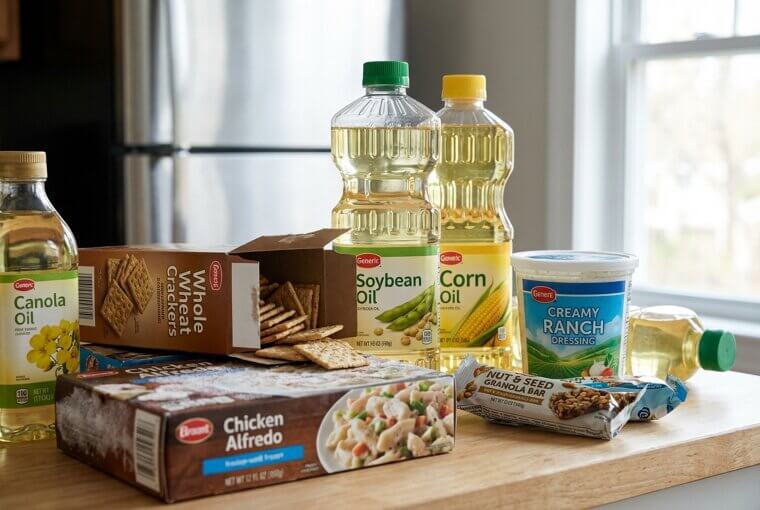
Try this right now — grab any package from your pantry and read the ingredients. You'll almost certainly find soybean or canola oil listed. They're inescapable unless you know what to reach for instead. And fortunately, the better options are just as affordable and easy to find.
Better Oils That Fight Aging
Here's your kitchen swap — do it tonight. Use extra virgin olive oil for salad dressings and gentle sautéing. Its polyphenols actively reduce inflammation and protect your blood vessels from the inside out. For high-heat cooking like stir-frying or searing, reach for avocado oil — it handles temperatures up to 500°F without breaking down into harmful compounds. And remember that margarine we talked about earlier? Replace it with real butter in moderation. Surprisingly, natural butter is far less inflammatory than those processed spreads you were told were healthier.
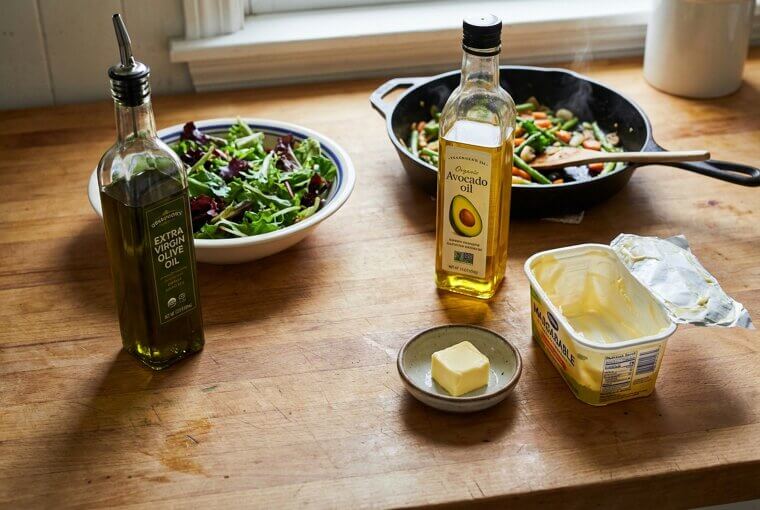
Three oils. That's it. Olive, avocado, butter. Put them on your counter, move the old bottles out. You've just eliminated one of the biggest daily sources of aging inflammation in your kitchen. But there's another "health food" betrayal waiting in your refrigerator — and this one might sting.
Yogurt Isn't Always Your Friend
That flavored yogurt you eat every afternoon thinking you're making a healthy choice? A single cup of strawberry yogurt from a popular brand packs over 25 grams of sugar. That's more than a chocolate donut. Let that land for a moment. You're spooning up what's essentially dessert while believing it's medicine. Remember glycation from earlier — where sugar cross-links your collagen, making skin stiff and wrinkled? That's happening every time you finish that cup.

Your "healthy snack" is literally bonding sugar molecules to the proteins holding your face together. The health food label is doing the heavy lifting here, not the yogurt. But here's the good news — there's a dead-simple way to read any yogurt label and spot the difference in five seconds.
How To Read A Yogurt Label
Next time you're in the dairy aisle, flip that yogurt container around and find three things. First, total sugars — you want six grams or less. Second, scan for "live active cultures" on the label, which means your gut actually benefits. Third, count the ingredients — fewer than five is ideal. Now grab plain Greek yogurt instead. It typically has 15 to 20 grams of protein per serving, which actively supports the muscle mass your body is quietly losing after 60.
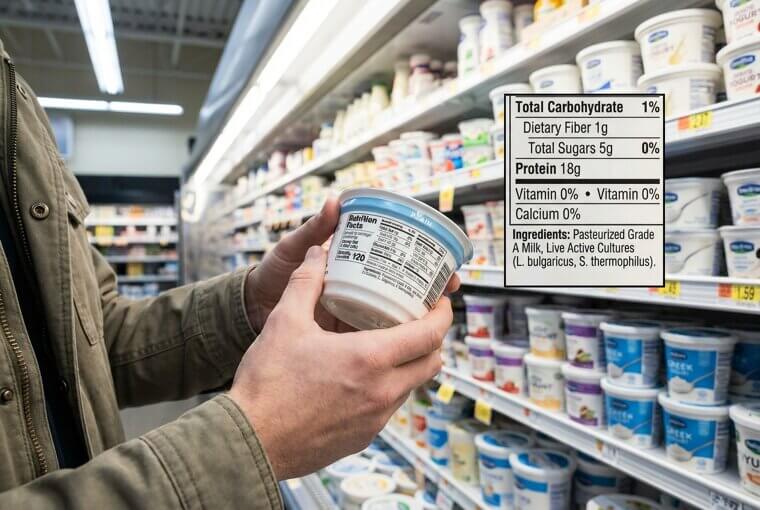
Top it yourself with fresh berries and a small drizzle of honey. You control the sweetness, you keep the protein, and you skip the hidden sugar bomb entirely. Speaking of sugar hiding where you'd never expect it — wait until you see what's really in your morning glass of orange juice.
Fruit Juice Is Not Fruit
That glass of orange juice you pour every morning? It contains roughly 36 grams of sugar — nearly identical to a can of Coca-Cola. When fruit becomes juice, manufacturers strip away the fiber that makes whole fruit healthy. Fiber acts as a natural brake, slowing sugar absorption so your body can handle it gradually. Remove that brake, and you're mainlining fructose straight into your bloodstream.
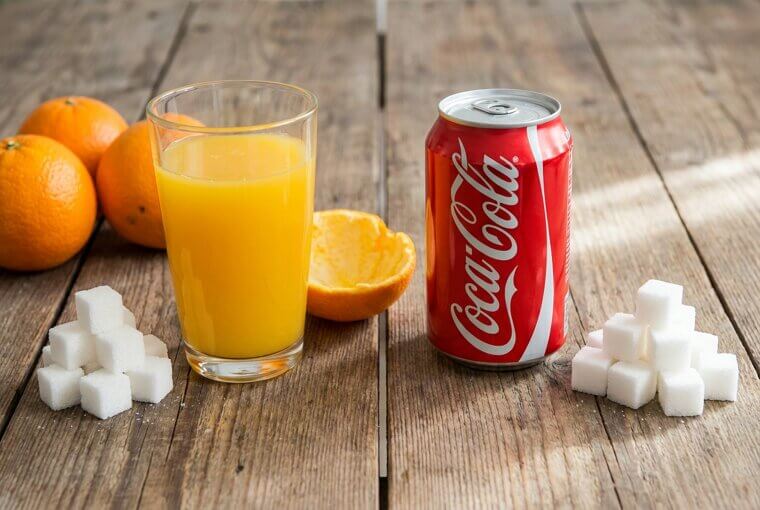
Remember that blood sugar spike we talked about in the very first section? Juice delivers one of the sharpest spikes possible — every single morning, compounding day after day, year after year. So what do doctors who study aging actually eat when they wake up?
What Doctors Eat For Breakfast Instead
Here's what longevity-focused physicians actually eat for breakfast. Geriatricians overwhelmingly favor eggs scrambled with spinach and tomatoes, avocado mashed on sprouted grain toast, or a small bowl of nuts paired with fresh berries. Notice the pattern — every option leads with protein and healthy fat. These two macronutrients stabilize your blood sugar for hours, preventing the sharp spikes that trigger glycation and the inflammation cascade we've been tracking throughout this article.
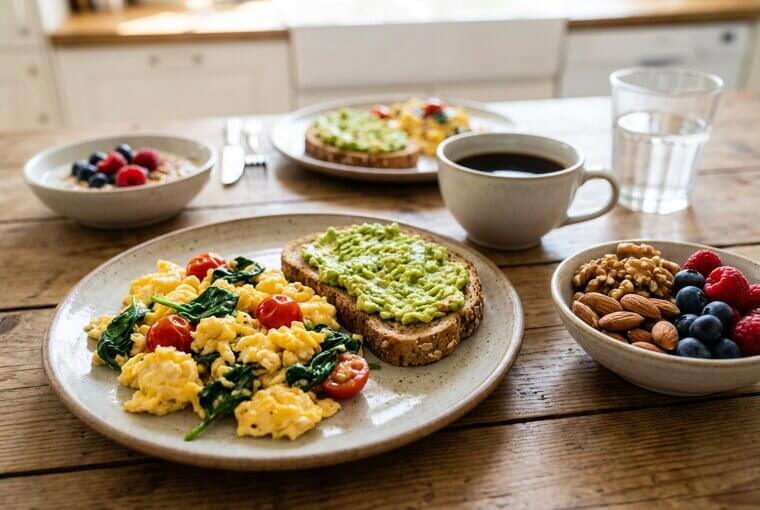
No cereal. No juice. No flavored yogurt. Just real food that keeps your body in repair mode instead of damage mode all morning. Think you're safe once you fire up the backyard grill? What's happening to your meat at high heat might surprise you.
Charred Meat Creates Aging Compounds
Remember glycation from earlier — sugar molecules attacking your collagen from the inside? Here's the twist: those exact same aging compounds form on the outside of your food. When meat hits a scorching grill and develops that blackened, crispy char, it generates massive amounts of advanced glycation end products, called AGEs. You're literally eating pre-formed aging compounds. They enter your bloodstream, settle into your tissues, and accumulate over years — stiffening joints, degrading skin elasticity, and hardening blood vessel walls.

The science converges in an uncomfortable place: sugar ages you from within, and charred meat ages you from without. Both pathways produce the same destructive molecules. But before you retire that grill forever, there's a surprisingly simple trick that cuts these compounds nearly in half.
The Safer Way To Grill
You don't have to give up the grill — just use this trick. Marinate your meat for at least an hour in something acidic: lemon juice, red wine vinegar, or a splash of dry wine. Studies show acidic marinades reduce AGE formation by up to 50 percent. Then lower your heat. Pull the meat off before it chars. Medium flame, shorter cooking time, still delicious.

Here's a bonus move: add fresh rosemary to your marinade. It contains carnosic acid, a natural AGE inhibitor that makes your food actively safer. Imagine grilling this weekend knowing every bite does less damage. Now — have you checked what's lurking inside your pantry?
Your Pantry's Hidden Age Accelerator
High-fructose corn syrup produces AGEs at ten times the rate of regular glucose. Ten times. And it's hiding in products you'd never suspect — ketchup, salad dressings, bread, canned soups, granola bars, even some "healthy" crackers. Pick up almost anything in your pantry right now and check the ingredients. There's a good chance you'll find it. This single ingredient activates both aging pathways we've been tracking: it supercharges glycation, cross-linking your collagen at an alarming rate, while simultaneously triggering the chronic inflammation that stiffens your joints and fogs your brain.
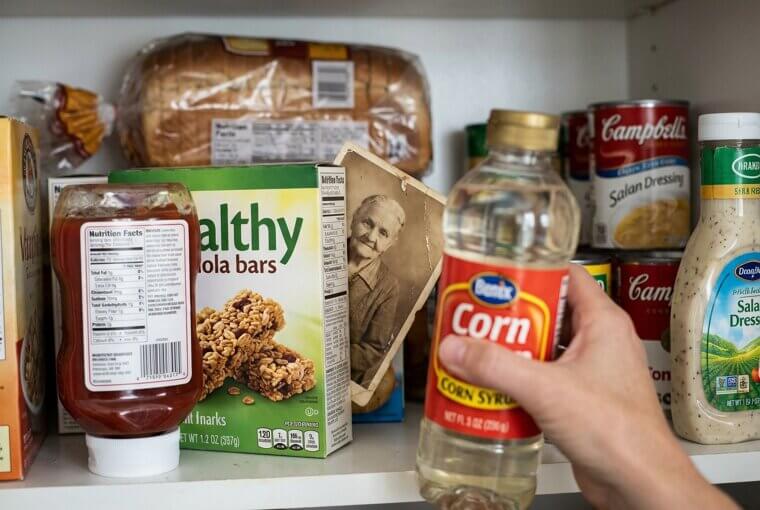
You've likely been consuming it daily for decades without a second thought. It's the place where every thread in this article converges — sugar damage and inflammatory damage, compounding silently in one ubiquitous ingredient. And it's not alone. The next thing aging your body is something you probably reach for at every single meal.
Excess Salt And Your Skin
You already know salt raises blood pressure. But here's what nobody talks about: excess sodium pulls water directly out of your skin cells, collapsing the hydration that keeps your face looking full and smooth. That puffiness under your eyes every morning? Sodium-driven fluid redistribution. Those wrinkles that seem deeper than they did last year? Dehydrated collagen loses its structure faster, cracking and folding like leather left in the sun.
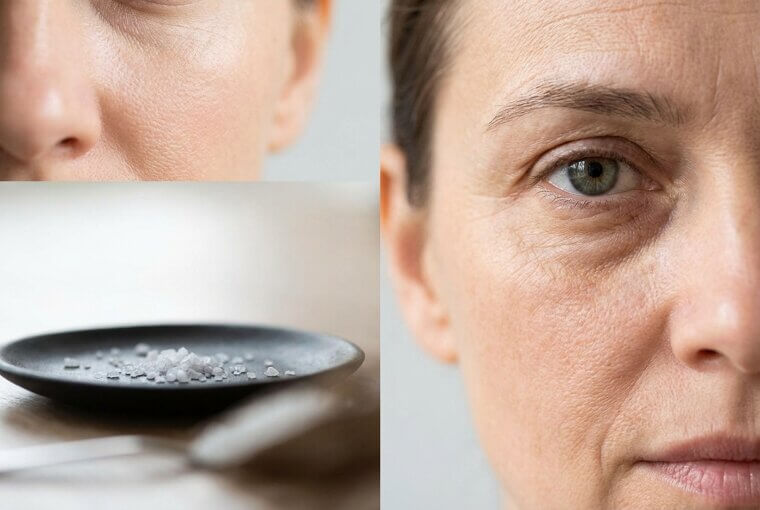
If you rely on canned soups, frozen dinners, or heavy seasoning, you're watching the consequences every time you look in the mirror. This isn't about your heart — it's about looking ten years older than you should. And those convenient frozen meals? They're far worse than you think.
Frozen Dinners Are Sodium Bombs
Nutritionists who specialize in senior health say frozen dinners are the single most common source of hidden sodium in their patients' diets. One frozen meal routinely packs 800 to 1,400 milligrams of sodium — that's half to nearly all of your recommended daily intake in one sitting. Registered dietitians report that when patients eliminate frozen dinners, fluid retention drops noticeably within days and inflammatory markers often improve within weeks.
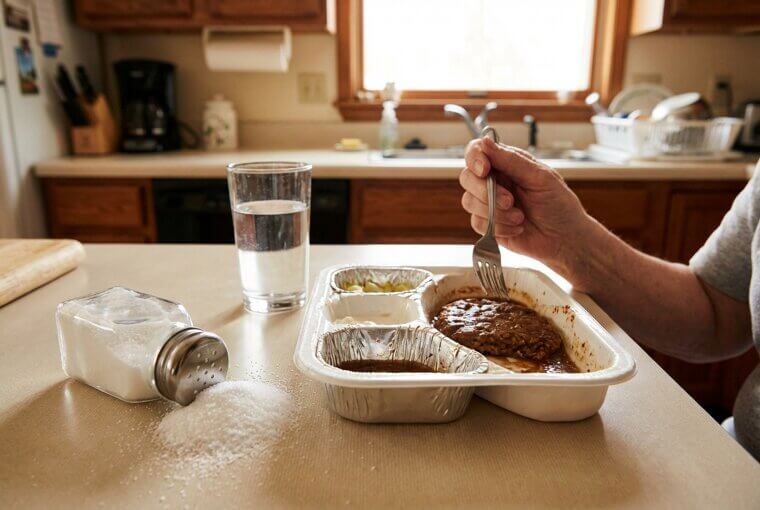
The industry uses sodium as a cheap preservative and flavor enhancer, which means convenience comes at a measurable biological cost. If these meals are a regular part of your routine, your body is absorbing that price quietly. But there are frozen options that don't do this.
Frozen Meals Worth Buying Instead
Here's your frozen meal checklist: sodium under 500 milligrams, an ingredient list you can actually read, and vegetables listed as the first or second ingredient. Look for brands like Amy's Light in Sodium, Saffron Road, or anything carrying the American Heart Association's heart-check mark. If the ingredient list reads like a chemistry textbook, put it back. Even better — spend one Sunday afternoon batch-cooking a simple soup or casserole and freezing individual portions yourself. You control every ingredient, and it takes less time than you'd think.
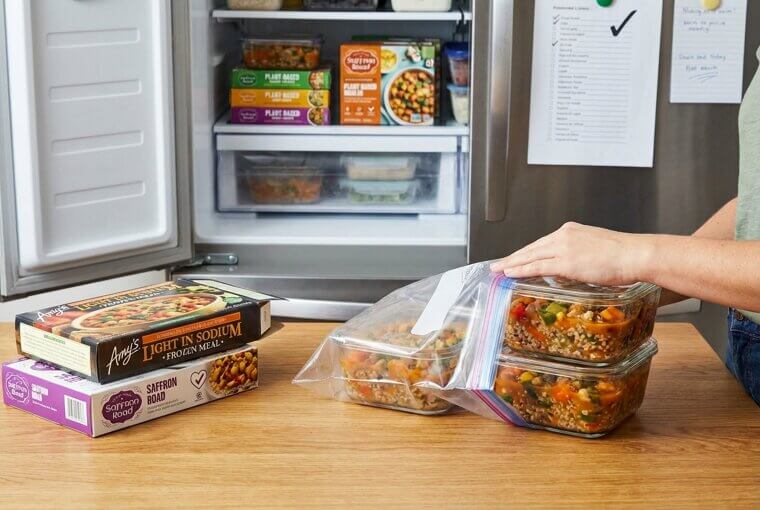
Your homemade frozen meals will beat any store option on sodium, preservatives, and nutrition — and they'll actually taste like real food. Convenience doesn't have to mean compromise. But there's another thing millions of people over 60 enjoy daily that quietly accelerates aging — and it comes in a wine glass.
Alcohol After 60 Hits Different
Here's the uncomfortable truth: after 60, your liver processes alcohol up to 50% slower than it did at 40. That nightly glass of wine lingers in your system longer, stoking inflammation and pulling moisture from your skin while you sleep. Worse, even moderate alcohol disrupts deep sleep architecture — the exact phase when your body repairs damaged cells and produces collagen. No deep sleep means no repair. And that "one glass of red wine is healthy" advice? Emerging research from major institutions now suggests any amount of alcohol accelerates biological aging markers.

Think about that — a ritual millions cherish may be quietly undermining the very vitality they're trying to protect. But what's actually happening inside your cells when aging accelerates? The answer involves tiny structures you've probably heard of but never fully understood.
The Telomere Connection Explained
Remember the telomeres we mentioned with diet soda? Here's what experts actually focus on. Telomeres are protective caps on your chromosomes — think of the plastic tips on shoelaces. Every time a cell divides, they get slightly shorter. When they get too short, cells stop functioning properly. That's biological aging at the molecular level. Here's the critical part: research from the University of California shows that diets high in sugar, processed meat, and inflammatory oils accelerate telomere shortening significantly.

But the reverse is also true. Omega-3s, antioxidants, and fiber actively slow the shortening process. This means every food choice described in this article connects to one measurable thing — the length of your telomeres. So what specific foods actually protect them?
Five Foods That Actually Slow Aging
Here's your anti-aging shopping list — five foods that directly fight the mechanisms we've been discussing. Blueberries: their anthocyanins shield your DNA from oxidative damage, helping protect those precious telomeres. Wild salmon: omega-3 fatty acids actively cool the chronic inflammation behind your stiff joints and brain fog. Leafy greens like spinach and kale: folate fuels the cell repair your body desperately needs after 60. Walnuts: packed with polyphenols that neutralize the oxidative stress caused by every aging accelerator in this article.
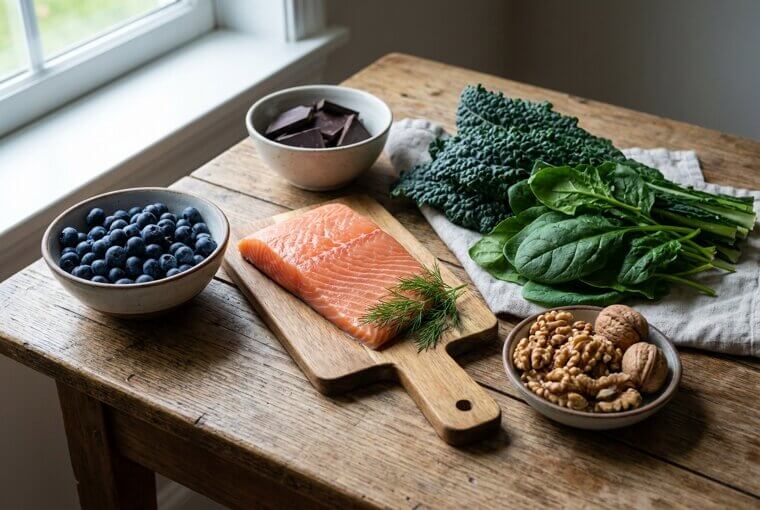
And sweet potatoes: beta-carotene protects skin from the inside out, counteracting the collagen damage from glycation and sun exposure. Five foods, five powerful defenses. Now let's turn this knowledge into a simple plan you can start this week.
The One-Week Kitchen Reset
You don't need to overhaul your kitchen overnight. Here's your week-one plan: swap your cooking oil to extra virgin olive oil or avocado oil — that single change reduces inflammatory omega-6s immediately. Next, pick one sugary item you eat daily — flavored yogurt, juice, sweetened coffee — and replace it with a whole-food alternative. Finally, add one anti-aging food from that shopping list each day. Blueberries on Monday, salmon on Tuesday — keep it simple.
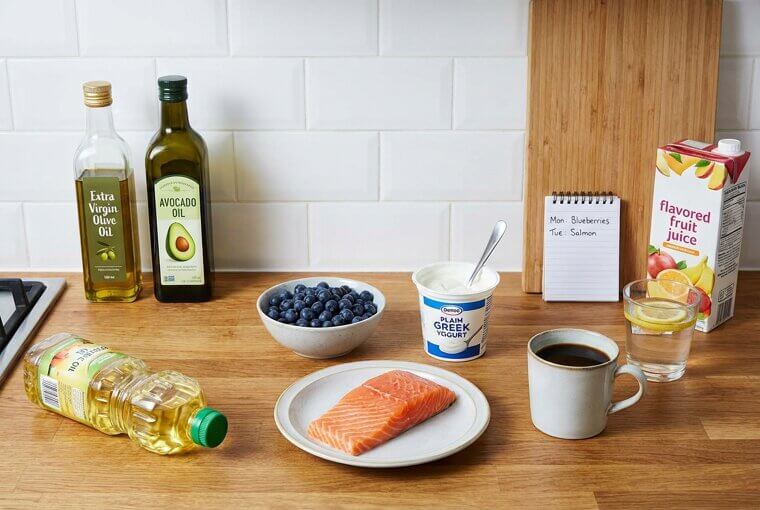
That's three small moves. Research shows measurable inflammation reduction in as little as two weeks from changes exactly this modest. Small shifts compound into something powerful. But here's something most people never realize — your grocery store is actually designed to work against you.
Your Grocery Store Has A Secret Layout
Here's what nutritionists know that most shoppers don't: grocery stores are engineered to push you through center aisles packed with processed foods. The layout isn't random — it's strategic. Essentials like milk and eggs sit in the back, forcing you past every aging accelerator we've discussed. The insider move? Shop the perimeter first. That's where fresh produce, quality meats, dairy, and whole foods live. The center aisles are where high-fructose corn syrup, inflammatory oils, and sodium bombs wait on every shelf.
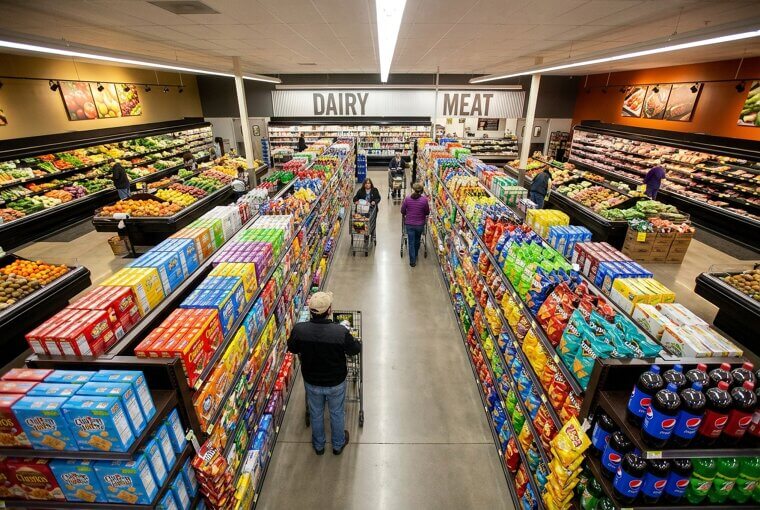
Only venture inward with a specific list — never to browse. Think of the perimeter as your anti-aging lane and the center aisles as territory you navigate with purpose, not impulse. This one mindset shift turns every shopping trip into an act of self-defense. Of course, none of this means you can never enjoy the foods you love.
It's Not About Perfection
Let's be honest — you're going to eat birthday cake with your grandkids. You're going to enjoy Thanksgiving stuffing and share pizza with old friends on a Friday night. And you absolutely should. This article was never about building a cage around your kitchen. It's about awareness. When you know that flavored yogurt is loaded with sugar or that your cooking oil matters, you make slightly different choices most days. That's enough.

Reducing these aging foods by even 30 to 40 percent can meaningfully change how you feel and look over the next five years. Not perfection — just a gentle shift. Because what you choose today really does write the story of your tomorrow.
What You Eat Today Shows Tomorrow
Picture yourself two years from now — keeping up with your grandchildren at the park without that familiar ache in your knees. Remembering the name that used to slip away. Waking up and actually feeling rested. Every time you steadied your blood sugar, calmed inflammation, or protected those tiny telomere caps on your chromosomes, your body noticed. It kept score. Not as punishment, but as gratitude — quietly repairing, rebuilding, holding onto youth wherever it could.

Your body has been fighting to stay young for you this whole time. Now you're finally helping it. And the most powerful thing you can do next? Make sure you're not the only one who knows this.
Share This With Someone You Love
You didn't read this far just for yourself. You read this because you care about feeling good, staying strong, and being present for the people who matter most. But here's the thing — the people you eat dinner with deserve to know this too. Your spouse, your sister, your best friend from college, the neighbor who always shares recipes. Health isn't a solo journey after 60. It's a table you sit around together.

Hit that share button right now. Send this to one person you want to grow old alongside — not just older, but truly well. That single tap might be the most loving thing you do today.Disclaimer: This story is based on real events. However, some names, identifying details, timelines, and circumstances have been adjusted to protect the privacy of the individuals involved. The images in this article were created with AI and are illustrative only. They may include altered or fictionalized visual details for privacy and storytelling purposes