
Most style mistakes aren't about buying the wrong clothes. They're about tiny habits you've never questioned — how things fit, what you skip, what your mirror isn't showing you. Stylists notice these things instantly but rarely say them out loud. This article changes that. Here's what they'd actually tell you if they could.
You Already Own the Problem Pieces
Here's something stylists know but won't lead with — most style mistakes aren't hiding in a store. They're already hanging in your closet. That favorite top you grab without thinking, those comfortable shoes you slip on every weekend. You bought them for good reasons. They felt right once, and maybe they still do when you glance in the mirror. But here's the thing about mirrors: when you've seen yourself in the same pieces dozens of times, your brain stops actually looking. It fills in what it expects to see.
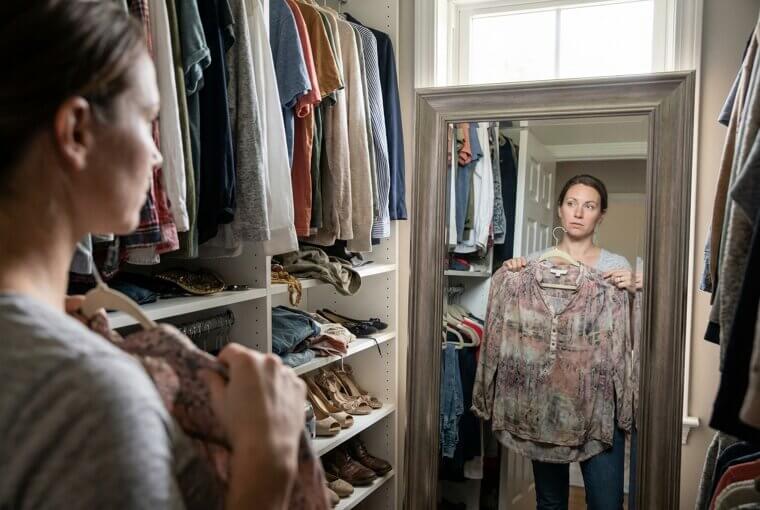
You're not starting from scratch here. You don't need a new wardrobe or a bigger budget. What you need is a fresh pair of eyes on what you already own — because the smallest invisible habits are quietly working against outfits you otherwise feel great in. And the first habit worth examining? It's about fit.
The Fit Problem Nobody Mentions
You know that pair of pants you can technically button but haven't felt great in for a while? Stylists see this in nearly every client consultation — clothes that zip, clasp, and close but aren't actually the right fit for your body today. Not the body you had five years ago, not the size you're working toward. Right now. This is the mistake stylists notice instantly but almost never say out loud, because it feels too personal.
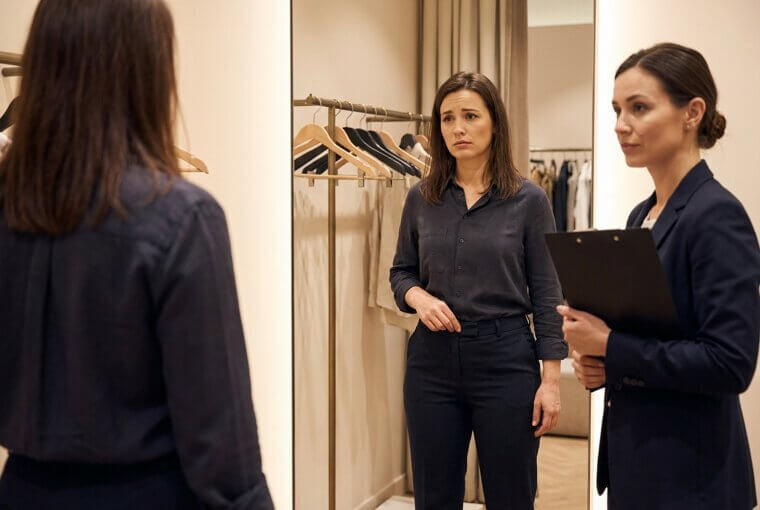
Even celebrities get this wrong without a tailor on speed dial. This isn't about size numbers — it's about comfort and confidence in what you're actually wearing on a Tuesday morning. And the tricky part? Your mirror might be helping you avoid the truth.
Why Your Mirror Tricks You
You check yourself in the same bathroom mirror, from the same angle, in the same lighting, every single morning. And your brain — helpful as always — fills in the gaps. It shows you what it expects to see, not what's actually there. Stylists know this. It's why they evaluate clients from behind, from the side, and while walking. They're seeing angles you almost never check.

Think about the last time you caught yourself on a store security monitor and thought, "Wait — that's me?" That little jolt of surprise? That's the gap between what your mirror shows and what everyone else actually sees. Closing that gap starts with one embarrassingly simple step.
Take a Back-View Photo Today
Here's your first assignment, and it takes thirty seconds. Ask your spouse, a friend, or prop your phone on a timer and snap one photo of your outfit from behind. That's it. This is literally the first thing stylists do in a consultation — and there's a reason. Most people have never actually seen how their clothes drape, pull, or bunch across the back. Fabric gaps at the waist. Shirts riding up without you knowing. A hem that looks fine in front but tells a completely different story from behind.

That single photo will reveal more than an hour of mirror-gazing ever could. Keep it on your phone — you're going to want it later as we work through some specific fixes. But first, there's one tiny detail on your shoulders that stylists can spot from across a room.
The Shoulder Seam Secret
Here's something stylists assess before you've even said hello: your shoulder seams. That small stitch where the sleeve meets the body of a shirt should sit right at the edge of your shoulder bone — not an inch past it. When that seam droops down your arm, the entire top collapses into shapelessness. Your sleeves look too long, your torso looks wider, and the whole silhouette reads as borrowed rather than chosen.
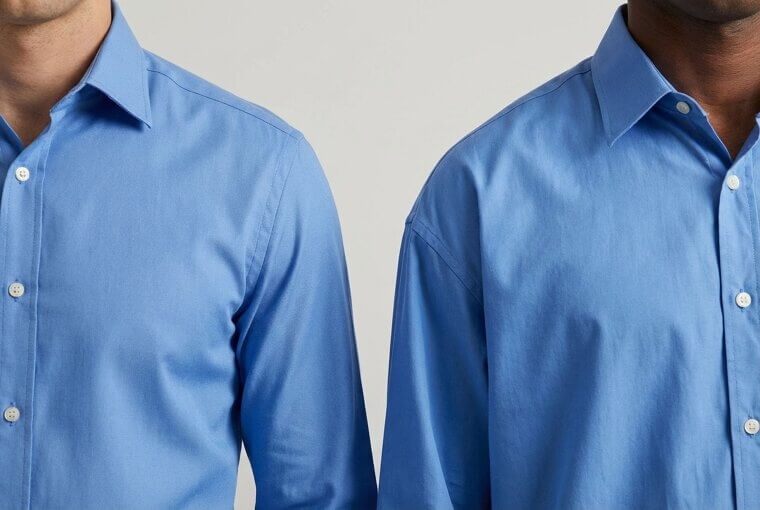
This applies to everything — jackets, blouses, tees, cardigans. Go ahead, glance down at your shoulders right now. Stylists can diagnose this in two seconds flat. And if your shoulder seams check out? Good. Because the next myth we need to tackle is one you've probably believed for decades.
Black Doesn't Always Slim You Down
Here's the myth: black is always slimming. Stylists hear it constantly, and most won't push back because it feels like arguing with gravity. But here's what they actually see — faded black washes out skin tone, especially under fluorescent lights or midday sun. Head-to-toe black without any texture or contrast doesn't slim you. It flattens you. The eye has nothing to grab onto, so the silhouette turns into one shapeless column.
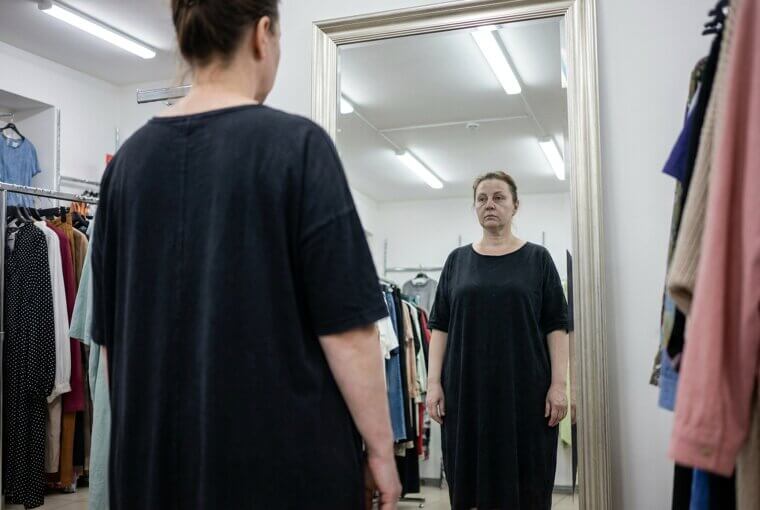
A well-fitted navy blazer or charcoal pant will do more sculpting work than a baggy black top ever could. The secret was never the color — it was the fit and the contrast. So if black isn't the automatic answer, what should you reach for instead?
One Color Swap That Changes Everything
Here's your experiment. Go to your closet — that same closet from section one — and find a black top you wear near your face. Now find anything in burgundy, emerald, or deep sapphire. Hold each one under your chin in natural light and look at your skin. One will make you look tired. The other will make your eyes sharper and your complexion warmer. Stylists call this face framing, and it matters more as we age because skin tone shifts and loses contrast on its own.
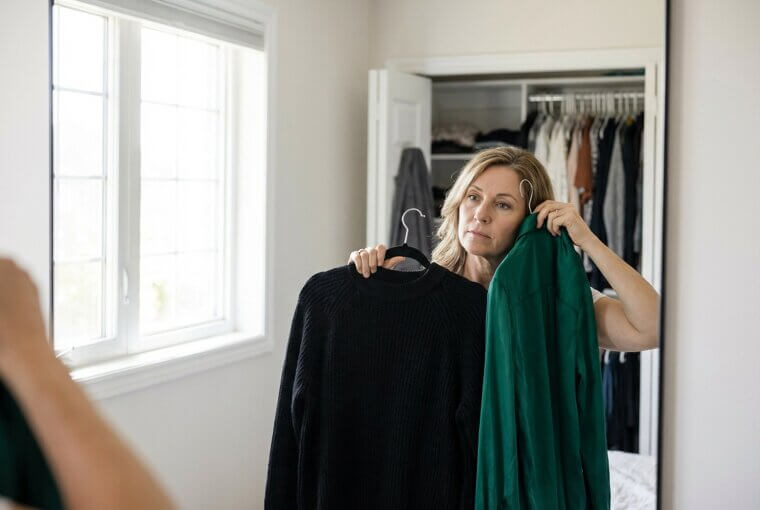
You don't need to abandon black entirely. Just move it away from your face — wear it on the bottom instead. That single swap costs nothing and changes how healthy you look in every conversation. Now, speaking of things sitting too close to your face, there's an invisible layering mistake that's probably in your outfit right now.
The Undershirt That Ruins Everything
Stylists rank this among their most awkward conversations: that white crew-neck undershirt peeking above your button-down. You might not even notice it anymore, but they do — instantly. That half-inch of visible cotton reads as unintentional and dated, like you got dressed in two separate decisions that never spoke to each other. Here's the distinction that matters: an undershirt meant for sweat protection or warmth is functional. It's not supposed to be seen. Its neckline must disappear completely beneath your outer layer.

The fix is simple — switch to a deep V-neck undershirt that vanishes below your collar line. Same warmth, same protection, zero visual clutter. It's a five-dollar swap that quietly upgrades every button-down you own. And speaking of things people notice before you realize — your shoes might be telling a story you didn't authorize.
Your Shoes Are Saying Too Much
Here's what researchers found when they studied first impressions: strangers accurately guessed someone's income, personality, and even political leaning just from looking at their shoes. Not their jacket. Not their watch. Their shoes. Worn-down heels, scuffed toes, and outdated shapes tell people you've stopped noticing details — and they extend that judgment to everything else about you.
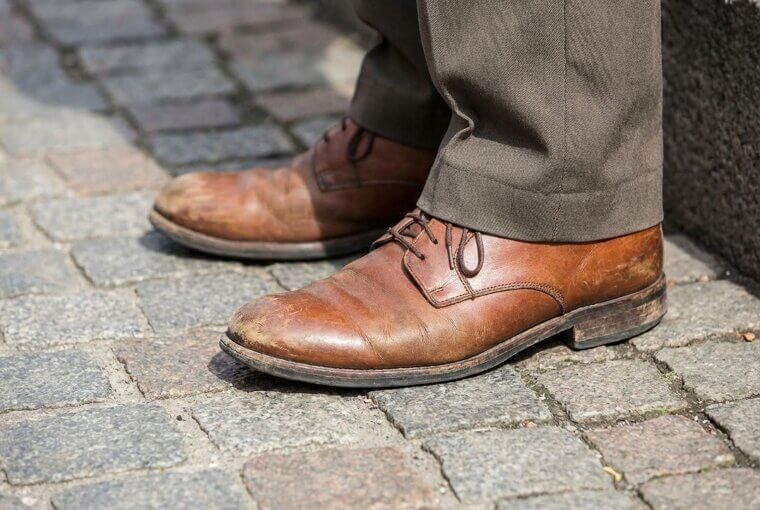
Stylists report something remarkable: clients who upgrade only their footwear receive more compliments than clients who buy entirely new outfits. Think about that. Your shoes are shaping how people treat you at work, at dinner, at every first handshake. The good news? You don't necessarily need new ones.
The Simple Shoe Refresh Trick
This weekend, grab a $6 shoe polish kit and a magic eraser. Polish revives leather that looks ten years tired, and a magic eraser on white sneaker soles works like actual magic — five minutes and they look nearly new. But before you start refreshing, line up every pair you own. Look at the heels from behind and the toe box from above. If the heels are visibly crushed inward or the toe box has deep permanent creasing, no amount of polish saves those — they're structurally finished.
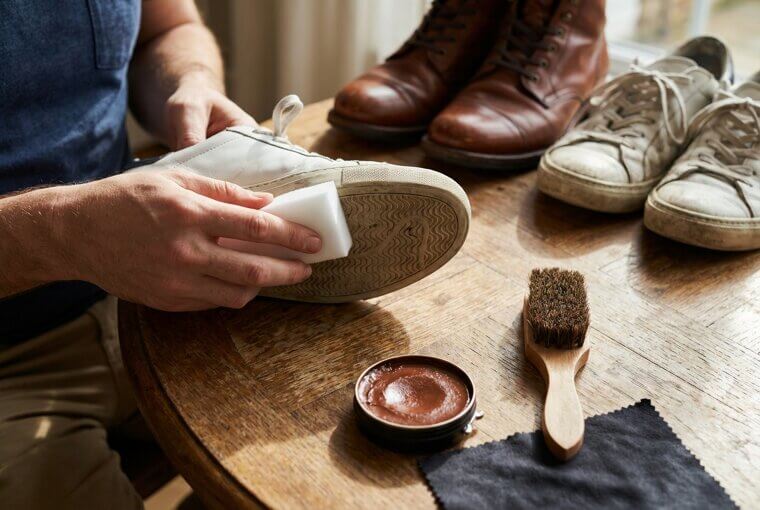
Donate them without guilt. Here's the rule stylists swear by: three well-maintained pairs beat ten neglected ones every single time. You'll get dressed faster, look sharper, and stop reaching for shoes that quietly undermine everything else you're wearing. Now that your shoes and closet are getting tighter, there's an invisible rule that controls why some outfits just look *right*.
Proportion Is the Rule You Never Learned
Ask any stylist what separates a good outfit from a great one, and they'll give you the same answer: proportion. It's the rule they consider most important and the one clients almost never understand. Here's how it works. If your top is relaxed and flowing, your bottom should be more fitted. If your pants are wide and loose, your top should have structure. The principle is simple — balance volume. When both pieces are baggy, your body disappears into shapeless fabric. When both are tight, nothing breathes and everything pulls.
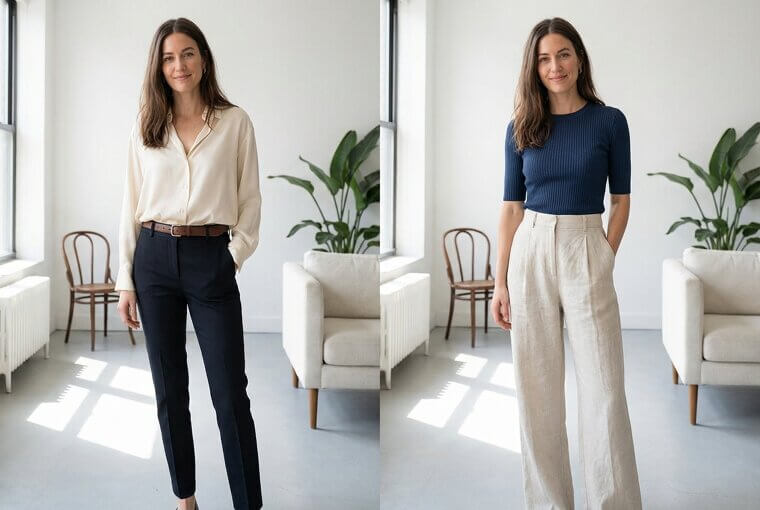
Most people default to matching volumes because it feels safe — loose with loose, fitted with fitted. That sameness is exactly why the outfit falls flat. Stylists balance these proportions instinctively, and it's the invisible reason one combination looks effortless while another feels off. You've been following this rule-breaking pattern without knowing it even existed. So how do you actually apply this tomorrow morning?
Try the "One Loose, One Fitted" Test
Here's your zero-cost experiment. Go to your closet right now and pull out your loosest, most relaxed top. Pair it with your most fitted pants. Take a photo — front and back, just like that back-view shot from earlier. Now reverse it: your most fitted top with your most relaxed pants. Take another photo. Set them side by side. One combination will immediately look more intentional, more polished, more like *you* decided something on purpose.
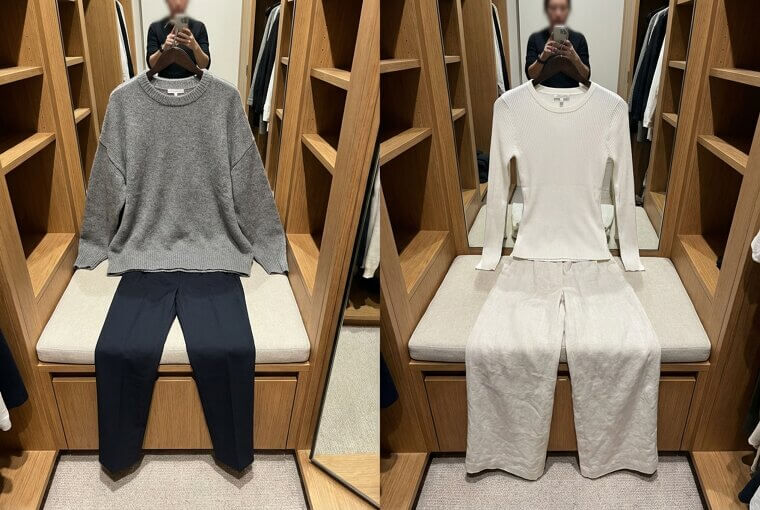
That's it. That's what stylists do in fitting rooms — they test both directions and let the mirror decide. You didn't buy a single thing, and you just unlocked a principle that governs every great outfit. But proportion only works when the pieces themselves pull their weight — and there's one simple addition that stylists never skip.
The "Third Piece" Stylists Always Add
Here's something stylists do that clients rarely notice: they almost never send someone out in just a top and bottom. There's always a third piece — a blazer, a structured cardigan, a vest, a scarf, a lightweight jacket. That third layer is what transforms "I got dressed" into "this is an outfit." It creates visual depth, adds dimension, and signals intention. Think about why you feel more put-together in layers even when every individual piece is simple. The third piece is the reason.

And here's what's worth remembering from section one: you probably already own several of these pieces. They're hanging in your closet right now — the linen blazer, the denim jacket, the long cardigan you forgot about. You stopped reaching for them, not because they don't work, but because getting dressed became automatic. But even the perfect third piece can't save an outfit if the fabric is fighting you.
Fabric Matters More Than Brand
Here's something that might change how you shop forever. When stylists pick clothes for clients, they walk right past the brand label. They flip to the tiny tag inside and read the fabric content first. Every single time. A $20 top in a cotton-modal blend will drape beautifully, photograph like a dream, and feel luxurious against skin. That $120 polyester blouse from the prestige label? It'll cling with static, develop pills after three washes, and carry that unmistakable cheap sheen that catches light the wrong way.
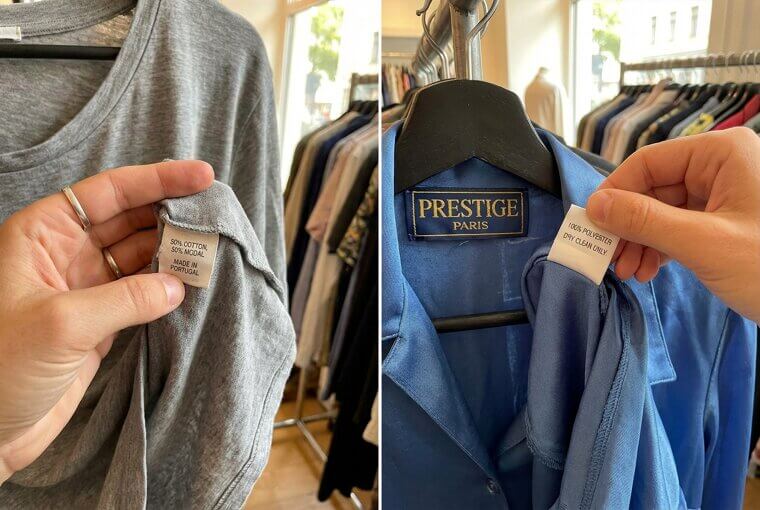
Pilling, static, and synthetic shine aren't price problems — they're fabric problems. You can spend a fortune and still look like the material is fighting you. Once you know this, you'll never shop the same way again. So what exactly should you look for on that little tag?
The Five-Second Fabric Tag Check
Here's your new five-second habit. Before anything goes in the cart, flip the tag. You're looking for cotton, linen, wool, silk, or quality blends like modal, Tencel, and cashmere-blend. If it says 100% polyester or 100% acrylic, pause hard. Now do the pinch test: squeeze the fabric between your fingers for two seconds and release. If it feels plasticky, crinkly, or holds the wrinkle instead of releasing it — walk away. Doesn't matter if it's marked down 70%. Doesn't matter if you love the color.

Stylists do this so reflexively they don't even think about it anymore. Once you train your fingers, you won't either. You'll save hundreds of dollars on clothes that would have disappointed you after one wash. But even perfect fabric can't help if the garment is the wrong length — and there's one cheap fix that stylists consider the most transformative alteration in existence.
Why Your Pants Hem Changes Everything
Of all the alterations in a tailor's repertoire, the cheapest one makes the biggest difference. Hemming pants costs $10 to $15, takes about ten minutes, and completely transforms how your lower body looks. Pants that puddle onto your shoes create a sloppy cascade effect that drags the whole outfit down. Pants that hover awkwardly above the ankle when they shouldn't make your legs look like they're waiting for a flood. Either way, the entire silhouette reads as unfinished — and people register it instantly, even if they can't name why.
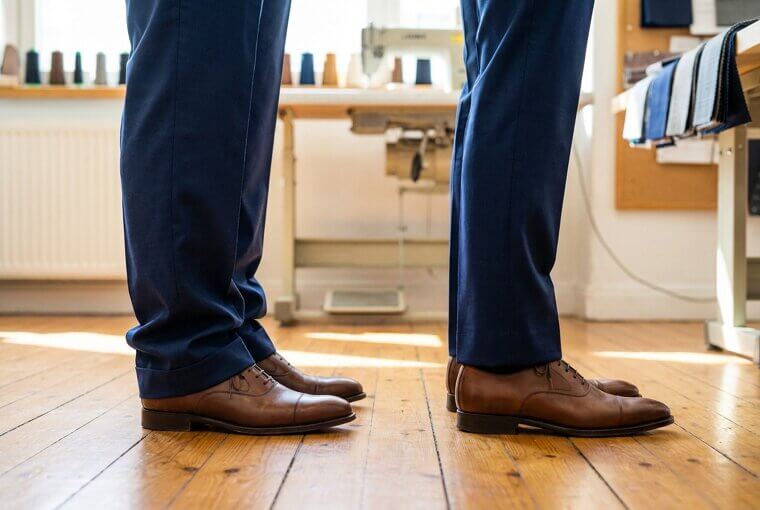
Stylists say incorrect hem length is the single most common mistake they encounter. Not the most dramatic — the most common. And the most ignored. Think about that: a $10 fix on a $30 pair of pants, and most people just live with the puddle. So what does visiting a tailor actually look like — and why is it far less intimidating than you think?
The Tailor Visit That Costs Less Than Lunch
This week, gather three pairs of pants that puddle or bunch and take them to your neighborhood tailor. Not a fancy alterations boutique — the small shop in your local strip mall with the sewing machine in the window. Hemming runs $8 to $15 per pair. Taking in a waist costs $15 to $20. Your total for three pairs will likely land under $45 — less than dinner for two at a casual restaurant. When the tailor pins your pants, here's what to ask for: a slight break for dress pants, meaning the fabric just kisses the top of your shoe with one small fold.
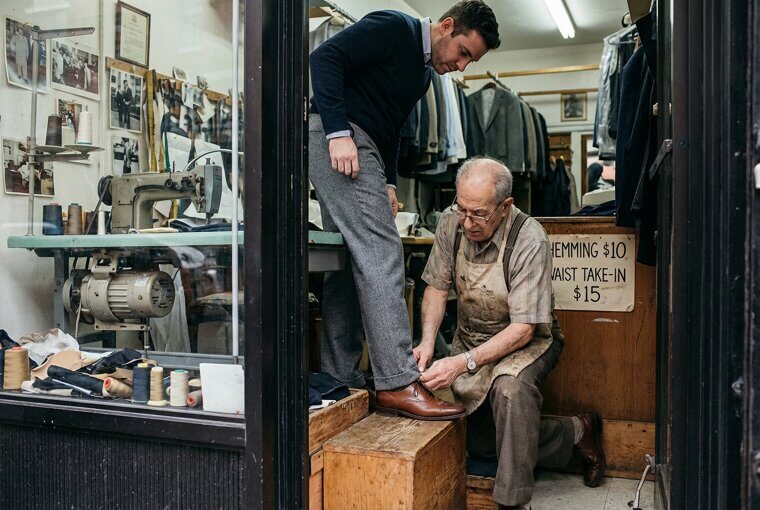
For casual pants and jeans, request a clean break — fabric touching the shoe with zero bunching. That's it. Two phrases that make you sound like you've done this a hundred times. Stylists say a tailor relationship is the single highest-value investment in your entire wardrobe. But even a perfectly tailored outfit can fall apart if you're making one surprisingly common mistake with your accessories.
Accessories You're Accidentally Overdoing
Stylists tread carefully here because accessories feel deeply personal — gifts from loved ones, vacation finds, pieces tied to memories. But here's what they won't say directly: when you wear statement earrings, a bold necklace, three rings, and a printed scarf simultaneously, people remember the clutter. Not your face. Not your words. The visual noise overwhelms everything, and you disappear behind your own accessories. The Coco Chanel rule — look in the mirror before leaving and remove one thing — isn't a cute quote stylists put on Pinterest. It's genuine professional practice they use daily with clients.
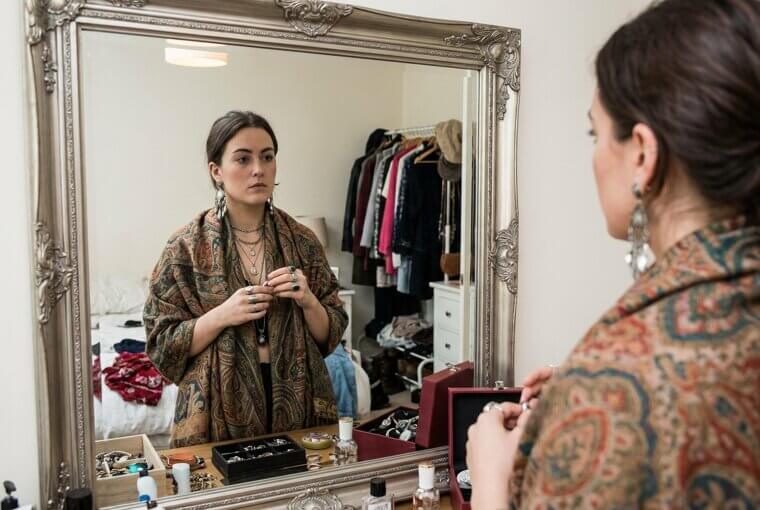
Remember how worn shoes shape first impressions? Accessories work the same way, except they're competing for attention right next to your face. The stakes are personal: people form opinions about your intentionality within seconds. So how do you keep what you love without the clutter? There's one beautifully simple system that works every single time.
The "One Statement" Rule Works Every Time
Here's your new morning formula: pick one hero piece you love — just one. Bold earrings? Leave the neckline bare so they shine. A statement necklace? Wear simple studs. An interesting belt? Keep everything else quiet. That's it. Every stylist builds outfits this way, choosing a single focal point and making everything else a supporting player. Tomorrow morning, try it. Grab one accessory that makes you happy and build the entire outfit around showcasing just that piece.
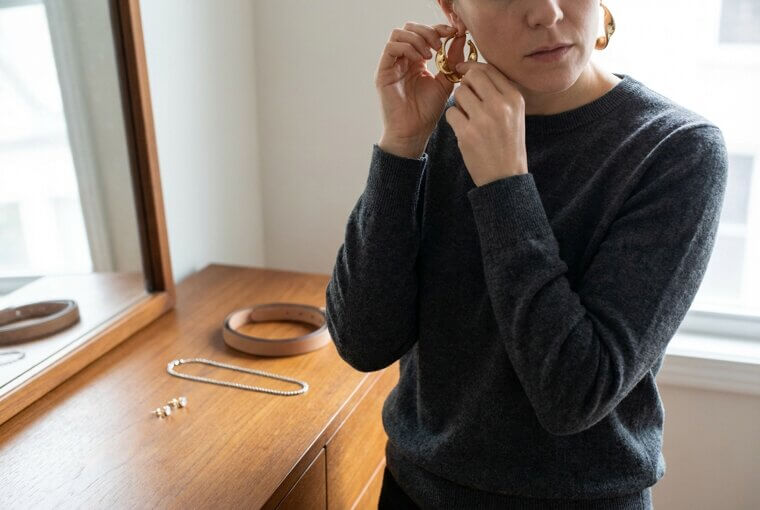
You'll notice something unexpected — getting dressed actually feels easier. The question shifts from "does all this match?" to "what do I want to highlight today?" One decision replaces a dozen. But accessories aren't the only thing competing for attention near your face. There's a connection between your haircut and your neckline that almost nobody thinks about.
The Haircut-Neckline Connection Nobody Sees
Here's a cross-discipline secret most professionals never discuss: your hairstylist and your clothing stylist almost never talk to each other, yet the relationship between hair length and neckline shape dramatically changes how your face reads. Short hair paired with a crew neck can visually compress the neck, making everything look shorter and wider. Long hair cascading over a high collar creates heaviness that pulls the eye down. V-necks are the universal cheat code — they elongate almost everyone regardless of hair length.

Stylists instinctively match necklines to their client's hair and face shape, but here's what's counterintuitive: the right neckline can actually make an unflattering haircut look better, and the wrong one can sabotage a great one. You've probably never isolated this variable before. In about sixty seconds, you can figure out exactly which neckline works hardest for you.
Find Your Most Flattering Neckline Fast
Grab three tops from your closet right now — a V-neck, a crew neck, and a scoop neck. Stand in front of your mirror (yes, the same mirror we've been training you to use differently since the beginning of this article) and hold each one up directly beneath your face. Don't put them on — just frame your face with each neckline. Look for three things: which one makes your skin look brightest, your neck appear longest, and your jawline most defined. One will win clearly. You'll actually see it happen in real time.
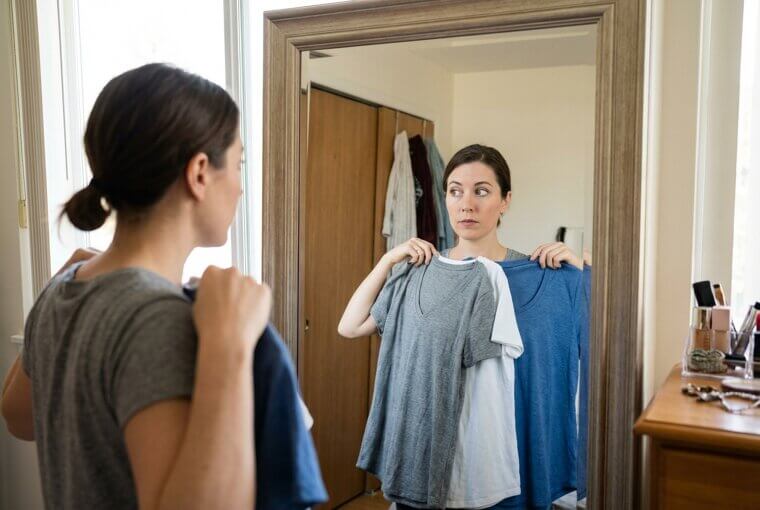
Stylists say this sixty-second experiment is the single biggest lightbulb moment clients experience. Once you know your best neckline, you stop buying tops that work against you — permanently. That knowledge saves hundreds of dollars and eliminates countless "why doesn't this look right?" mornings. Now, here's something that might sting a little: another deeply held style rule you've been following faithfully is actually working against you.
Matching Too Perfectly Looks Worse
Here's a rule that might have been drilled into you: shoes match the belt, bag matches the shoes, all metals match each other. Perfectly coordinated, perfectly polished. Except stylists see this and think one word — costume. When everything matches too precisely, the outfit looks rigid and rehearsed rather than confident and modern. Professionals deliberately introduce one "off" element. They'll mix gold and silver jewelry together, pair brown leather shoes with a black bag, or throw an unexpected texture into an otherwise streamlined look.
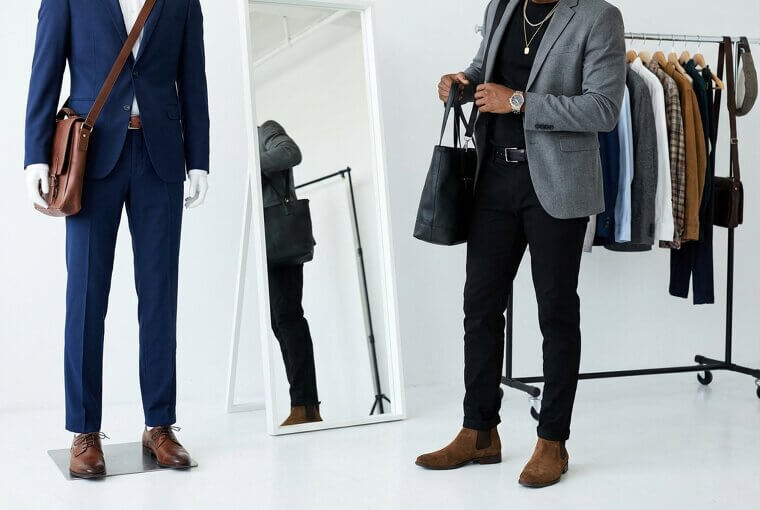
That single mismatch is what makes an outfit feel alive instead of assembled from a rulebook. Intentional imperfection signals that you understand style well enough to break the rules on purpose. If you were taught decades ago that everything must coordinate, consider this your permission slip. Let one thing be beautifully "wrong." Speaking of rules worth questioning — your closet may be hiding a problem that goes much deeper than matching.
The Aging Closet Problem Stylists Dread
Your closet is probably holding clothes from three different life stages and at least two different body shapes right now. Stylists say this is the number one reason clients stare at a packed closet and declare they have nothing to wear. The real cost isn't just wasted space — it's the decision fatigue hitting you every single morning before your day even starts. Wearing silhouettes from a decade ago, even when they technically button and zip, communicates something you don't intend: that you stopped paying attention.

This isn't about chasing trends. It's about currency — looking like you belong in your current life. Stylists watch clients decline invitations, avoid photos, and lose confidence daily because of this invisible closet problem. The frustration is real, and you deserve better. The good news? There's a fast, structured way to fix this — and it takes just twenty minutes.
The Ruthless Closet Edit in 20 Minutes
Set a timer for twenty minutes and pick one category — just tops. Pull every single one out and lay them on your bed. Now try each on and snap a quick photo, exactly like we talked about way back at the start of this journey. Ask three questions: Does it fit my body right now? Does it make my skin look healthy right now? Do I feel good in it right now? If any answer is no, it goes straight in the donate bag. No nostalgia allowed while that timer is running.
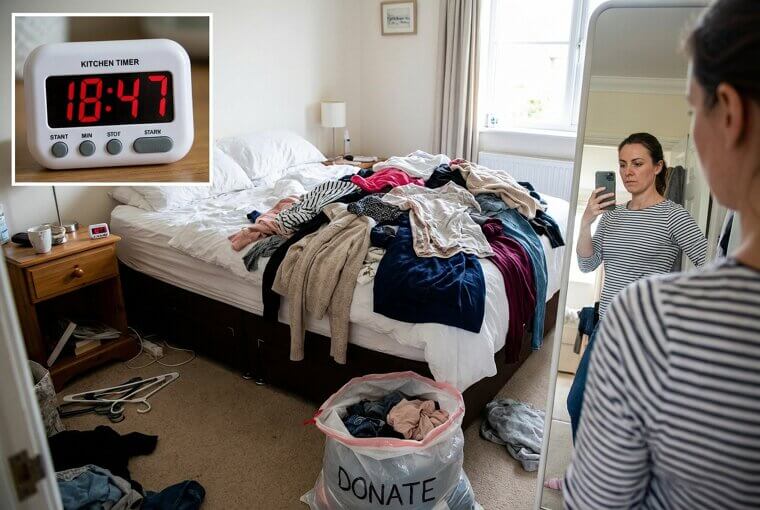
Here's what stylists know from doing this with hundreds of clients: removing the wrong 30% makes the remaining 70% suddenly feel like an entirely new wardrobe. You don't need more clothes — you need fewer wrong ones. Next up, there's a specific pattern mistake that can add a perceived decade to your appearance overnight.
The Print Mistake That Ages You Instantly
You could nail the fit, choose beautiful fabric, and still look ten years older because of the print. Tiny florals, novelty graphics, and overly whimsical patterns carry invisible timestamps — they scream the decade they peaked in. Stylists see this constantly: clients reach for the same print style they loved twenty years ago without realizing those patterns have evolved around them. The consequence is brutal. The wrong print adds a perceived decade to your appearance regardless of how well everything else fits.
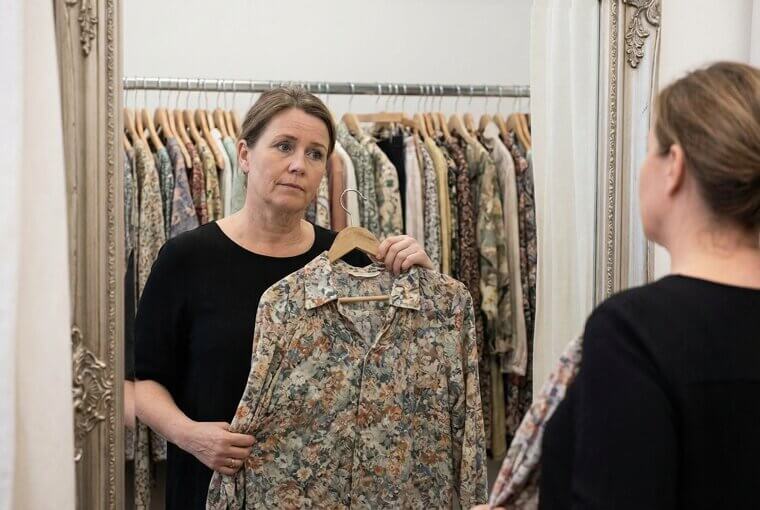
What reads as current and confident? Larger-scale geometrics, modern stripes, and tonal patterns where the print feels intentional rather than inherited. Remember that fabric check from earlier — content and pattern work as a team. A dated print on quality fabric still looks dated. So what's the one universally safe print stylists actually recommend?
One Print That Works on Everyone
Here's your shopping target: a medium-scale stripe in navy and white, or charcoal and cream. Stylists reach for this print first because stripes create visual structure, elongate the body, and literally never go out of style. Look for a classic Breton stripe top or a vertical-stripe button-down — both work with jeans, dress pants, and under blazers. The key is stripe width. If you're petite, aim for stripes about the width of your finger. Broader frame? Go slightly wider, about two fingers. Avoid pinstripes that disappear and bold stripes that overwhelm.

This one recommendation replaces the paralysis of staring at a wall of patterns in any store. Think of it as your print home base — the safe ground you return to whenever you're unsure. But knowing what to wear is only half the equation. What are stylists actually scanning for when they first look at you?
What Stylists Notice in the First Three Seconds
Here's what the professional eye actually scans in those first three seconds: shoulder seams sitting on the bone or drooping past it. Pant hems hitting the shoe cleanly or pooling on the floor. Shoes that look maintained or forgotten. And one thing that ties it all together — whether the outfit looks like a series of decisions or a series of defaults. That's it. They're not assessing your body, your age, or your budget. They're reading intention.

This is the most important reframe in everything we've covered. Style isn't about being thin, young, or wealthy. It's about showing that you made choices on purpose. Every section you've read has been building toward that single idea. And what happens when someone finally dresses with that kind of intention? The change goes far deeper than clothing.
Confidence Is Visible and It's Not What You Think
A stylist once described the moment that made her choose this career. A woman in her sixties tried on a properly fitted blazer for the first time in years, looked in the mirror, and stood two inches taller without thinking about it. Her shoulders dropped. Her chin lifted. When she spoke, her voice carried differently. That's not a metaphor — confidence physically reshapes how you hold yourself. Stylists see it constantly. The right clothes don't give you something new. They stop hiding something that was always there.
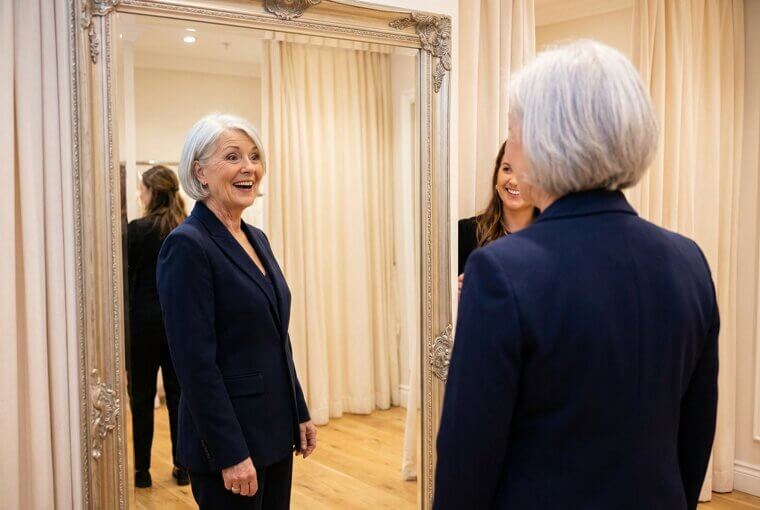
Many stylists say this is why they do the work — not to transform someone into a different person, but to watch someone become more visible as themselves. You deserve that moment. And it might be closer than you think.
The Compliment You'll Get This Week
Imagine this. Sunday morning, you've checked your shoulder seams, hemmed those navy pants last Tuesday, and swapped your usual black top for that deep burgundy you rediscovered in the back of your closet. You walk into church, the grocery store, your daughter's kitchen — and someone pauses mid-conversation. "You look really good. Did you do something different?" You won't be able to pinpoint which change did it. Neither will they.

That's the whole point. They're not complimenting a garment. They're responding to someone who looks intentional, present, and quietly confident. They're seeing you. Stylists live for that exact moment — and now it belongs to you. Everything you need was already in your closet, waiting.
Your Style Isn't Broken — It's Just Waiting
Nothing in this article asked you to spend a fortune. A photo from behind. A shoulder seam shifted into place. A fabric tag flipped over. A twelve-dollar hem. One bold earring worn alone. And the quiet bravery to let go of pieces that belonged to someone you used to be. That's all it took. Your style was never broken, and it was never missing. It was buried — under old habits, rules someone taught you decades ago, and a mirror that only ever showed you one angle.
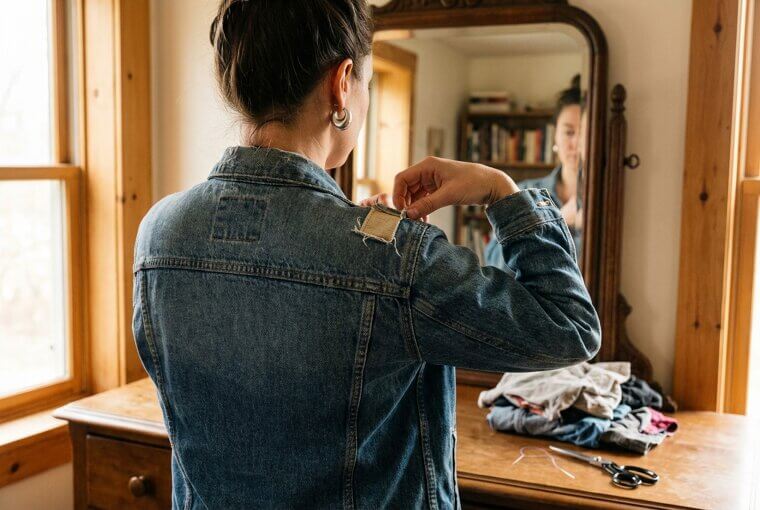
Stylists don't create style. They clear away what's hiding it. Now you can do that for yourself. Tomorrow morning, when you open that closet, everything looks different — because you do.Disclaimer: This story is based on real events. However, some names, identifying details, timelines, and circumstances have been adjusted to protect the privacy of the individuals involved. The images in this article were created with AI and are illustrative only. They may include altered or fictionalized visual details for privacy and storytelling purposes